


How to Clean Solar Panels: A Step-by-Step DIY Guide
As you already know, residential and off-grid solar systems are amazing sources of renewable energy that are quickly growing in popularity. The large flat glass panels harness the sun’s light to generate electricity that can be used and/or stored to power a home. Solar energy has many benefits, such as lower energy bills (or zero energy bills), less environmental impact, and either partial or complete independence from the grid.

Solar is also becoming more accessible, especially with the help of some of the solar panel companies that offer complete solar kits. However, solar panels only pay off if they produce enough energy to supply the electricity needs of the home. The production of that energy depends on how much sunlight the panels can absorb, so if solar panels are dirty, they won’t work as well as they could.
Generally, the best solar panels don’t need much cleaning and maintenance in places that get regular rain. Rain can clean most of the dirt and debris that might prevent the solar panels from operating at peak efficiency by getting the most sunlight possible. However, dirt can still accumulate over time. In dry or dusty areas, near building or industrial sites, or if you have a rooftop chimney or stove pipe, rain may not be enough to keep the panels clean.

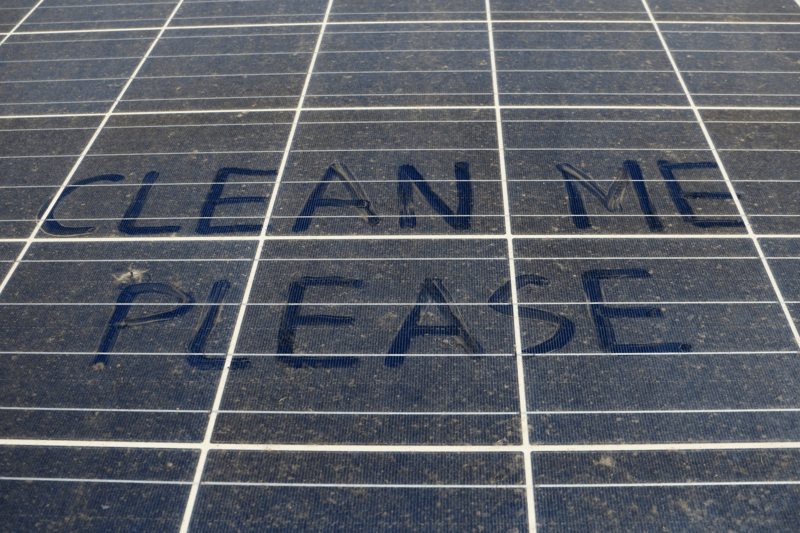
Learning how to clean solar panels can help homeowners save money on solar panel maintenance costs.

Table of Contents
- Why do solar panels need to be cleaned?
- How often should you clean your solar panels?
- 5 Simple Steps to Clean Solar Panels
- Step 1: Gather the necessary tools and materials
- Step 2: The best time and weather to clean solar panels
- Step 3: Access and inspect your solar panels
- Step 4: Rinse and wash your solar panels
- Step 5: Check and test your solar panels
- Conclusion
- FAQs
- What is the best way to clean solar panels?
- Can you use Windex to clean solar panels?
- Can you use a garden hose directly on solar panels?
- How often should solar panels be cleaned?
- The frequency of solar panel cleaning depends on several factors, such as the location, climate, angle, and type of the panels. Generally speaking, solar panels should be cleaned at least once or twice a year, preferably in the spring and fall. However, they may need to be cleaned more frequently if they are located in a dusty or polluted area, or if they experience heavy rain, snow, or wind.
- What are the best tools and materials to clean solar panels?
- How much does solar panel cleaning cost?
- How to prevent or reduce solar panel soiling?
- Can I put RainX on my solar panels?
Why do solar panels need to be cleaned?
The answer is simple: dirt, dust, debris, bird droppings, and other contaminants can accumulate on the surface of your solar panels over time.
Even when the panels may look clean after a heavy rain, they can still harbor a thin film of these contaminants. This will prevent 100% of the sunlight from reaching the solar cells, reducing the amount of electricity they can produce.
According to some studies, dirty solar panels can lose up to 35% of their efficiency compared to ones that have been properly cleaned.

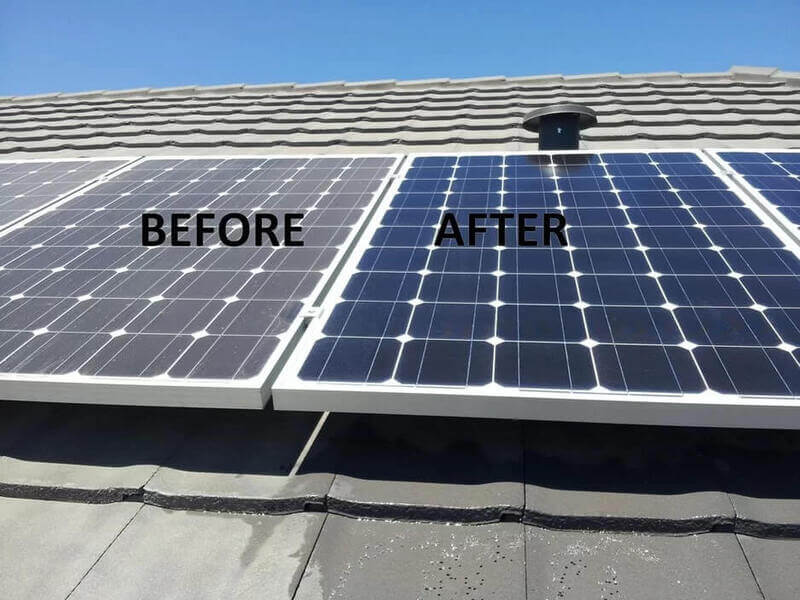
Below are energy production percentages you may lose per quarter if you fail to give your panels the required cleaning.
- Year 1 Q1: 5% Energy Loss
- Year 1 Q2: 10% Energy Loss
- Year 1 Q3: 15% Energy Loss
- Year 1 Q4: 20% Energy Loss
- Year 2 Q1: 25% Energy Loss
- Year 2 Q2: 30% Energy Loss
- Year 2 Q3: 35% Energy Loss
How often should you clean your solar panels?
The answer depends on several factors, such as the location, climate, angle, and type of your solar panels.
Generally speaking, you should clean your solar panels at least once or twice a year, preferably in the spring and fall. If you have trees nearby that drop leaves then late fall may be best. However, you may need to clean them more frequently if you live in a dusty or polluted area, or if you experience heavy rain, snow, or wind. We’ll discuss snow removal in a separate post.

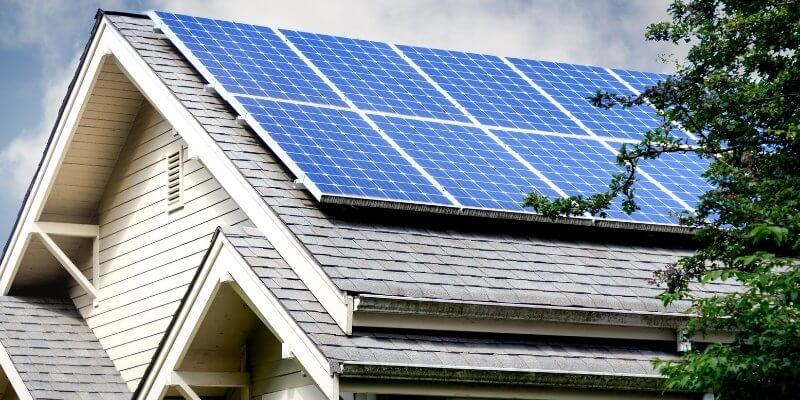
So, how exactly do you clean your solar panels properly? Thankfully the answer isn’t complicated, but it does require some planning, preparation, and exercising caution.
You can choose to DIY clean your solar panels using simple tools and materials, or ultimately you can hire a professional solar panel cleaning service to do it for you. Either way, you need to follow some basic steps and best practices to ensure safety and quality.
In this article, we’ll show you how to clean your solar panels safely yourself using simple tools and materials that are easily available. We’ll also provide you with tips and tricks to make the process easier and more effective.
By following this step-by-step guide, you’ll be able to clean your solar panels quickly and efficiently, and regain their maximum efficiency fast.
5 Simple Steps to Clean Solar Panels
The first step to clean your solar panels is to gather the necessary tools and materials. You don’t need any fancy or expensive equipment, just some common items that you probably already have at home or can easily find at your local hardware store.
Step 1: Gather the necessary tools and materials
Here is a list of what you will need:
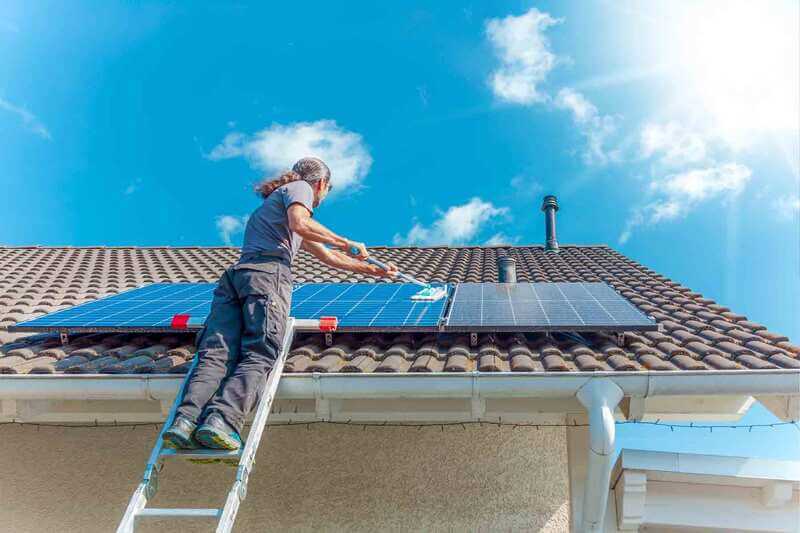
- A ladder: You will need a ladder to access your solar panels, especially if they are mounted on the roof. Make sure the ladder is sturdy, stable, and long enough to reach the panels safely. You may also need a helper to hold the ladder for you or to hand you the tools and materials. We like this telescoping ladder for at the cabin as its easily showable,
- A hose: You will need a hose and spray nozzle to wet and rinse your solar panels with water. Make sure the hose is long enough to reach the panels from the nearest water source. You may also need a nozzle or a spray attachment to control the water pressure and direction.
- A bucket: Choose a bucket is large enough to fit the sponge, the brush, and the squeegee. We like using a large rectangular bucket that tends to stay more securely on our metal roof. You may also want to use a lid or a cover to prevent the water from spilling or evaporating.
- A sponge: If your washing my hang a large soft sponge is great as it holds plenty of water and detergent to wash an entire panel. Make sure the sponge is soft, clean, and non-abrasive. You may also need a scrubber to remove stubborn dirt or stains. Our scrubber of choice is the scrub daddy sponge.
- A soft brush: They make very soft bristled brushes that are perfect for washing solar panels. Again, make sure the brush is soft, clean, and non-abrasive. You can find brushes that attach to long telescoping handles or extension pole to reach panels that otherwise would be too difficult to reach.
- A squeegee: A squeegee works to dry the solar panels quickly and prevent water from drying, spotting and leaving a film that we’ve been trying to remove. Make sure the squeegee is flexible and wide enough. There are brush, cloth, squeegee combo heads that we will discuss further below.
- A cloth: Microfiber cloths work great to dry and polish your solar panels. Use them to help remove any streaks, spots, or residues.
- A mild detergent: There are solar panel specific mild detergents to wash your solar panels. Of course you can use dish soap like Dawn. Just make sure the detergent is biodegradable, eco-friendly, and non-corrosive. You may also need a vinegar solution to remove any hard water deposits or mineral buildup.
Some optional or alternative tools and materials that you consider are:
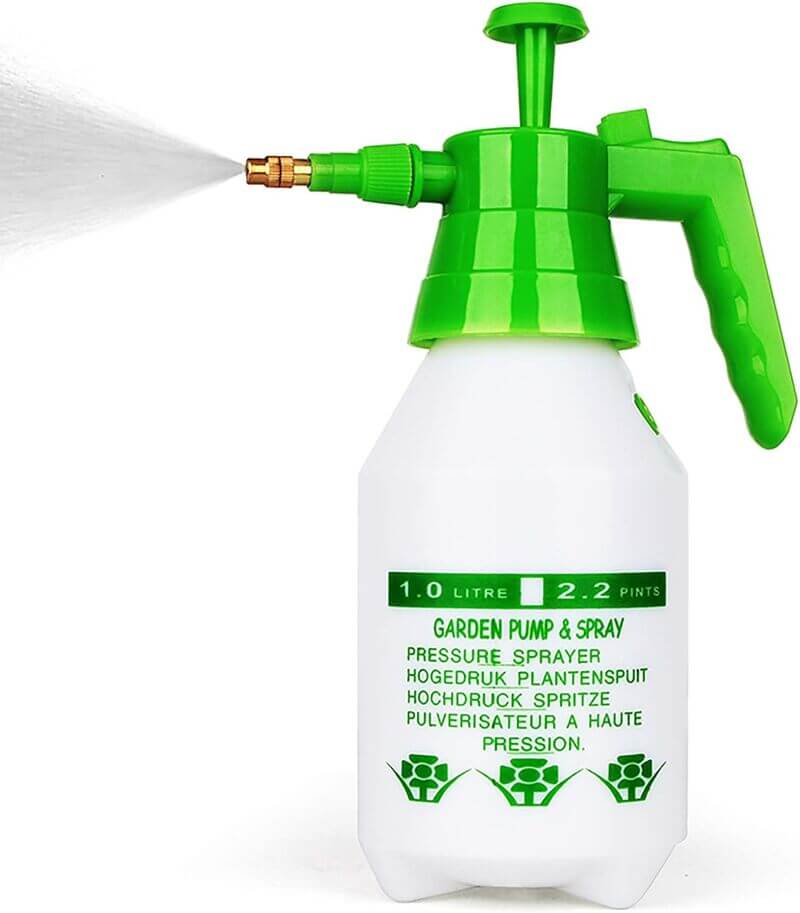
- A garden pump sprayer: You may want to use a spray bottle to wash your solar panels with water and detergent. This can help you apply the detergent more evenly and efficiently, as well as reduce the amount of water and detergent you need. For folks off the grid water may not be as plentiful and a small pump sprayer can help to cut back on water usage. We use a garden sprayer to apply a sudsy coating and let that sit for five to ten minutes before rinsing it off.

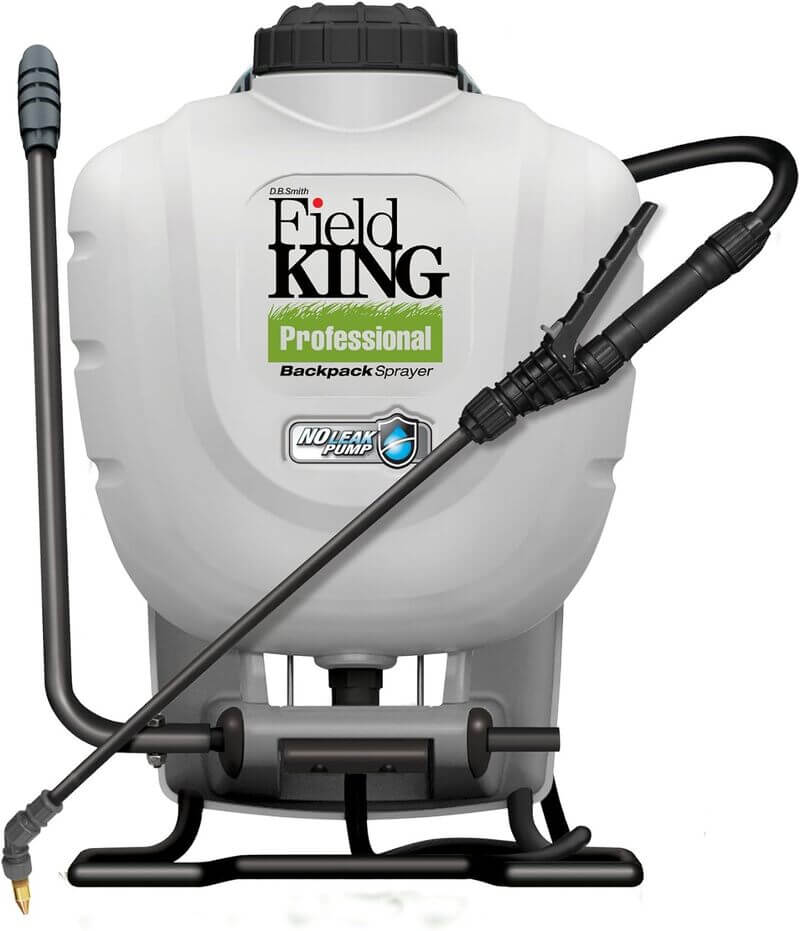
- A Backpack sprayer: If you don’t want to have to lug up the roof, buckets or soapy water, and try and balance a bucker of soapy water on an angles roof then you might consider a backpack sprayer. You can add soapy water to the tank, spray down the panels and let it sit before topping up the tank with fresh water and cleaning off the panels.

- A cordless leaf blower: You may want to use a blower to help dry your solar panels quicker. This can help prevent any water spots or residues from forming. However, you need to make sure the blower is clean and has a low or medium speed setting. You also need to avoid blowing any dust or debris onto the panels.
- A polishing agent: You may want to use a polishing agent to polish your solar panels. This can help you restore the shine and clarity of the panels, as well as protect them from future dirt and damage. However, you need to make sure the polishing agent is suitable for your solar panels and follow the manufacturer’s instructions. You also need to avoid using any abrasive or corrosive substances that could scratch or harm the panels.
Step 2: The best time and weather to clean solar panels
The second step to clean your solar panels is to choose the best time and weather to do it.
This is important because the timing and weather conditions can affect the safety and quality of the cleaning process.
You want to avoid cleaning your solar panels when they are too hot, too cold, too wet, or too windy.

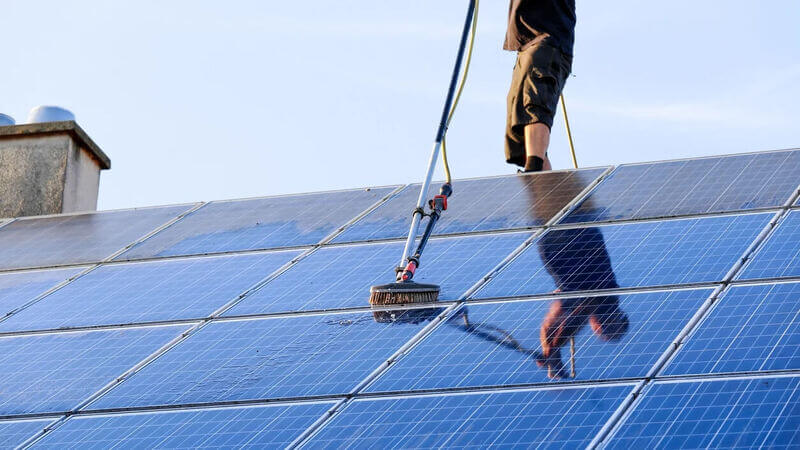
Here are some guidelines on how to choose the best time and weather to clean your solar panels:
- Avoid high temperatures and direct sunlight: You don’t want to clean your solar panels when they are too hot or exposed to direct sunlight. This can cause the water to evaporate quickly, leaving behind streaks, spots, or residues. It can also cause the panels to expand and contract, creating cracks or gaps. It can also burn your skin or damage your eyes. The best time to clean your solar panels is in the early morning or late afternoon, when the temperature is cooler and the sun is lower.
- Avoid rain, snow, or wind: You really don’t want to clean your solar panels when it is raining, snowing, or windy. It might seem like a great time to do it to avoid having to rinse off the solar panels and roof but it’s just too risky. This can make the cleaning process more difficult and dangerous, as well as less effective and efficient. Rain or snow can dilute the detergent, reduce the visibility, or freeze the panels. Wind can blow dust or debris onto the panels, create instability, or knock down the tools or materials. The best time to clean your solar panels is on a clear, calm, and dry day, when the weather is stable and predictable.
- Consider the location and climate of your solar panels: You may need to adjust the timing and frequency of your solar panel cleaning depending on the location and climate of your solar panels. For example, if you live in a dusty or polluted area, you may need to clean your solar panels more often, as they can get dirty faster. If you live in a rainy or snowy area, you may need to clean your solar panels less often, as they can get washed naturally. If you live in a sunny or dry area, you may need to clean your solar panels at different times of the year, as they can get hotter or cooler.


There are some exceptions or special cases where you may need to clean your solar panels regardless of the time or weather. For example, if you notice a significant drop in the output or efficiency of your solar panels, you may need to clean them as soon as possible, as they may be covered with dirt or debris. If you experience a heavy storm or a strong wind, you may need to clean them right after, as they may be damaged or displaced.
They may also be covered in snow in which case we have a complete DIY snow removal article for that exact situation.
If you have a scheduled inspection or maintenance, you may need to clean them before, as they may need to be checked or repaired.
Step 3: Access and inspect your solar panels
The third step to clean your solar panels is to access and inspect them. This is important because you need to make sure that you can reach your solar panels safely and securely, and that they are in good condition and ready to be cleaned. You also need to take some safety precautions and tips to avoid any accidents or injuries.

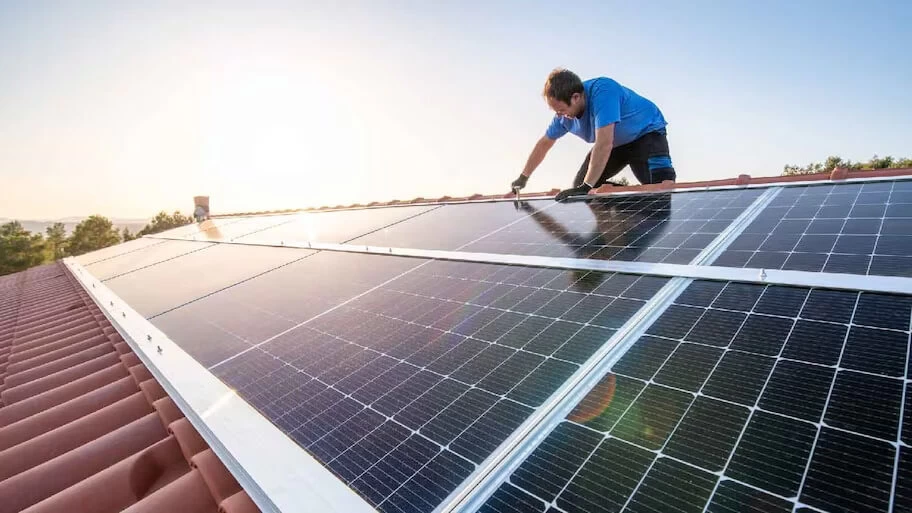
Here are some steps and tips on how to access and inspect your solar panels:
Turn off the power supply
Before you access your solar panels, you need to turn off the power supply to your solar system. This will prevent any electric shocks, short circuits, or fire hazards. You can do this by switching off the main breaker or disconnect switch, or by following the manufacturer’s instructions. You should also wear rubber gloves and shoes, and avoid touching any wires or cables.
Use a sturdy ladder
If your solar panels are mounted on the roof, you need to use a sturdy ladder to access them. Make sure the ladder is stable, secure, and long enough to reach the panels safely. You may also need a helper to hold the ladder for you or to hand you the tools and materials. You should also wear a harness, a helmet, and a safety rope, and avoid climbing the ladder when it is wet, windy, or dark.
Secure the hose
If you are using a hose to rinse your solar panels, you need to secure it to the ladder or the roof. This will prevent the hose from falling, tangling, or pulling you down. You should also check the water pressure and temperature before using the hose, and avoid spraying the water directly onto the panels or the wires.
Inspect the panels
Once you access your solar panels, you need to inspect them for any signs of dirt, dust, debris, bird droppings, or other contaminants. You should also look for any cracks, chips, or loose connections that could affect the performance or efficiency of the panels. You can use a cloth or a brush to remove any loose dirt or debris, and take note of any areas that need more attention or repair.
Step 4: Rinse and wash your solar panels
The fourth step to clean your solar panels is to rinse and wash them. This is the main part of the cleaning process, where you will remove any dirt, dust, debris, bird droppings, or other contaminants from the surface of your solar panels.
You will need to use water and detergent, as well as a sponge, a brush, or a squeegee.
Here are some tips on how to properly rinse and wash your solar panels:
Rinse the panels first
The first thing you need to do is to rinse your solar panels with water to loosen and remove the majority of the contaminants.
You can use a garden hose with a spray nozzle, a pressure washer set to the lowest pressure and widest nozzle tip, or a garden sprayer or bottle to do this. Be sure to start from the top of the panels and work your way down, covering the entire surface of the panels.
Also avoid using too much pressure or force over one spot for too long, as this could force water into a small opening or wiring connector.
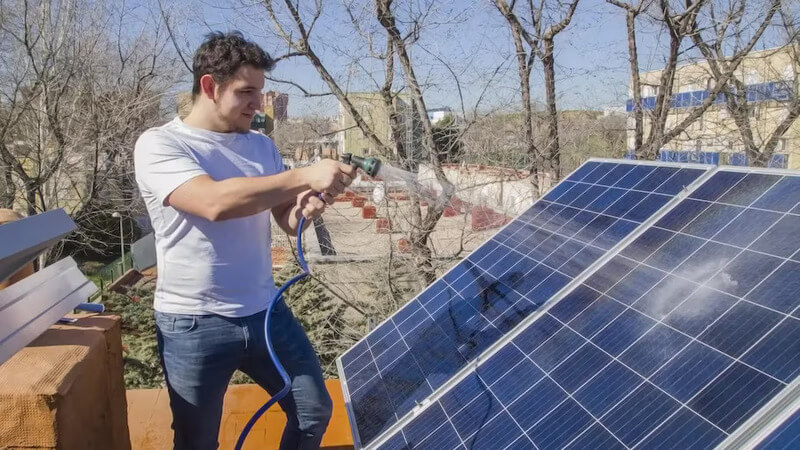
Wash the panels with soap
The next thing you need to do is to wash your solar panels with water and detergent.
You can use a bucket, a sponge, or a soft brush to do this. The purpose of washing is to remove any dirt, dust, debris, bird droppings, or other contaminants from the surface of the panels.
You should mix some mild detergent with water in the bucket, and dip the sponge or the brush in the solution. You should then gently scrub the panels with the sponge or the brush, using circular motions and applying even pressure.
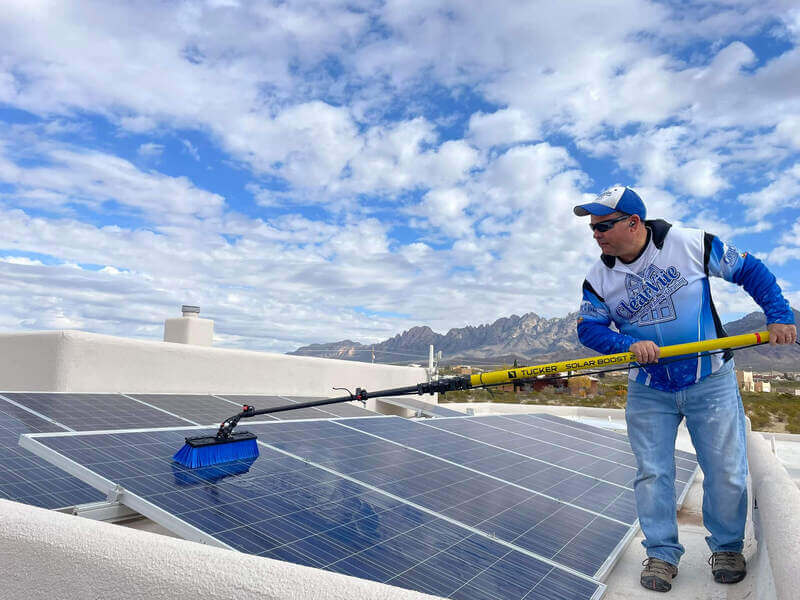
You should also pay attention to any areas that are more dirty or stained, and use a scrubber or a scouring pad if necessary.
Avoid using any abrasive or corrosive substances, such as bleach, ammonia, or alcohol, as they could harm the panels or the wires.
Squeegee the panels dry
The last thing you need to do is to squeegee your solar panels.
You can use a squeegee, a cloth, or a microfiber cloth to do this.
The purpose of squeegeeing is to dry and polish the panels, removing any excess water, streaks, spots, or residues. You should start from the top and work your way down, wiping the panels with the squeegee, the cloth, or the microfiber cloth.
You should also use gentle pressure and smooth strokes, and avoid leaving any marks or scratches on the panels.
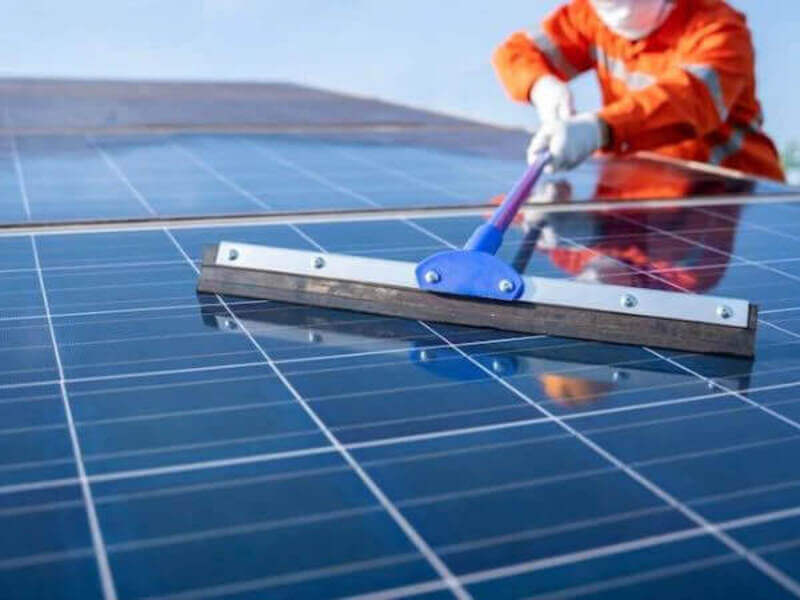
Some optional or alternative products that you may want to use to rinse and wash your solar panels are:
Vinegar solution: You may want to use a vinegar solution to rinse and wash your solar panels. This is a natural and eco-friendly method that can help you remove any hard water deposits or mineral buildup from the surface of the panels. You can make a vinegar solution by mixing one part of white vinegar with three parts of water in a spray bottle. You can then spray the solution onto the panels and let it sit for a few minutes. You can then rinse the panels with water and squeegee them as usual.
Electrostatic or ultrasonic cleaning: You may want to use an electrostatic or ultrasonic cleaning system to rinse and wash your solar panels. This is a novel and innovative method that can help you clean your solar panels without water or detergent. An electrostatic cleaning system uses an electric charge to attract and remove the dirt and dust from the surface of the panels. An ultrasonic cleaning system uses sound waves to create tiny bubbles that burst and dislodge the dirt and dust from the surface of the panels. These systems are usually installed on the panels and can be activated remotely or automatically.
Solar panel cleaning kits: You may want to consider buying a solar panel cleaning kit. A solar panel cleaning kit usually includes a pole-mounted brush that attaches to a hose, allowing you to scrub and rinse your panels from the ground or reach further distances while on the roof. Some kits also come with a squeegee, a cloth, a detergent, or a water deionizer. A solar panel cleaning kit can help you save time and money, as well as improve the efficiency and lifespan of your panels. Some of the solar panel cleaning products and kits we recommend are…

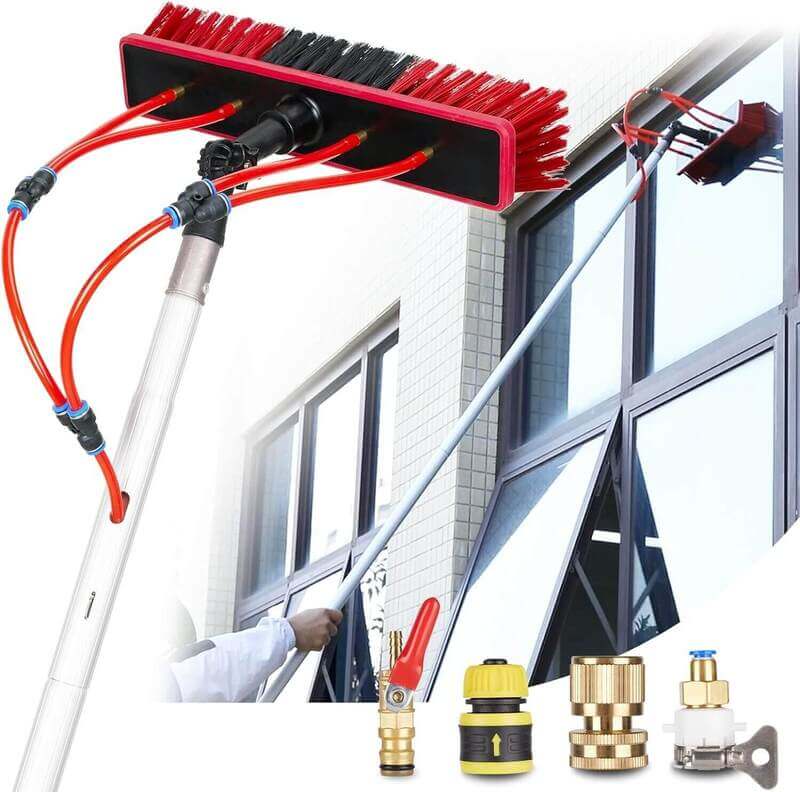
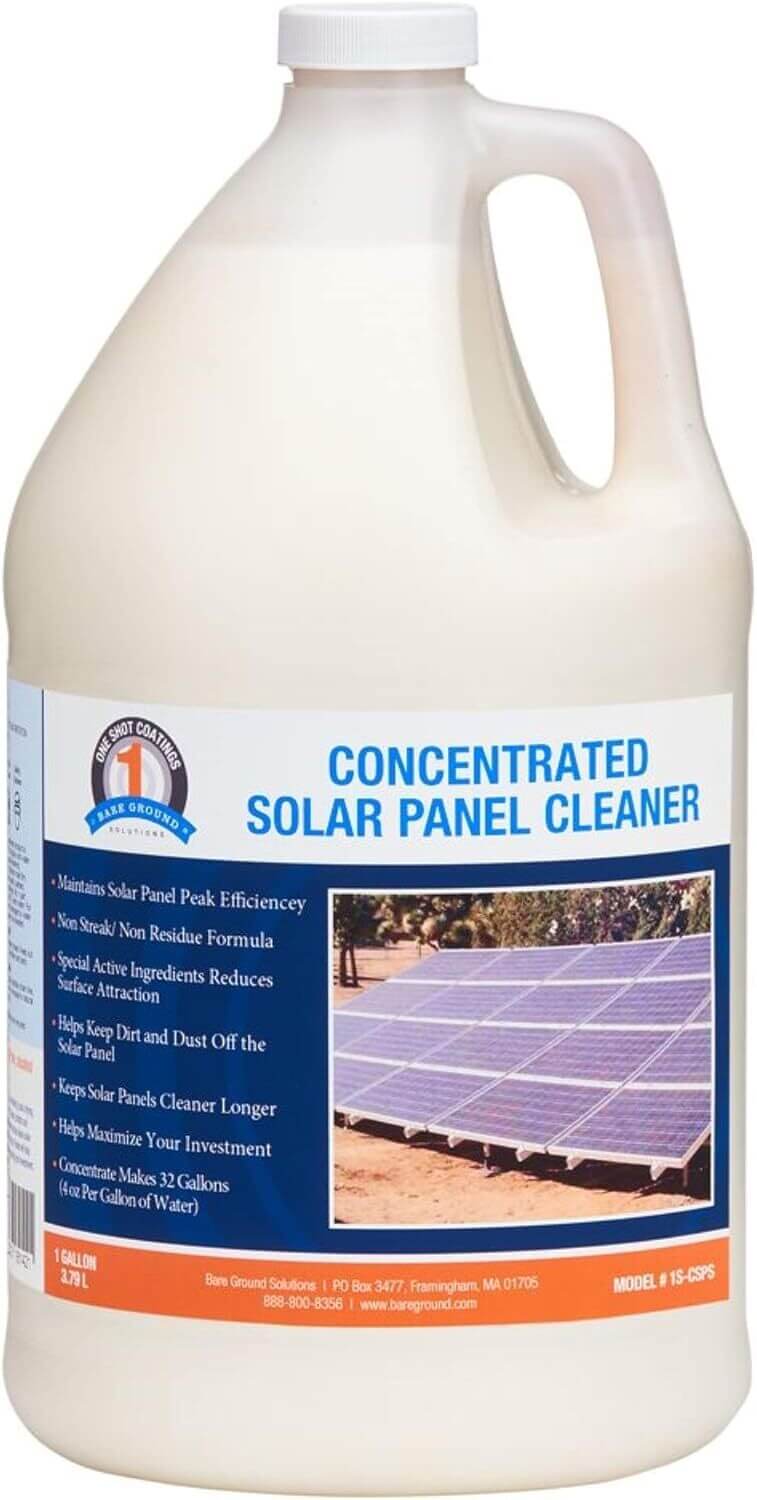
Bare Ground Winter Bare Ground Solutions Solar Panel Cleaner Concentrate

VITEVER Professional Window Squeegee Cleaner Tool
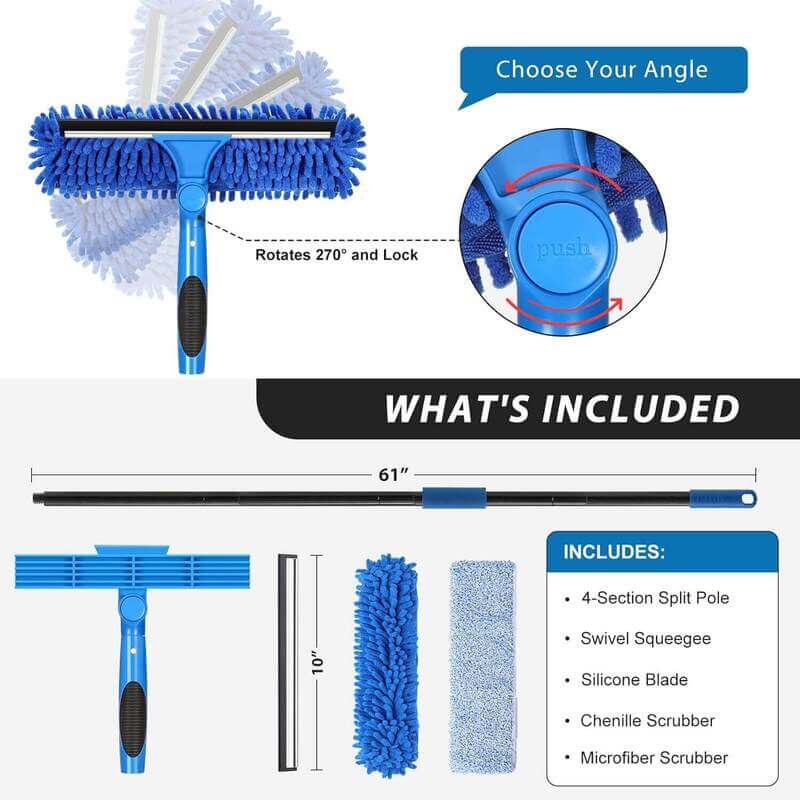
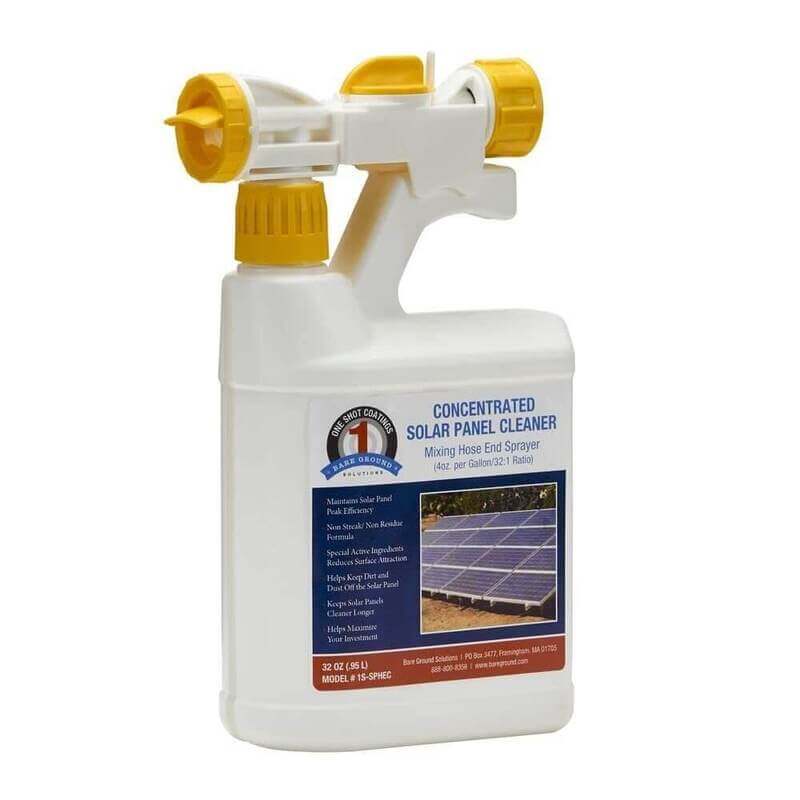
One Shot 1S-CSPC Solar Panel Cleaner Concentrate

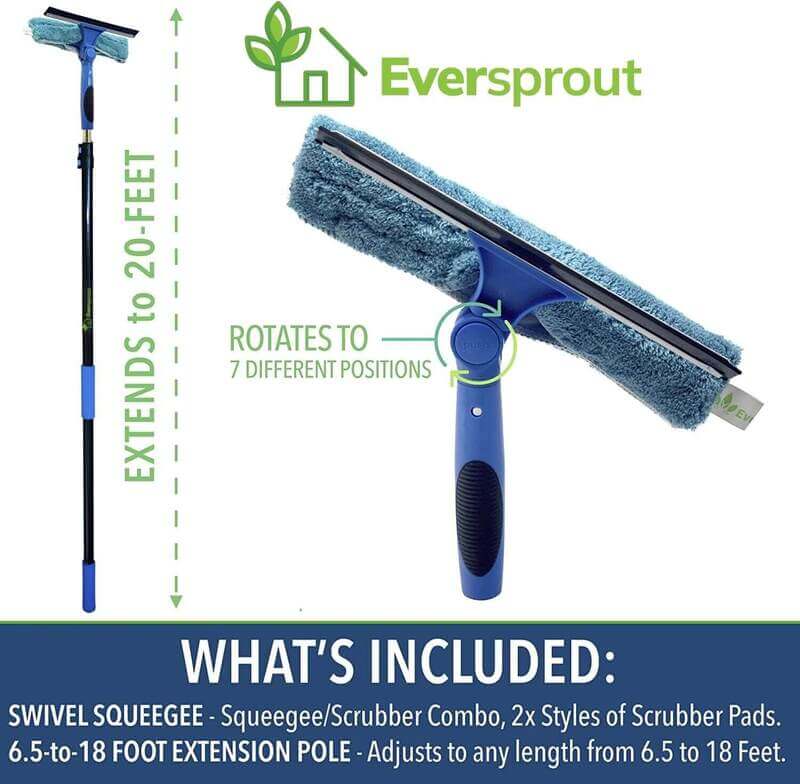
EVERSPROUT Swivel Squeegee & Microfiber Glass Window Scrubber

We also have a complete list of additional off grid tools and off grid products including complete solar systems from Bluetti and Anker.
Step 5: Check and test your solar panels
The fifth and final step to clean your solar panels is to check and test the system after cleaning the panels.
This is important because you need to make sure that your solar panels are working properly and efficiently after the cleaning process.
You also need to look for any issues, damages, or malfunctions that could affect the performance or safety of your solar panels.
Turn on the power supply
After you finish cleaning your solar panels, turn on the power supply to your solar system. Ensure everything is working properly.
Measure the output and efficiency
Compare the output and efficiency of your panels now that they have been cleaned.
Our solar system has an online monitoring system that allows us to scroll back through its energy production history. Many of the solar systems we recommend either from Anker, Bluetti or the complete kits from The Solar Power Store in Canada, The Cabin Depot in the US or The Cabin Depot in Canada all have monitoring systems that provide very thorough details of solar production.
Look for any cracks, chips, or loose connections
The last thing you need to do is to look for any cracks, chips, or loose connections on your solar panels.
Have one last walk around before you call the job done. This will tell you if your solar panels have been damaged or displaced during the cleaning process or by any external factors. You can do this by visually inspecting the panels, the wires, and the connectors.
You should also check for any signs of corrosion, rust, or wear and tear. You should also listen for any noises like creaks or squeaks while your walking around the panels that could indicate a problem.
If you notice any issues, damages, or malfunctions on your solar panels, you need to address them ASAP. If you aren’t comfortable working on your solar system, or aren’t able to due to contract details contact your solar panel installer as soon as possible. They’ll be able to diagnose and fix the problem, and prevent any further damage or loss of efficiency.
Always follow the manufacturer’s warranty and maintenance guidelines, and keep a record of your solar panel cleaning and testing.
Conclusion
Cleaning your solar panels is an essential part of maintaining your off grid solar system. It will improve the performance, efficiency, and lifespan of your solar panels, as well as save you money and energy. By following this step-by-step guide, you will be able to clean your solar panels quickly and effectively using simple tools and materials. You will also be able to regain their maximum efficiency fast.
We hope you found this article helpful and informative. If you have any questions, comments, or feedback, please feel free to leave them below. We would love to hear from you and learn from your experience. If you enjoyed this article, please share it with your friends and family who might be interested in learning how to clean their solar panels.
Thank you for reading and happy cleaning!
FAQs
What is the best way to clean solar panels?
- The best way to clean solar panels is to use a gentle soap and water solution. Use a soft cloth or sponge to gently scrub the panels with the solution and then wash them with clean water. Do not use any strong chemicals or rough materials, as these can harm the panels. If your water is hard, rinse your panels with distilled water. Hard water can create mineral buildup on the panels, lowering their efficiency. You should also not clean your panels when it is hot. The soap can dry too fast, creating streaks on the panels. It is better to clean your panels when it is cool and cloudy.
Can you use Windex to clean solar panels?
- There is no consensus among experts on whether Windex is safe for solar panels. You should always ask your solar panel installer or manufacturer for the best cleaning method for your panels. Windex may be fine for windows, but you need to be careful when using it on solar panels. Mix Windex with water, don’t use it on panels that are hot or in the sun, and don’t use Windex with ammonia as it can harm the anti-reflective coating on some panels.
Can you use a garden hose directly on solar panels?
- Hosing off solar panels with water is usually a safe and effective way to clean them. You should do this often to keep your panels working well. Rainwater can wash off some of the dirt and debris, but not all of it. Using a hose will get rid of any extra dirt, dust, pollen, or other pollutants.
Do You have to turn off the solar system to clean the panels?
- It is very important to turn off solar panels before cleaning them, as this will protect you from any electric shocks or accidents. Solar panels produce electricity when they get sunlight, and even a little bit of leftover current can be dangerous. By turning off the system, you can avoid this risk and clean your panels safely.
How often should solar panels be cleaned?
The frequency of solar panel cleaning depends on several factors, such as the location, climate, angle, and type of the panels. Generally speaking, solar panels should be cleaned at least once or twice a year, preferably in the spring and fall. However, they may need to be cleaned more frequently if they are located in a dusty or polluted area, or if they experience heavy rain, snow, or wind.
What are the best tools and materials to clean solar panels?
- The best tools and materials to clean solar panels are those that are soft, clean, and non-abrasive, such as a sponge, a soft brush, a squeegee, a cloth, and a mild detergent. These tools and materials can effectively remove the dirt and debris from the surface of the panels, without scratching or harming them.
How much does solar panel cleaning cost?
- The cost of solar panel cleaning depends on several factors, such as the size, number, type, and location of the panels, the frequency and method of the cleaning, and the service provider. The average cost of solar panel cleaning ranges from $10 to $20 per panel, or $150 to $350 per system. However, the cost can vary widely depending on the specific circumstances and requirements.
How to prevent or reduce solar panel soiling?
- Solar panel soiling is the accumulation of dirt, dust, debris, bird droppings, and other contaminants on the surface of the panels, which can reduce their output and efficiency. To prevent or reduce solar panel soiling, some measures can be taken, such as choosing the right location, angle, and type of the panels, installing a protective coating or a self-cleaning system on the panels, or removing any nearby sources of pollution or debris. There are products (Diamond Fusion, Coating.ca, ChemiTek ) that claim to protect solar panels by creating a hydrophobic layer, like RainX on a windshield.
Can I put RainX on my solar panels?
- No. In fact RainX even says RainX should NOT be used on solar panels on their website.


