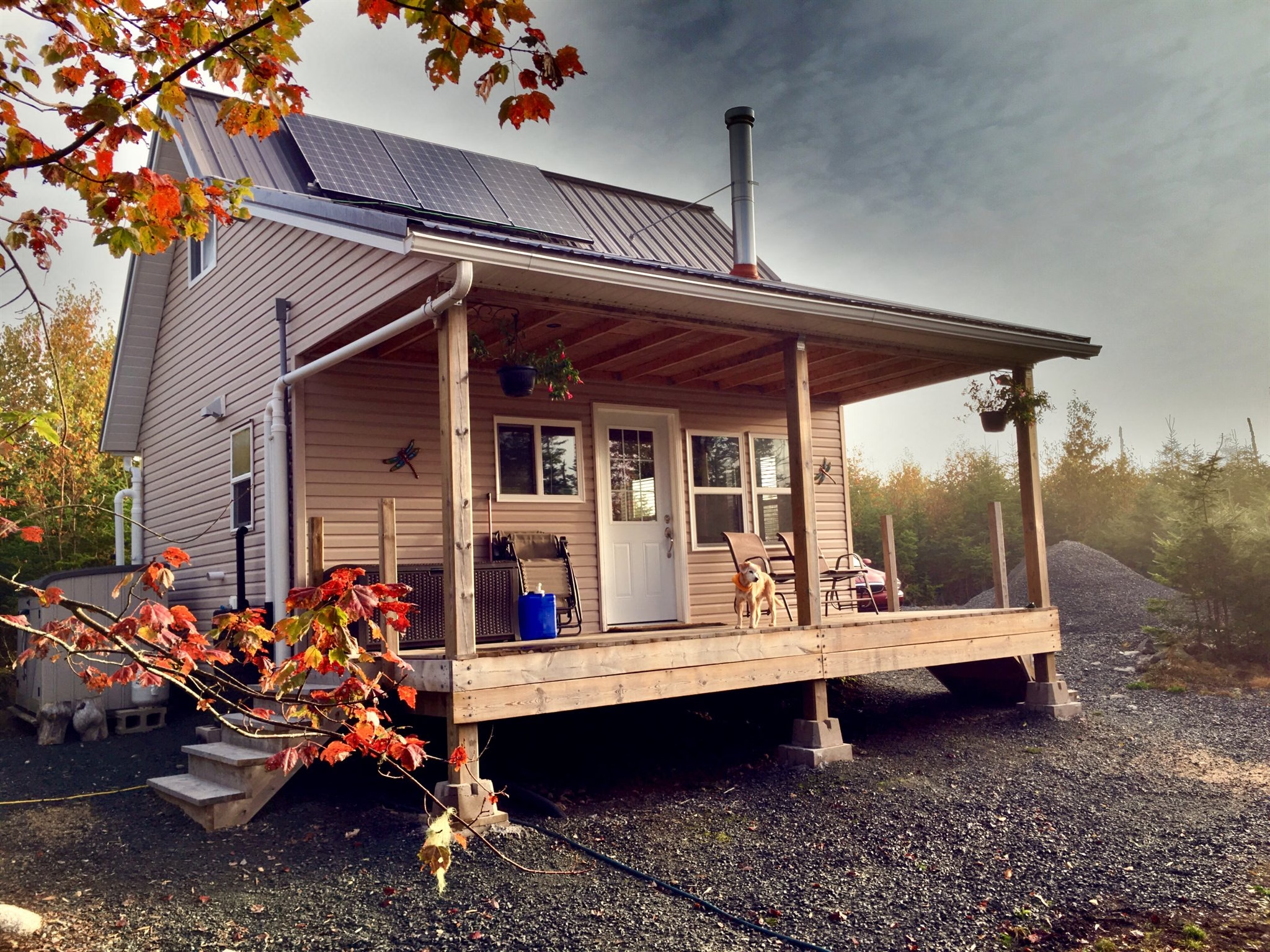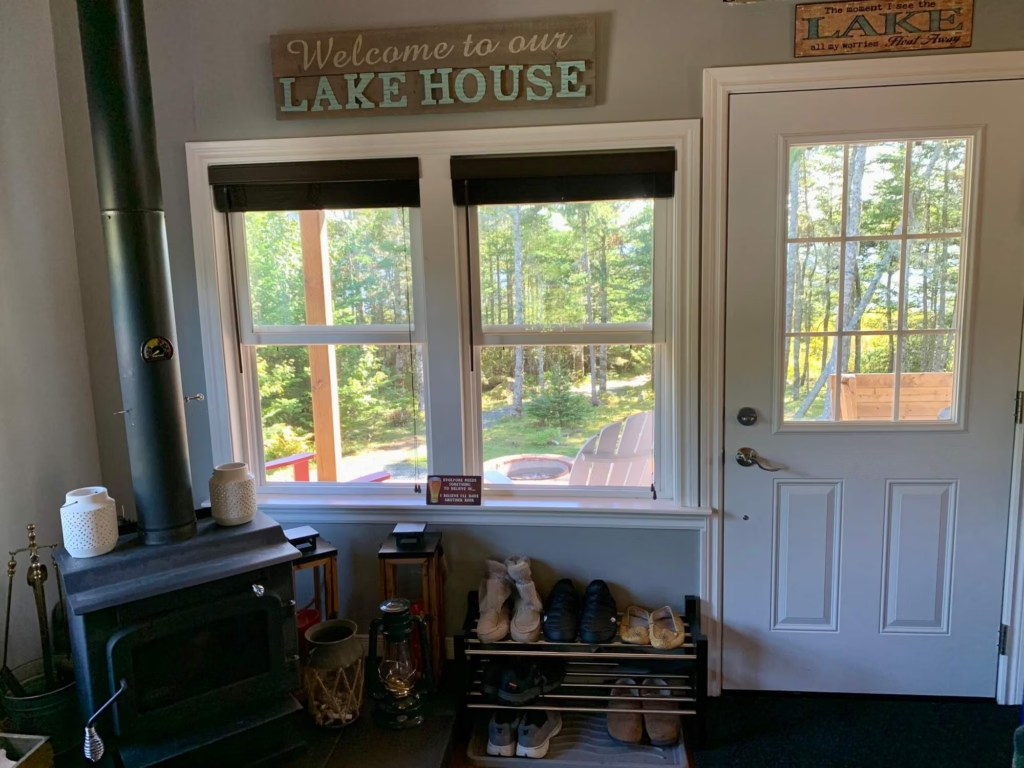
Everyday comfort, practical routines and life at our Nova Scotia cabin.
Living off grid does not have to mean giving up the comforts of home. At our cabin, solar electricity, wood heat, propane-supported heating and hot water, stored water and internet access all have a part to play.
The difference is that we take more responsibility for the things a utility company would normally handle. This page brings together our real-life stories about comfort, water, seasonal routines and the compromises behind a more independent cabin.
THE COMFORTS WE BUILT INTO CABIN LIFE
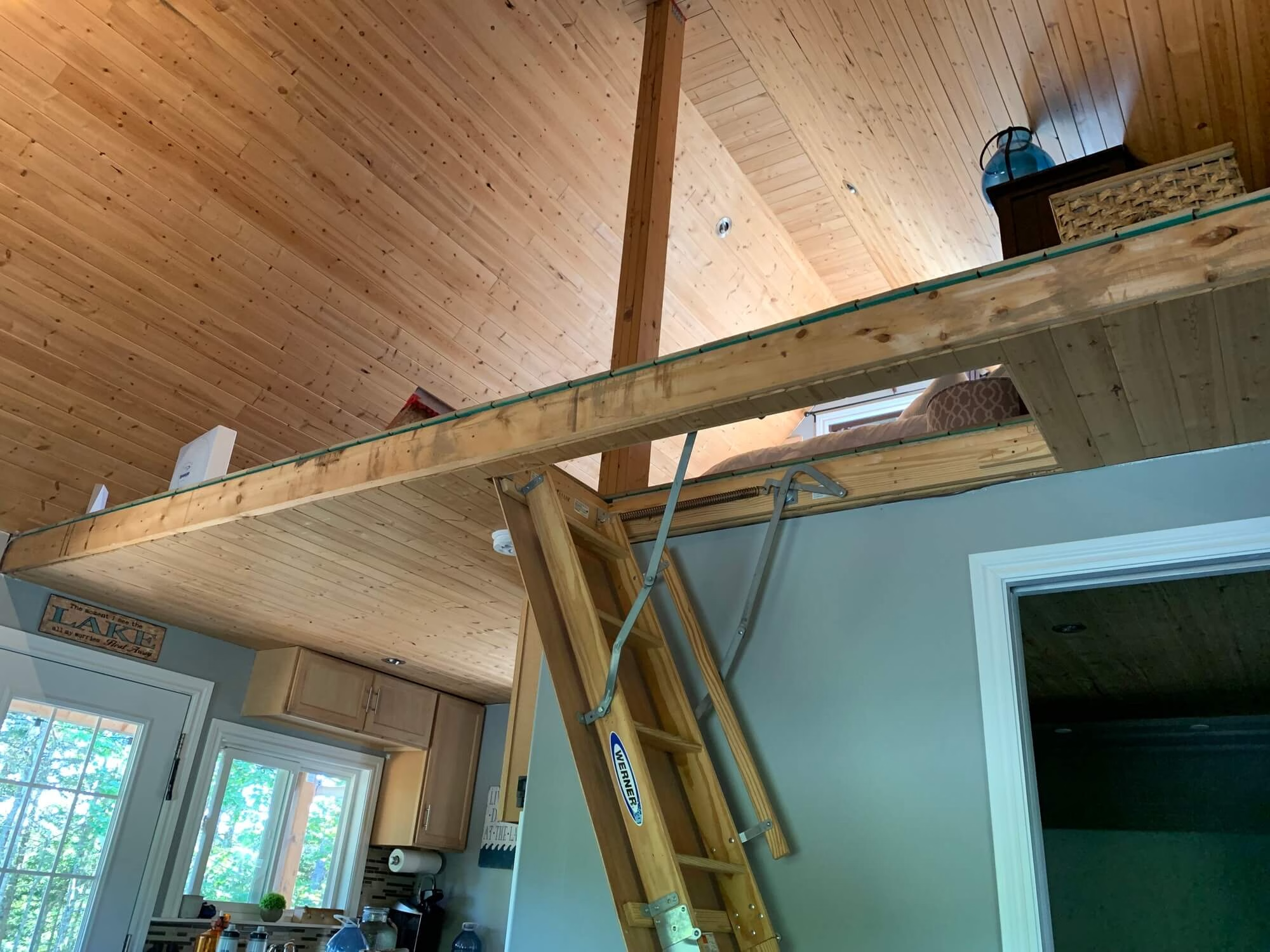
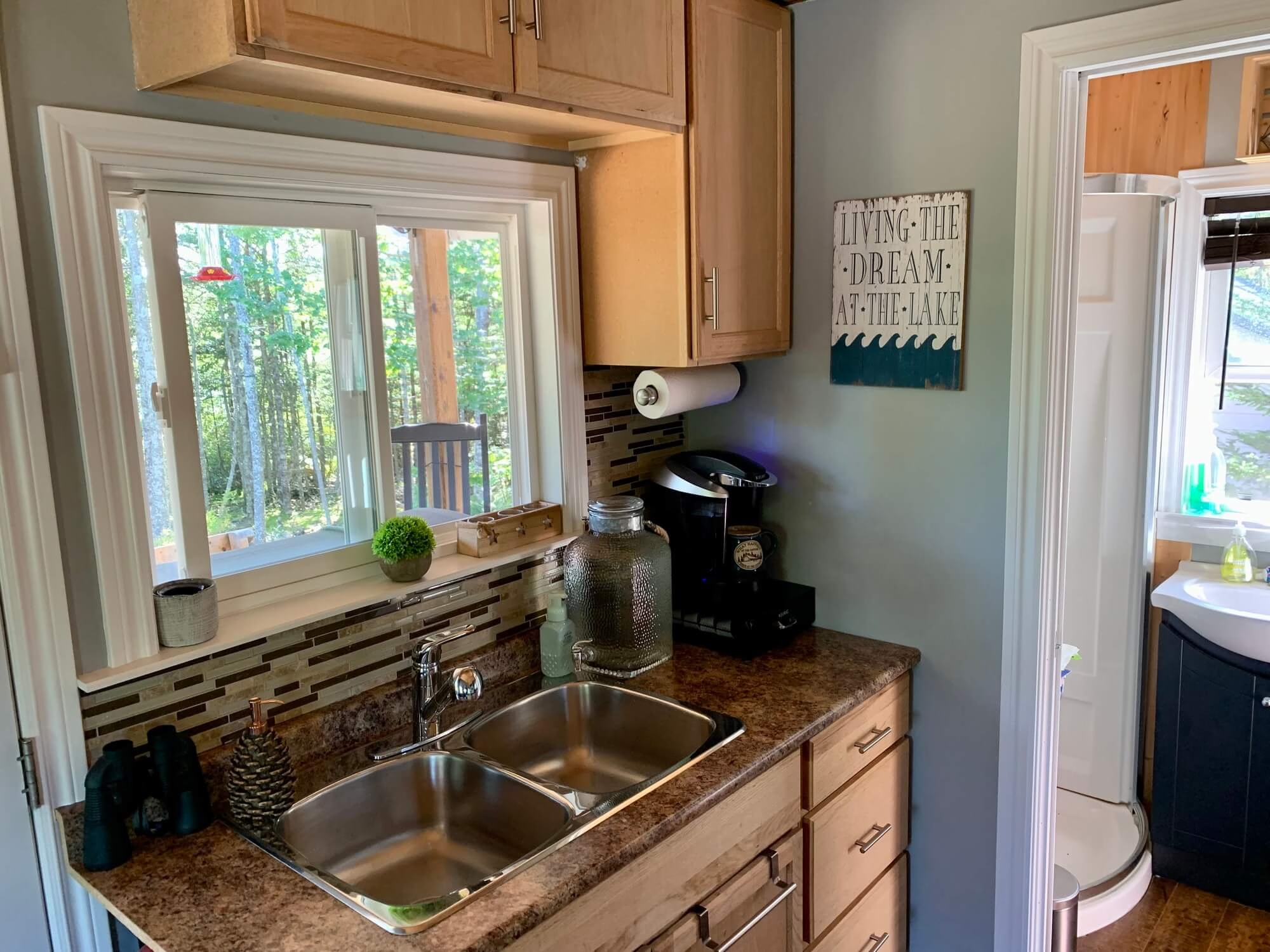
Warmth and a usable kitchen
Our wood stove provides heat when we’re at the cabin, while a direct-vent propane wall heater is part of the heating setup. Ordinary things, like preparing meals and keeping the cabin comfortable, shaped our equipment choices as much as the idea of living independently.
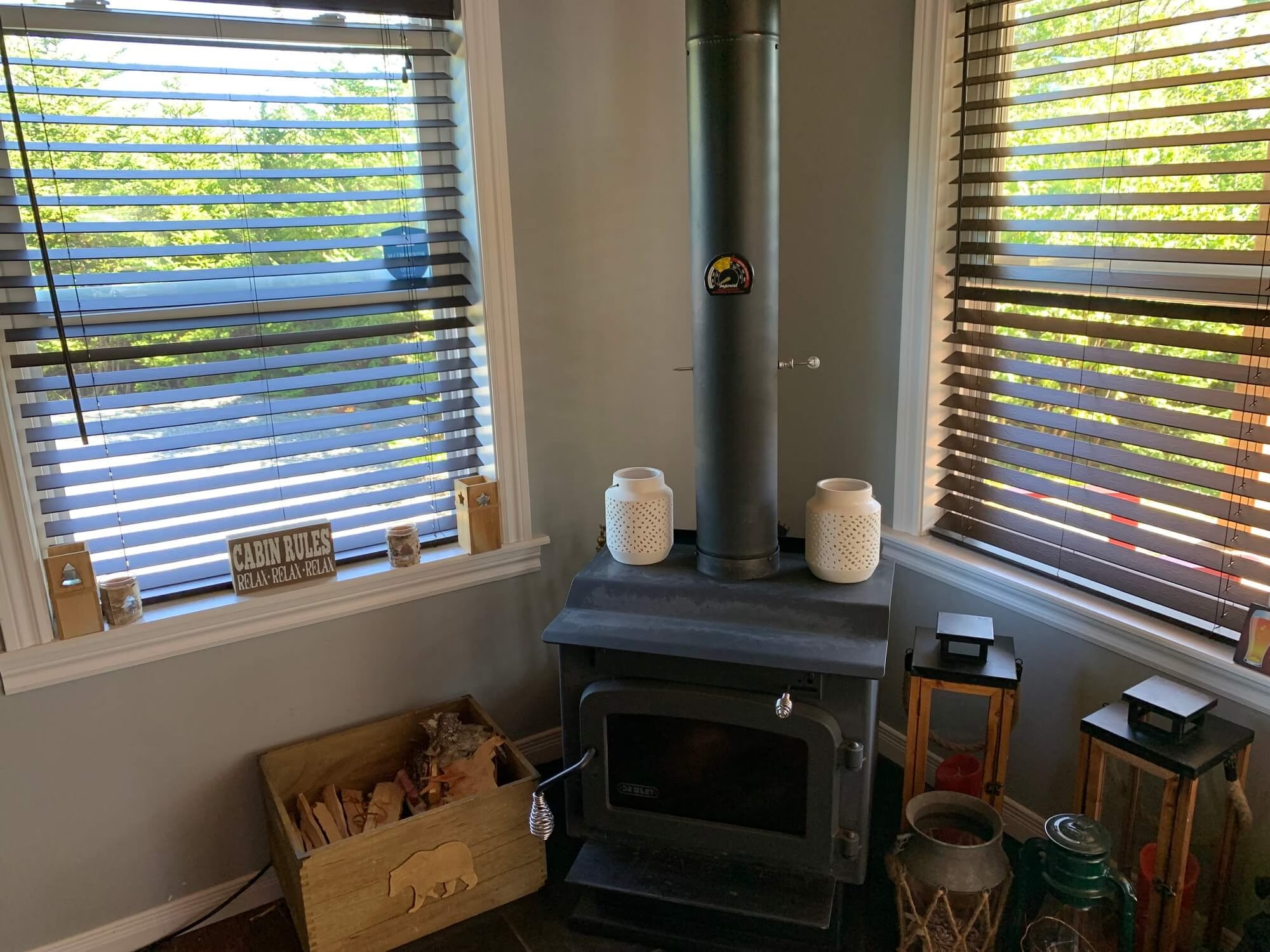
Explore our heating experience
Running water and hot showers
Water is one of the biggest differences between life on and off the grid. Our cabin has a rainwater collection system, a pump and indoor plumbing. We use collected water for household needs and have separate fresh-water storage. A propane tankless heater helps make showers and washing up more familiar.
Staying connected
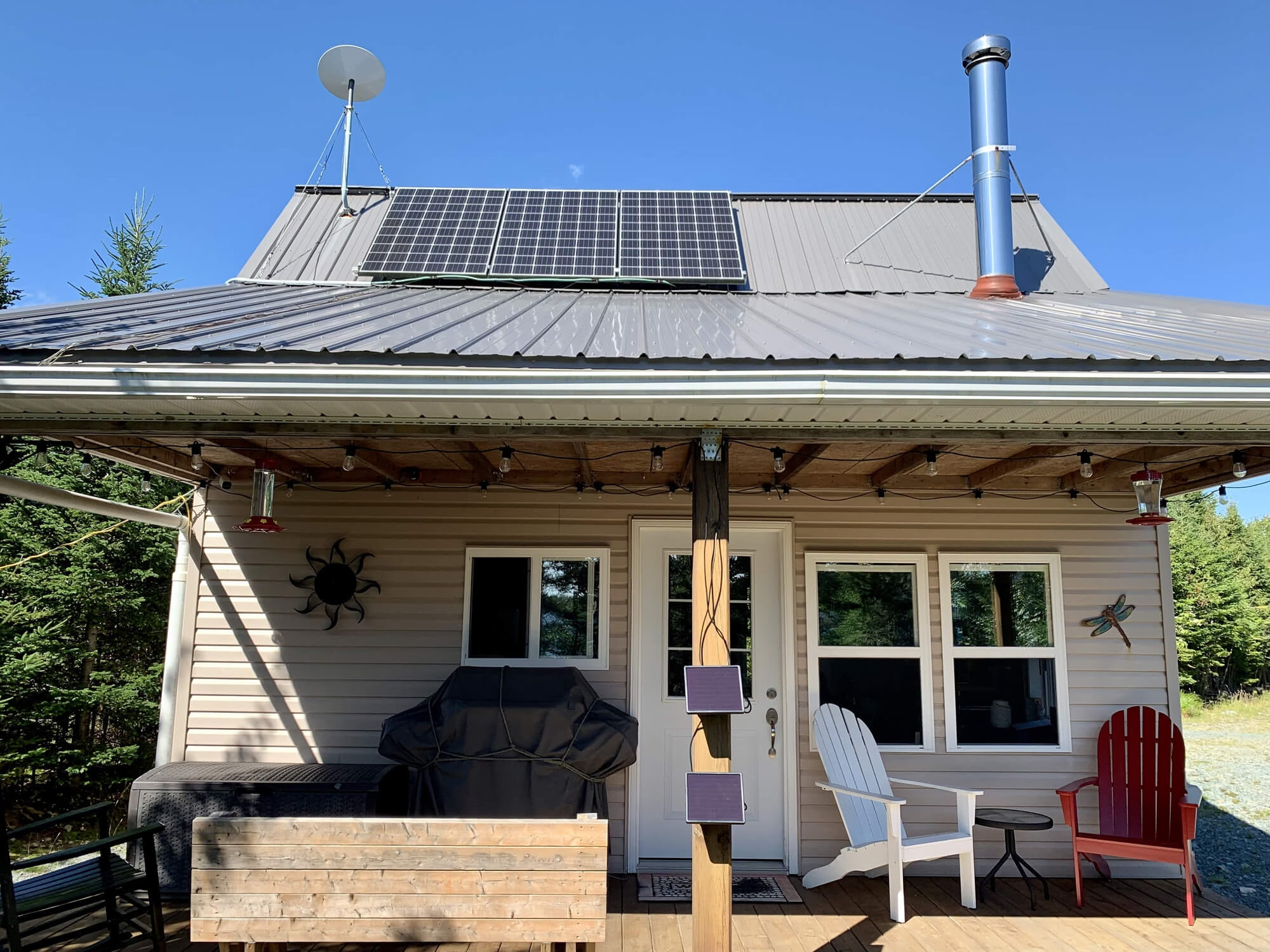
Being off grid does not mean being cut off. We’ve documented our use of Starlink for internet access and remote monitoring of cabin conditions. Connectivity has its own equipment, energy needs and costs, but it can make a remote place more practical.
Explore off-grid living basics
THE SEASONS CHANGE THE ROUTINE
Our cabin is in Nova Scotia, where conditions change considerably through the year. In warmer seasons, collected rainwater can help with washing and other household uses. In winter, our stored fresh-water supply becomes more important as outdoor water equipment faces freezing conditions.
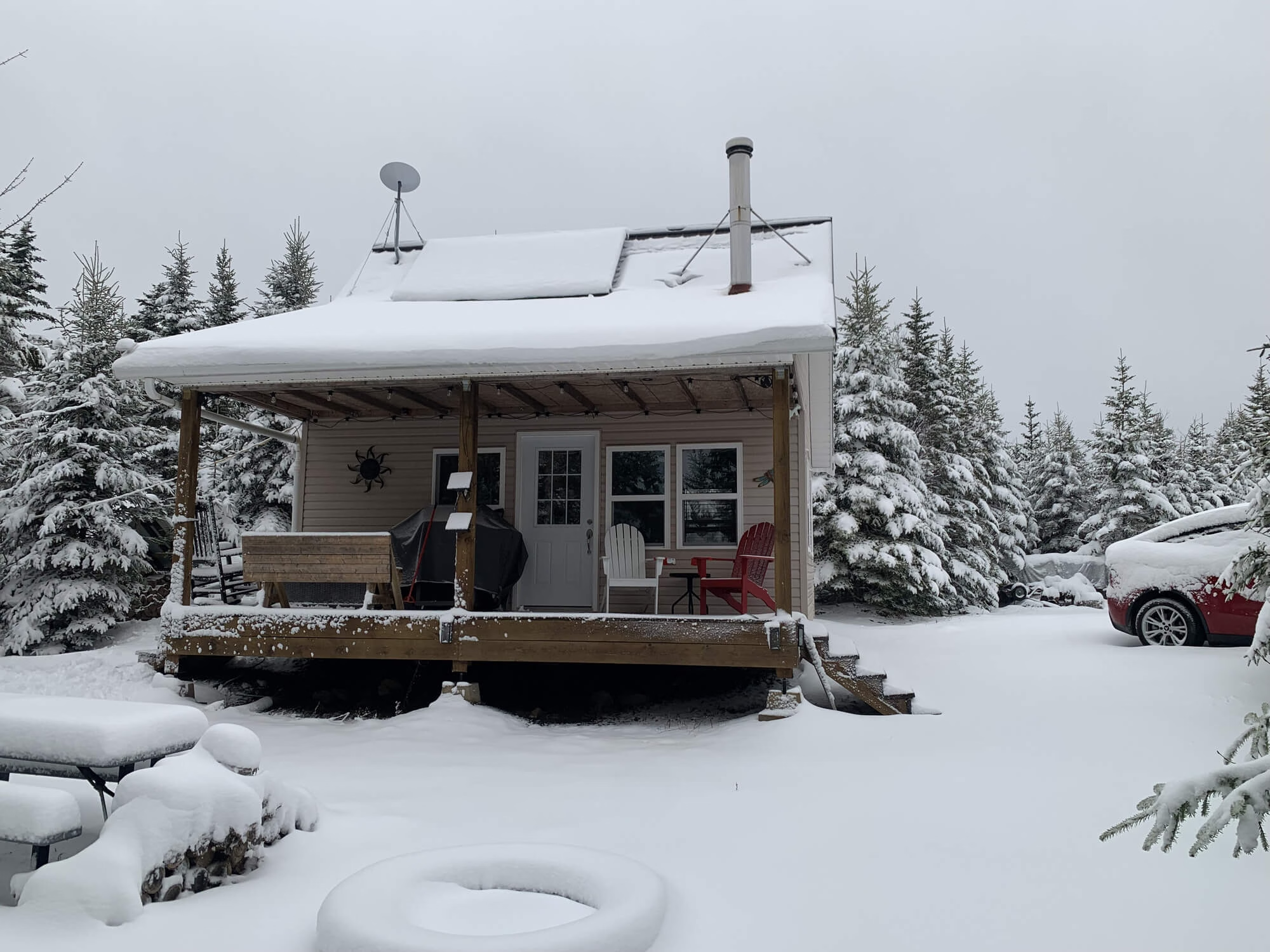
Heating fuel, water supply, solar performance and the condition of equipment are all things to think about before arriving, while staying and when leaving. The details depend on the property, the season and how often the cabin is occupied. We share our arrangements as examples from one real cabin—not as instructions that will suit every site.
THE LESS GLAMOROUS SIDE IS PART OF THE STORY
Independence brings useful choices, but it also brings practical jobs: checking how much water is available, keeping up with heating fuel, inspecting equipment and knowing which conveniences depend on electricity or propane.
That is not a reason to avoid off-grid living. It’s a reason to plan around the daily reality rather than an idealised picture of it.
EXPLORE AT YOUR OWN PACE
If you’re beginning to explore life off grid, start with the practical questions: How will the cabin stay warm? Where will water come from? Which appliances matter most? What changes in winter? The articles above walk through how we approached those questions.