


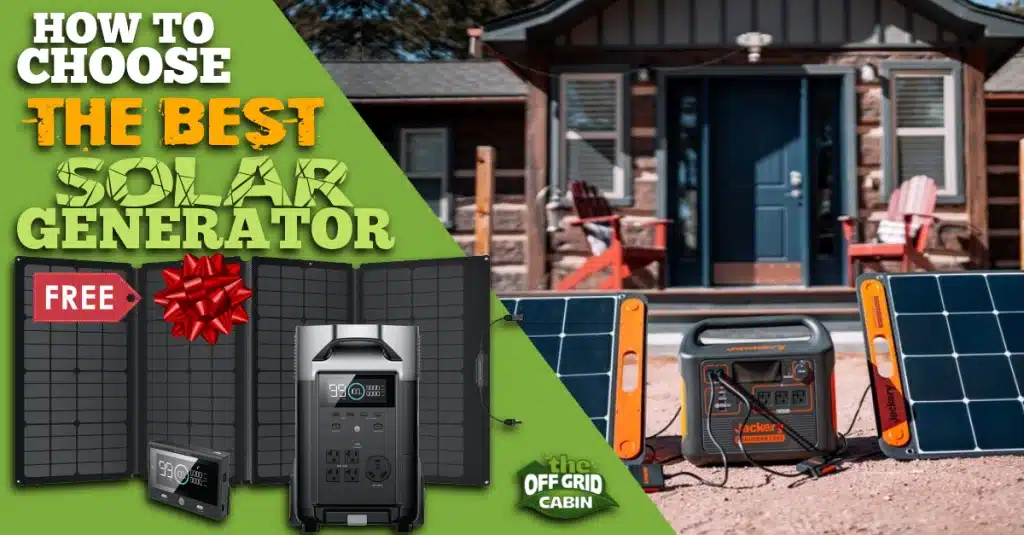
How To Find The Best Solar Generator
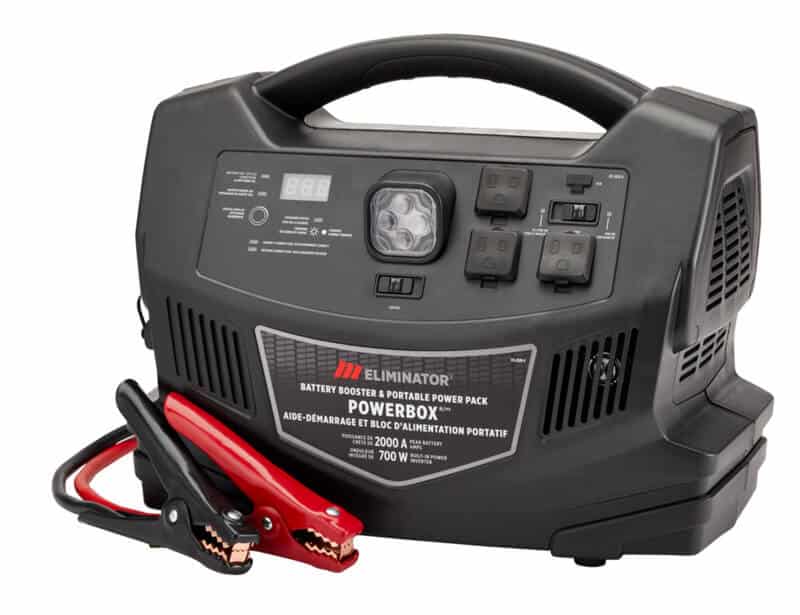
When we first cleared the land to build our off grid home back in 2016, we started with one of those small 700 watt Moto Master Eliminator Power Box from Canadian Tire that we used to keep our cordless tools charged during the day. That’s about the limit of use for this sized device on a build site. The advanced and much more powerful solar generators of today just weren’t available quite yet and we didn’t own a gas generator… yet.

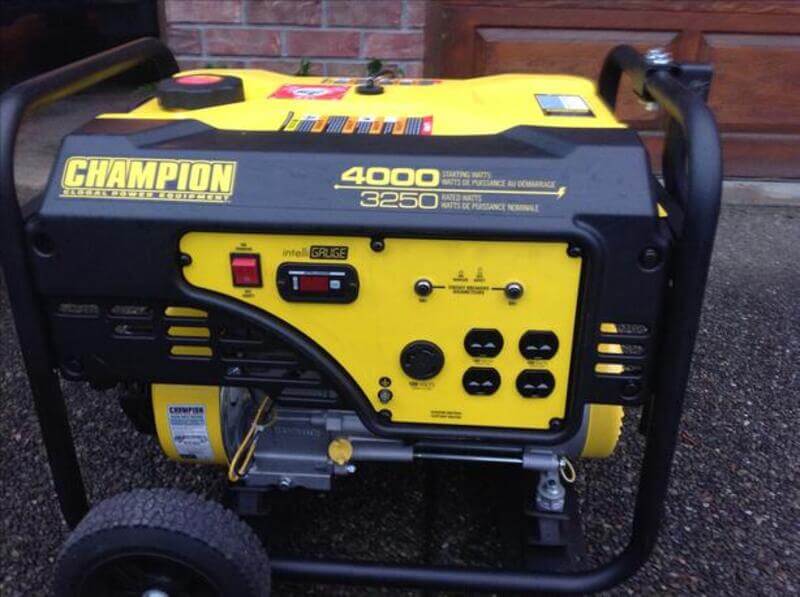
Next we bought a 3250 watt Champion generator that would run most of the day nonstop to power our compound miter saw, skill saw, charge up our cordless nail gun and recharge the cordless tools. You can check out our entire off grid tool list here.

While we did indeed cut a lot of lumber using that gas generator, it would have been so much better to have a power delivery system that met certain criteria…
- Silent
- Draws power only when a tool trigger is pulled
- Continuously recharged by the sun while still operating
- Portable enough to bring home to recharge for the next day
Fast forward to today and a lot has changed in battery technology since then. Now we have solar generators that can serve as the electrical backbone for an entire build site for several consecutive days. Best of all, it can then be used to power the home afterwards. At last we have a reliable, portable, silent, fully rechargeable and ample power supply for every off grid enthusiast, homesteader, camper or cabin builder.
Welcome to the world of Solar Generators!

Table of Contents
- Introduction To Solar Generators
- What is a Solar Generator and How Does it Work?
- What are the Benefits of Using a Solar Generator for Off Grid Living?
- Clean and renewable energy
- Low maintenance and easy to use
- Cost-effective in the long run
- Reliable and versatile
- What are the Different Types and Features of Solar Generators?
- Stationary Solar Generators
- Solar Generator Features
- Size
- Capacity
- Functionality
- Expandability
- Modularity
- Compatibility
- Portability
- Display
- Safety
- How to Choose the Best Solar Generator for Your Off Grid Living Needs?
- Total Output Wattage
- Energy Storage Capacity
- Efficiency
- Durability
- Portability
- Price
- Quality
- Features
- What are the Best Solar Generators Available on the Market Today?
- Anker SOLIX C1000 Solar generator
- Goal Zero Yeti 1500X
- EcoFlow Delta 2
- BLUETTI AC200P
- Anker SOLIX F2600 Solar Generator
- Conclusion
- FAQs
- Q: How long can a solar generator last?
- Q: How do I charge a solar generator?
- Q: How much does a solar generator cost?
- Q: How do I install a solar generator?
- Q: How do I maintain a solar generator?
- Q: What are the drawbacks or limitations of using a solar generator?
- Q: What are some best practices and tips for solar generators?
- Q: Where can I buy a solar generator?
Introduction To Solar Generators

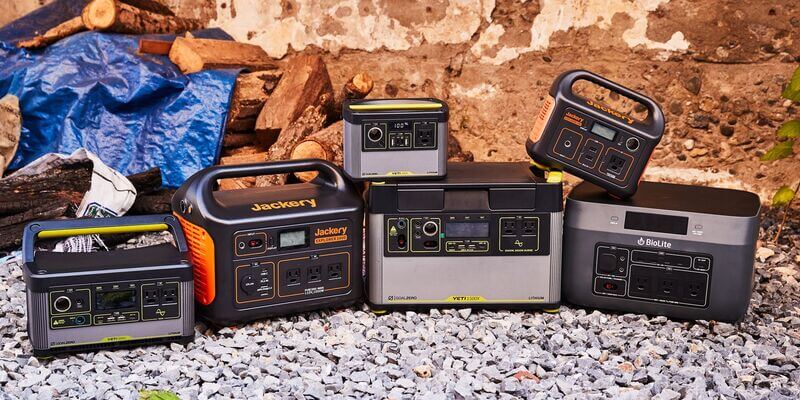
If you’re interested in off grid living or perhaps building your own off grid home, you already know that one of the biggest challenges is finding a reliable and sustainable source of power during and after your build. You never want to depend on the grid, which can be unreliable, expensive, or just plain unavailable in remote areas. You also don’t want to rely on fossil fuel generators, which are harmful to the environment, require ongoing maintenance, costly fuel and generate excess heat/noise.

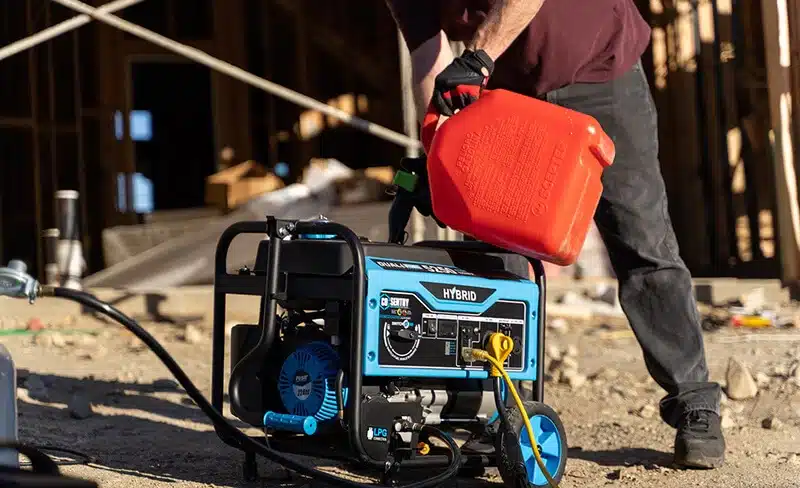
One of the best solutions is to use a portable solar generator. The concept of a portable solar generator is very similar to the gas generator we’re all familiar with.
However, they run on electricity instead of gas or propane. Think of a portable solar generator as a compact version of a full scale rooftop solar system all rolled into one or two components.
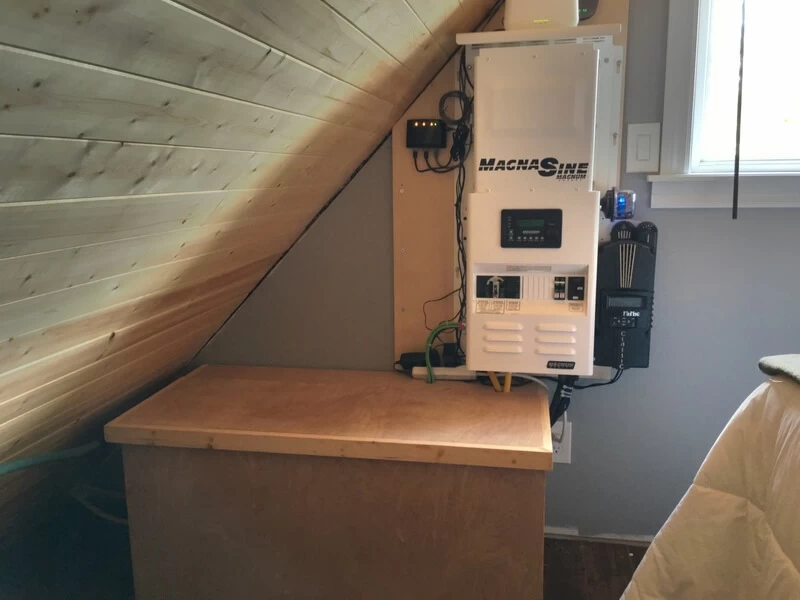
Typical full scale off grid solar systems consist of permanently mounted rooftop solar panels, a wall mounted charge controller, a wall mounted inverter, and a separate enclosure to store the batteries. All of these components are separate from one another and connected by several thick copper cable runs, fuses, disconnects and system monitoring components/computers.
We currently have three solar panels installed on out roof and the battery bank, inverter and charge controller are all in the loft. These are the solar panels on the off grid cabin.


This is our charge controller, inverter, and battery bank.

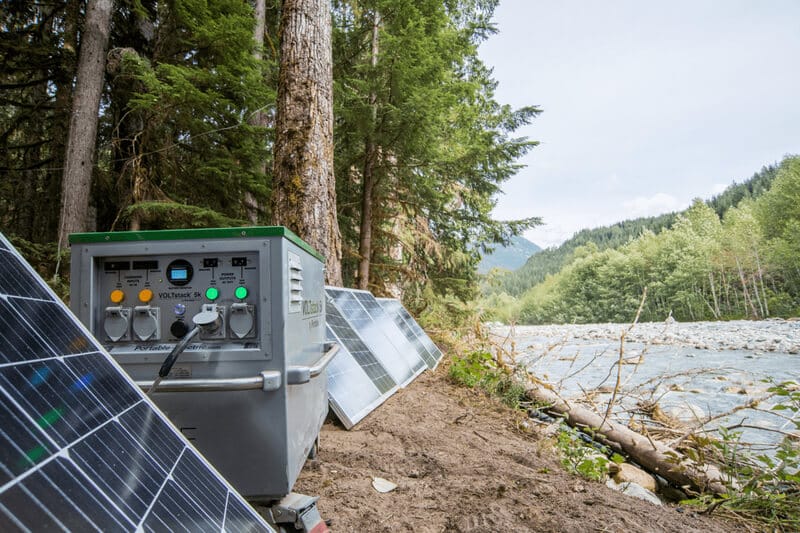
A portable or semi-portable solar generator consists of only the main solar generator assembly and solar panels which are optional.

So how exactly does a solar generator work? What are the different types and features of solar generators? And how do you choose the best solar generator for your off grid living needs?
In this article, we will answer these questions and more. We will also compare some of the top solar generators available on the market today and give you our recommendations. By the end of this article, you will have a better understanding of what a solar generator is, how it works, and which one to buy for your off grid living needs.
What is a Solar Generator and How Does it Work?

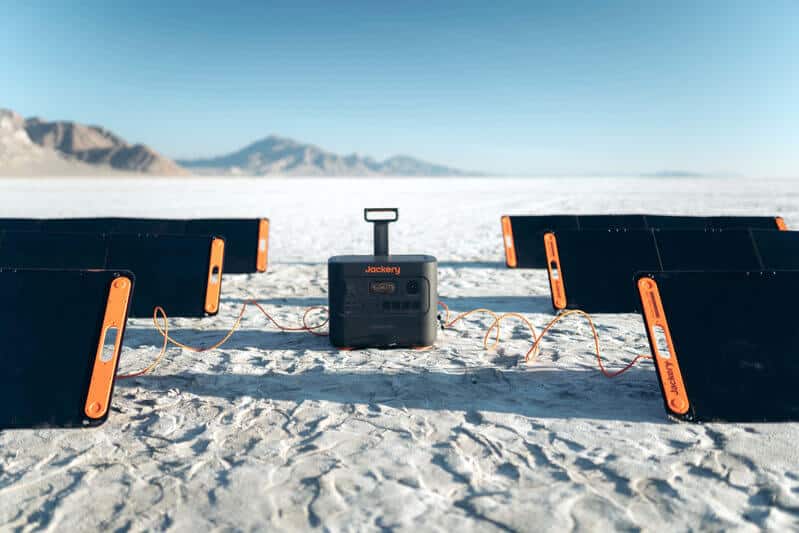
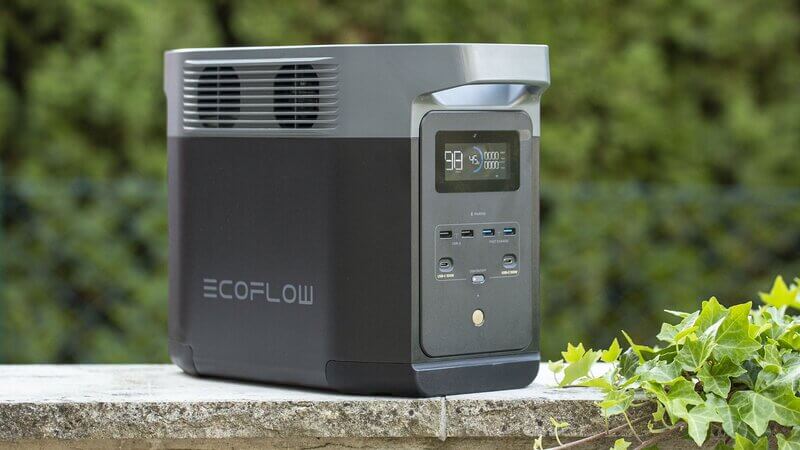
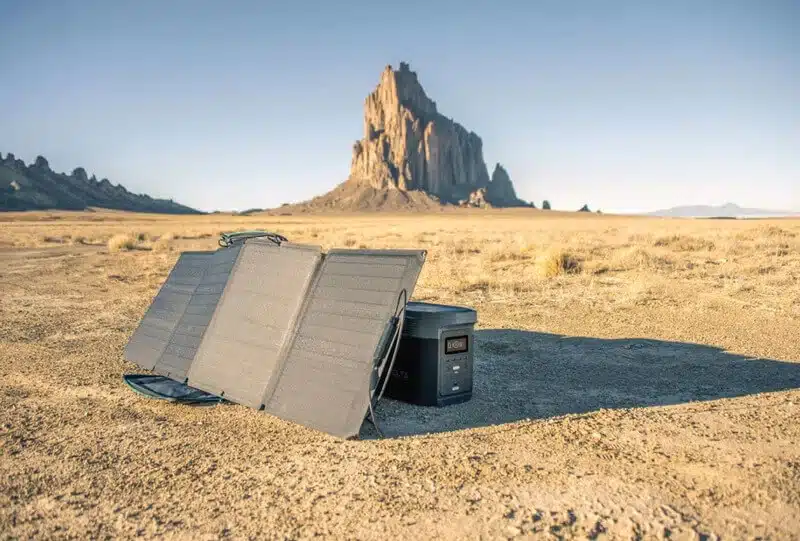
Unlike the larger permanent solar system the portable solar generator consists of just two components. The first is the main assembly which houses the battery bank, charge controller, inverter, the monitoring systems, all of the cabling and a display all in one. This is the EcoFlow Delta Portable Power Station.

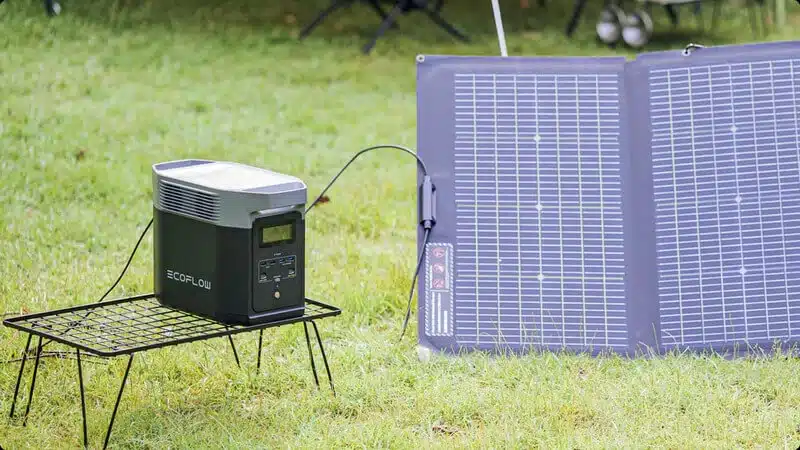
The only other component required to make this a self sustaining energy system are solar panels that are used to recharge the solar generator.
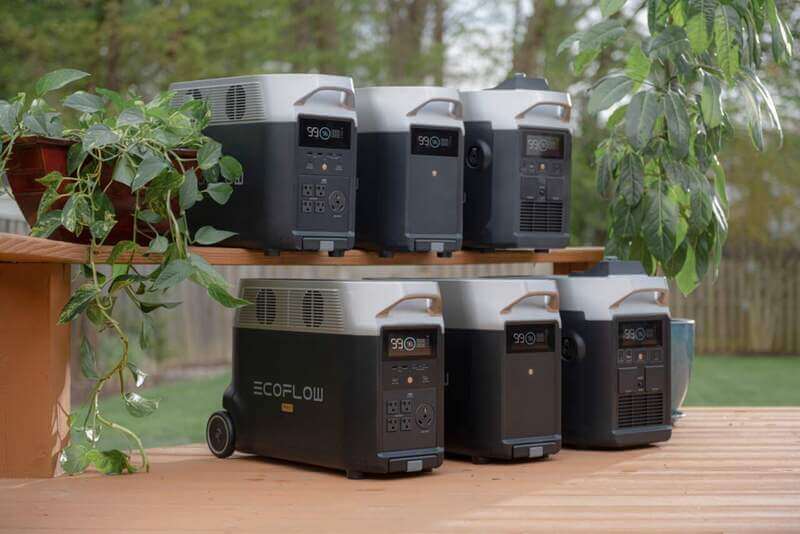
The best part is that man of these systems like the EcoFlow are expandable by adding on
to increase the systems overall energy storage capacity.

However, portable being the key word these solar generators can also be easily moved, and recharged by plugging into a typical wall socket. Meaning, you can load it into a vehicle to take it back home (or wherever) at the end of a build day or camping to recharge it, and bring it back the next day fully charged.
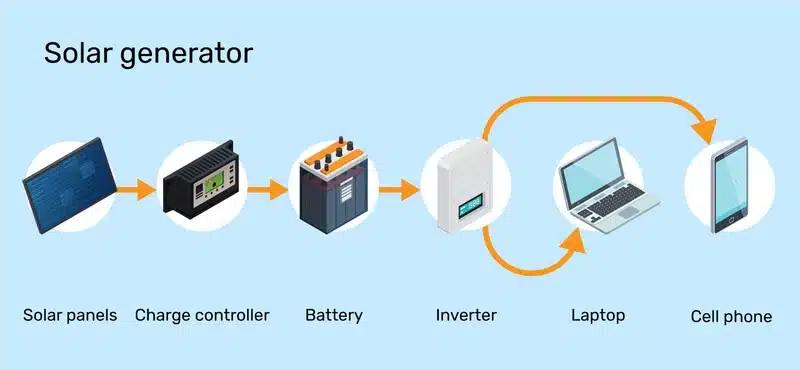
Here’s a quick refresher of the components that make up the solar generator.
- Solar panels: Solar panels are made of photovoltaic cells that absorb sunlight and convert it into direct current (DC) electricity. The amount of electricity that solar panels can produce depends on the size, quality, and efficiency of the panels, as well as the amount and intensity of sunlight they receive. Solar panels can be laid on the ground, propped up on a stand for the optimal angle or hung from a tree, and connected to the solar generator with wires.

- Battery: The battery inside most solar generators is a LiFePO4 lithium battery. It stores the DC electricity produced by the solar panels. The battery acts as a backup power source when there is no direct sunlight or when the demand for electricity exceeds the supply. The battery also regulates the voltage and current of the electricity to prevent damage to the appliances and devices. The capacity and lifespan of the battery depend on the type, size, and quality of the battery, as well as how often and how deeply it is discharged and recharged.
- Inverter: The inverter is a device that converts the DC electricity stored in the battery into alternating current (AC) electricity. AC electricity is the standard form of electricity that most appliances and devices use. The inverter also adjusts the frequency and voltage of the electricity to match the requirements of the appliances and devices. The power and efficiency of the inverter depend on the type, size, and quality of the inverter, as well as the load and demand of the appliances and devices. The inverter is usually attached to the battery or the solar panel, and connected to the appliances and devices with wires or outlets.
The solar generator works like a solar system by following these steps:
- The solar panels capture sunlight and convert it into DC electricity or the solar generator can be recharged using AC power from a wall socket.
- The DC electricity flows from the solar panel(s) to the battery through a charge controller, where it is stored and continuously monitored/regulated.
- The stored energy in the battery can then send the DC electricity to an inverter, where it is converted from DC into AC electricity.
- The AC electricity flows to the appliances and devices, where it is used to power them.

What are the Benefits of Using a Solar Generator for Off Grid Living?

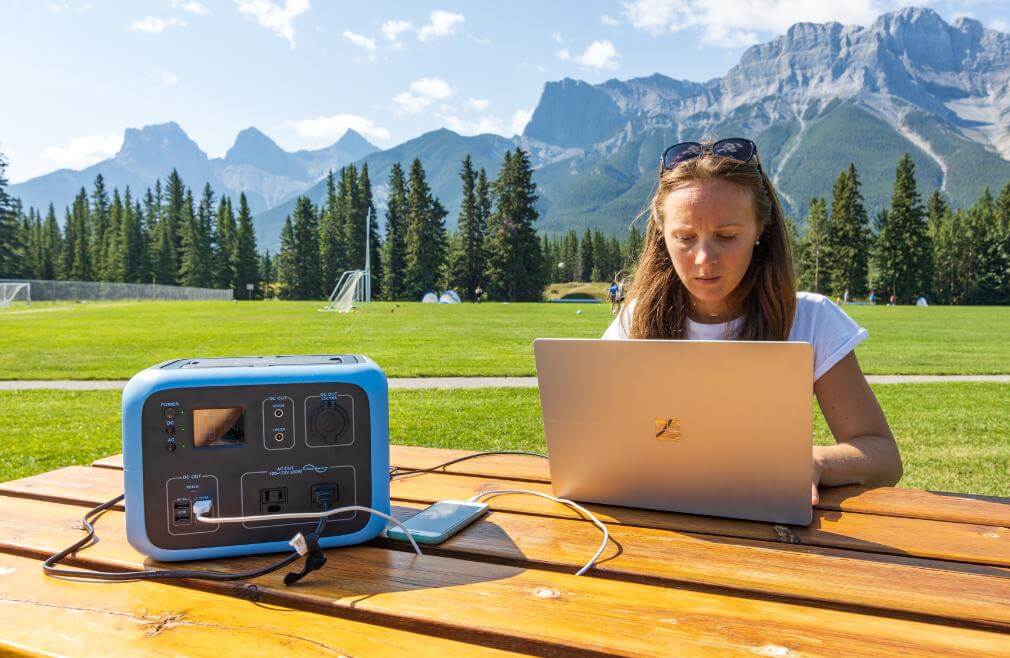
Using a solar generator for off grid living has many benefits from convenience, flexibility, low maintenance, and cost-effectiveness. The solar generators of today can easily provide enough power to sustain a small off grid home for several days. And unlike a full sized roof mounted solar system, a solar generator does not require installation, wiring, and little to no maintenance. It’s small, lightweight, and easy to relocate making it perfect for build sites as well as weekend camping getaways.
Here are some additional benefits of a solar generator for off grid living:
Clean and renewable energy
- A solar generator uses sunlight, which is a clean and renewable source of energy. It does not produce any noise, emissions, or fumes that can harm the environment or your health. It also reduces your carbon footprint and dependence on fossil fuels.
Low maintenance and easy to use
- A solar generator does not have any moving parts that can wear out or break down. It only requires minimal maintenance, such as cleaning the solar panels and checking that the generator is not stored long term with the battery level completely discharged. It is also easy to use, as it does not require any fuel, oil, spark plugs, filters, fuel stabilizer, pull cords or ventilation. You just need to plug in your appliances and devices and that’s it.
Cost-effective in the long run
- Some higher quality solar generators may have a high initial cost compared to others, but it will save you money and stress in the long run. It does not have any recurring costs like a gas powered generator. It also has a much longer lifespan, as it can last for 10 to 20 years or more with proper care and use.
Reliable and versatile
- A solar generator can provide you with a reliable and consistent source of power, even in remote areas or during emergencies. Because you are not reliant on fuel there is no requirement to drive off to a gas station with gas cans leaking and stinking up your vehicle. It can also power a wide variety of appliances and devices, such as lights, fans, heaters, refrigerators, TVs, laptops, phones, and tools. You can also customize your solar generator to suit your needs and preferences, by choosing the size, type, and features of the solar panels, and by staking some generators together to create a much larger energy storage bank.
What are the Different Types and Features of Solar Generators?
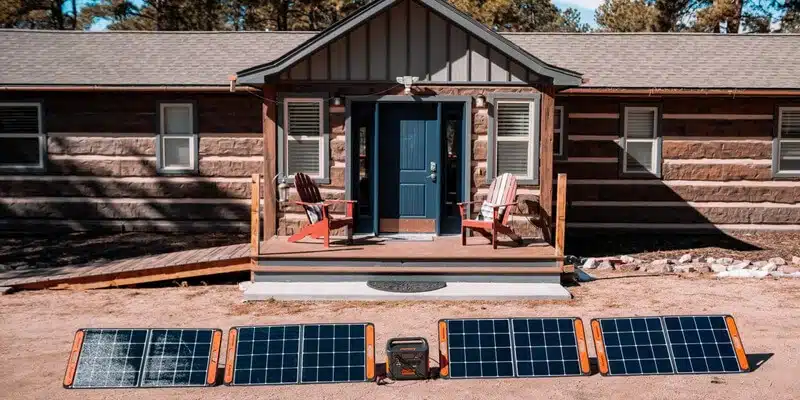
There are two main types of solar generators and it really only comes down to size/portability.
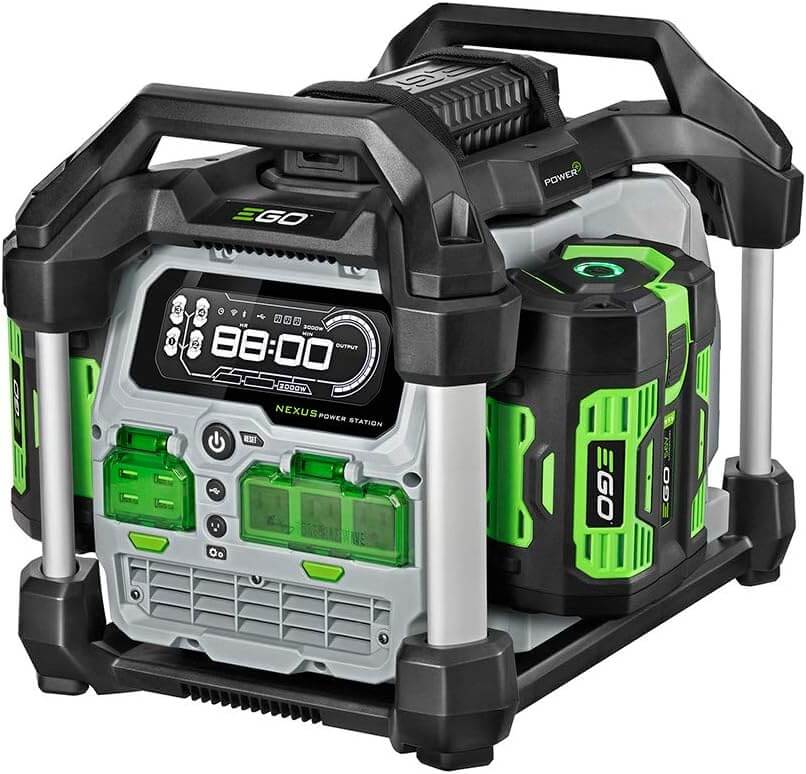
Portable Solar Generators
Portable solar generators are small, lightweight, and easy to carry and set up. They can be used anywhere and anytime you need power, such as in off grid cabins, tiny homes, RVs, or camping sites. They can power a few appliances and devices for a short time, such as laptops, phones, lights, or fans. They do not require any installation, wiring, or maintenance, but they depend on sunlight and have a limited capacity and performance. Some examples of portable solar generators are the
EGO Power+ PST3042 Nexus Portable Power Station, J
ackery Explorer 1000, the Goal Zero Yeti 1500X, and the EcoFlow River Pro.

Stationary Solar Generators
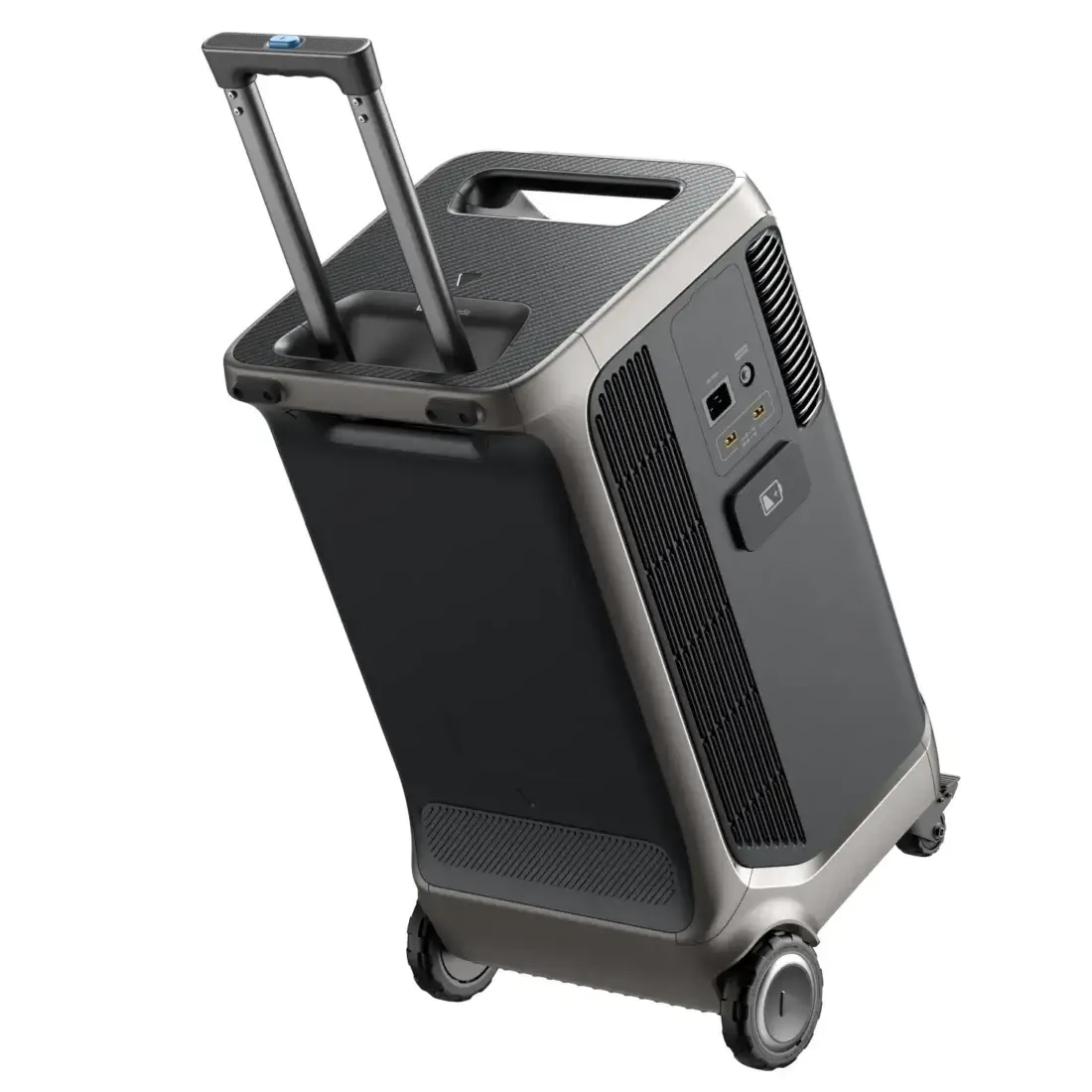
Stationary solar generators are larger, heavy, and more difficult to move. They are usually installed and wired directly to an electrical panel. They can power many appliances and devices for a long time, such as refrigerators, air conditioners, or circular saws. They require some installation, wiring, and maintenance, but they are more reliable, consistent, and powerful than portable solar generators. Some examples of stationary solar generators are the Point Zero Energy Titan Solar Generator, the Inergy Apex Solar Generator, the Humless Home Power 6.5K Solar Generator, and the
Anker SOLIX F3800 Solar Generator
.

Solar Generator Features
Size
The size of the solar generator refers to the physical dimensions and weight of the solar panels, battery, and inverter. The size of the solar generator affects the portability, installation, and storage of the solar generator. Generally, the larger the solar generator, the more power it can produce and store, but the less portable and convenient it is. The smaller the solar generator, the less power it can produce and store, but the more portable and convenient it is. You should choose the size of the solar generator based on your available space, mobility, and power needs.
Capacity
The capacity of the solar generator refers to the amount of electricity that the solar panels can produce and the battery can store. The capacity of the solar generator affects the performance, efficiency, and durability of the solar generator. Generally, the higher the capacity of the solar generator, the more appliances and devices it can power and the longer it can run, but the more expensive and heavier it is. The lower the capacity of the solar generator, the less appliances and devices it can power and the shorter it can run, but the cheaper and lighter it is. You should choose the capacity of the solar generator based on your power consumption, budget, and backup time. Here’s a handy Off-Grid Load Calculator from SolarOnline that can help you calculate the rough requirements of your electrical needs. https://www.solaronline.ca/load-calculator/
Functionality
The functionality of a solar generator refers to the features and options that model provides. solar panels, battery, and inverter offer. For the user’s convenience, they typically offer USB-A ports, USB-C ports, car cigarette lighter ports, and AC outlets that users can directly plug into, and charge their devices. Some might offer additional charging options like barrel plugs (a rounded output for outdated devices) and wireless charging to support wider ranges of devices and appliances.
Some of the common features and options of solar generators are:
Expandability
Expandability is the ability of a portable solar generator to connect to more solar panels or batteries to increase its capacity and performance. This feature allows you to customize your portable solar generator according to your power needs and preferences. For example, the Anker SOLIX F2000 and the Bluetti AC300 are both expandable portable solar generators that can be connected to multiple solar panels or batteries.
Modularity
Modularity is the ability of a portable solar generator to separate into individual units that can be used independently or together. This feature allows you to use your portable solar generator in different ways and situations. For example, the Goal Zero Yeti 1500X and the EcoFlow Delta 1300 are both modular portable solar generators that can detach their batteries and inverters and use them separately or together as needed.
Compatibility
Compatibility is the ability of a portable solar generator to work with a wide range of appliances and devices that use different voltages, currents, frequencies, and plug types. This feature allows you to power various appliances and devices with your portable solar generator without needing adapters or converters. For example, the EcoFlow Delta 1300 and the BLUETTI Portable Power Station are both compatible portable solar generators that can work with most AC, DC, USB, and USB-C appliances and devices.
Portability
Portability is the ease and convenience of moving and setting up a portable solar generator. This feature allows you to take your portable solar generator with you wherever you go and use it whenever you need it. For example, the Jackery Explorer 240 and the Rainier Outdoor Power Equipment Portable Power Station are both portable solar generators that are lightweight, compact, and easy to carry and set up.
Display
Display is the visual interface that shows the input, output, and battery status of a portable solar generator. This feature allows you to monitor and control your portable solar generator easily and accurately. For example, the EF ECOFLOW Portable Power Station and the ITEHIL Portable Power Station are both portable solar generators that have smart LCD screens that show the input, output, and battery percentage of the portable solar generator.
Safety
Safety is the protection and prevention of damage or injury to the portable solar generator, the appliances and devices, and the users. This feature allows you to use your portable solar generator safely and securely. For example, the BLUETTI Portable Power Station and the ITEHIL Portable Power Station are both portable solar generators that have outlet covers that prevent dust, water, and debris from entering the outlets. They also have built-in safety features, such as over-voltage, over-current, over-temperature, and short-circuit protection.
How to Choose the Best Solar Generator for Your Off Grid Living Needs?
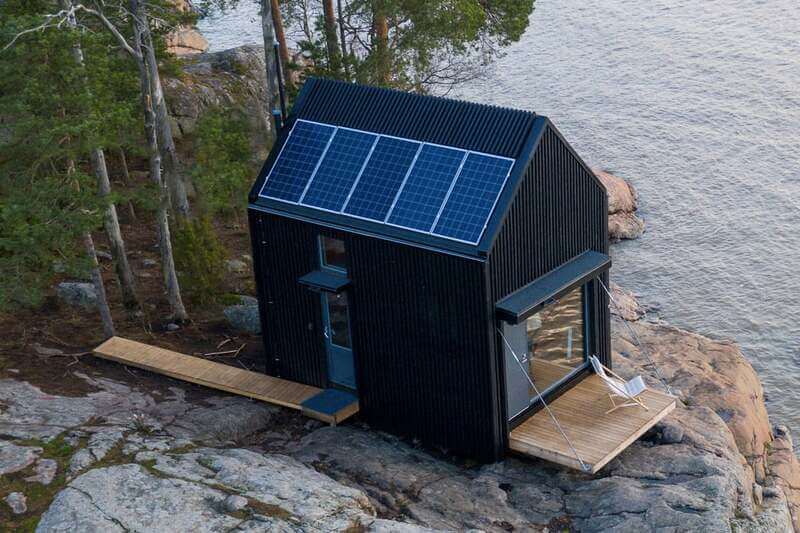
Choosing the best solar generator for your off grid living doesn’t need to be a daunting task but you do want to consider some specific factors before choosing just a solar generator advertising a large energy storage capacity. We’ve created a list with several important factors to consider when choosing a solar generator. While several companies manufacture portable solar generators, not all of them are created equal. AS you’d imagine solar generators have gained popularity enough that you’ll now see TV commercials advertising generators of every quality level. Don’t be swayed by a TV commercial. Do your own research.
Factors to consider when deciding which is the best solar generator for you:
Total Output Wattage
The wattage of a solar generator is the amount of power that it can produce and deliver to your appliances and devices. You should choose a solar generator that can meet or exceed your power needs, both in terms of total wattage and peak wattage. The total wattage is the sum of the wattage of all the appliances and devices that you want to run at the same time, while the peak wattage is the maximum wattage that your appliances and devices need to start up or run at full capacity. You can find the wattage of your appliances and devices on their labels, manuals, or online.
Energy Storage Capacity
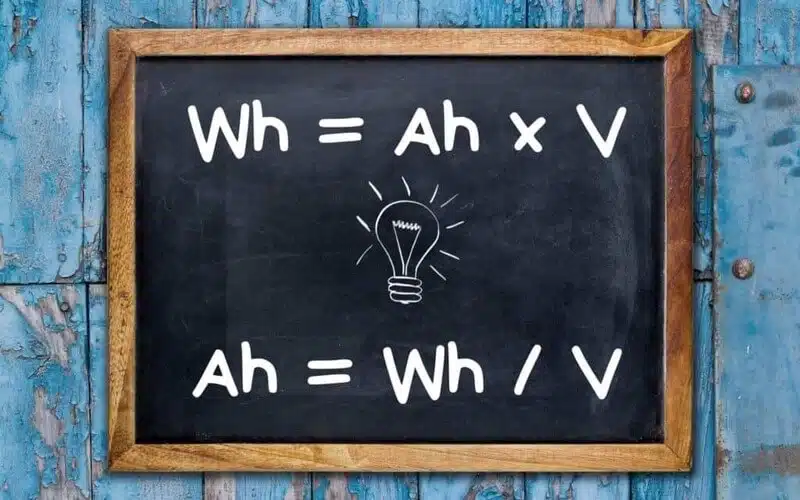
The capacity of a solar generator is the amount of power that it can store and supply to your appliances and devices. You should choose a solar generator that has a large enough battery to run your appliances and devices for as long as you need. The capacity of a solar generator is measured in watt-hours (Wh) or amp-hours (Ah), which indicate how much power the battery can provide for one hour. You can calculate the capacity of a solar generator by multiplying its wattage by its run time, or by multiplying its voltage by its amp-hours.

Efficiency
The efficiency of a solar generator is the ratio of the power output to the power input of the solar generator. You should choose a solar generator that has a high efficiency, which means that it can produce and store more power from the same amount of sunlight. The efficiency of a solar generator depends on the quality and performance of the solar panel, battery, and inverter, as well as the weather conditions and the angle of the solar panel. You can find the efficiency of a solar generator on its specifications, reviews, or ratings.
Durability
The durability of a solar generator is the ability of the solar generator and its solar panels to withstand wear and tear, damage, exposure, and battery degradation over time. You should choose a solar generator that has a long lifespan and can resist harsh weather conditions, extreme temperatures, and frequent use. The durability of a solar generator depends on the quality and durability of the materials, components, and technologies that make up the solar generator, as well as the care and maintenance that you provide. You can find the durability of a solar generator on its warranty, guarantee, and customer support.
Portability
The portability of a solar generator is the ease and convenience of moving and setting up the solar generator. You should choose a solar generator that is lightweight, compact, and easy to carry and set up. The portability of a solar generator depends on the size, weight, and design of the solar generator, as well as the accessories and features that it offers. You can find the portability of a solar generator on its dimensions, weight, and handle.
Price
After comparing different models you’ll have an idea of the “average” price range based on the different capacities and features. Decide how much you’re willing to spend on a solar generator. Don’t forget to factor in the cost of solar panels and any additional cabling you may require. Some pricing factors to consider are the warranties, guarantees, and customer support offered to ensure the quality and durability of the solar generator you choose. It’s worth paying a little more for the support network should you need it.
Quality
Quality only hurts once they say. Look for solar generators that use high-quality materials, components, and technologies that can withstand harsh weather conditions, extreme temperatures, and frequent use. You should also look for solar generators that have high efficiency, performance, and durability ratings that can ensure the optimal functioning and longevity. Research a manufacturer’s reputation, search for online reviews, and browse the feedback from customers.
Features
Consider what features and options different solar generators offer, such as expandability, modularity, compatibility, portability, display, safety, and more. Do you really need a solar generator with USB-A ports? Do you need a 240V outlet? Do you intend to connect it directly to a utility panel in the future? You should look for solar generators that have the features and options that suit your needs and preferences. You should also look for solar generators that have user-friendly and intuitive features and options that make the solar generator easy to use and operate. Choose the solar generator that has the best features and options for your off grid living needs.
What are the Best Solar Generators Available on the Market Today?

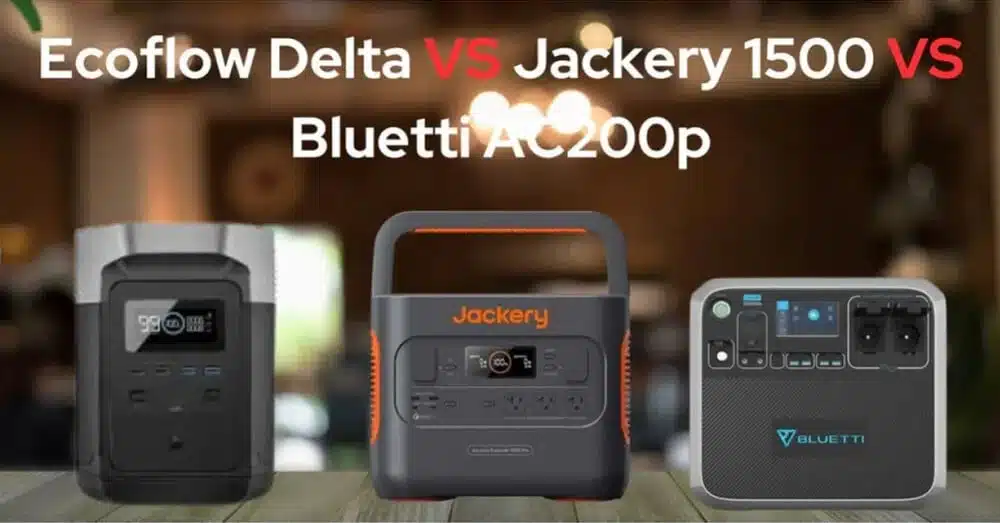
Based on the factors mentioned above, we have selected some of the best portable solar generators available on the market today. These solar generators have been chosen based on their power, capacity, functionality, quality, and price. Here are our top picks for the best portable solar generators for off grid living ranging from smaller more portable system to larger generator that can serve as a permanent energy storage device for your off grid home:
Anker SOLIX C1000 Solar generator
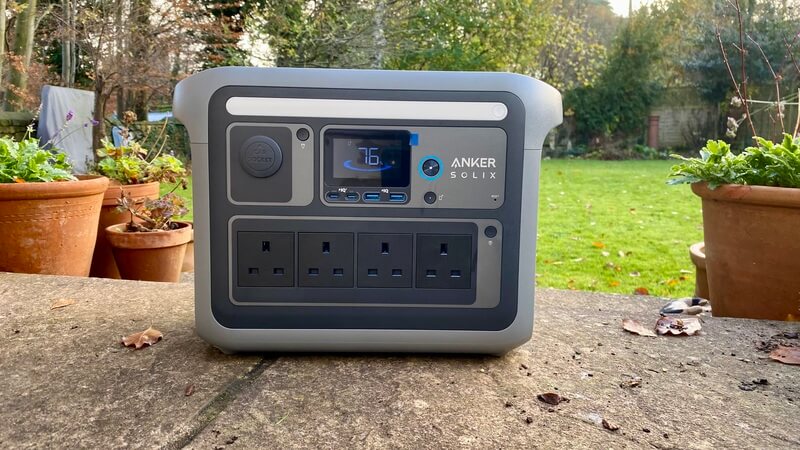
- The Anker SOLIX C1000 Solar Generator is a portable power station that can recharge to 100% in under an hour with HyperFlash™ technology.
- It has a long-lasting LFP battery with 1,056Wh capacity, which can be expanded to 2,112Wh by plugging in another battery.
- It can power up to 11 devices simultaneously with 1,800W pure sine wave AC output, 600W max solar input, and multiple USB and 12V ports. It also has a smart app control, a drop-proof design, and a built-in LED lamp. The Anker SOLIX C1000 Solar Generator is ideal for off-grid camping, remote device charging, and backup power for outages. Find the latest pricing and special deals in the Anker SOLIX C1000 right here.
Goal Zero Yeti 1500X
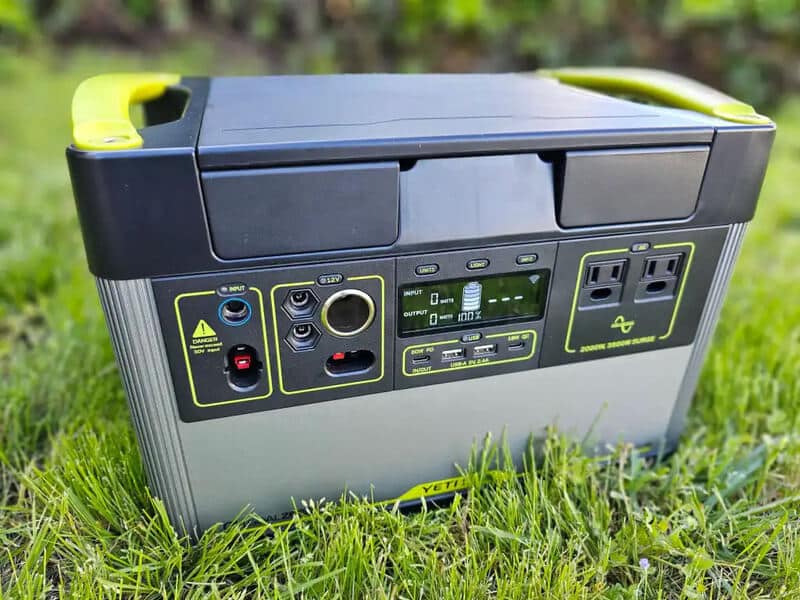
- The Goal Zero Yeti 1500X is a versatile and reliable solar generator that can provide up to 2000 watts of continuous power and 3500 watts of peak power. It has a massive lithium-ion battery that can store up to 1516 watt-hours of electricity, enough to run a full-size refrigerator for 28 hours or a circular saw for 10 hours. It also has a pure sine wave inverter that can deliver high-quality AC electricity to your appliances and devices.
- The Goal Zero Yeti 1500X is compatible with a wide range of AC, DC, USB, and USB-C appliances and devices, such as laptops, phones, tablets, printers, fans, lights, and more. It also has a smart LED display that shows the input, output, and battery level of the solar generator.
- The Goal Zero Yeti 1500X is expandable, meaning that you can connect up to four Goal Zero Boulder 200W solar panels to charge the battery faster and increase the power output. The Goal Zero Yeti 1500X is also modular, meaning that you can detach the battery and the inverter and use them separately or together as needed. The Goal Zero Yeti 1500X is a perfect solar generator for off grid living, home backup, and outdoor adventures. It comes with a 2-year warranty and a 30-day money-back guarantee. Most recent pricing for the Goal Zero Yeti 1500X can be found here.
EcoFlow Delta 2
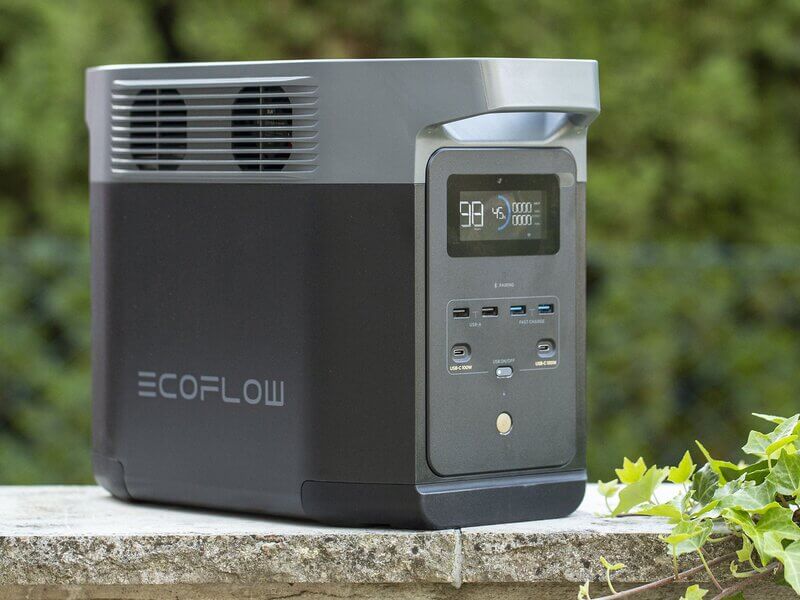
- The EcoFlow Delta 2 is a fast and efficient solar generator that can provide up to 1800 watts of continuous power and 3300 watts of peak power. It has a high-capacity lithium-ion battery that can store up to 1260 watt-hours of electricity, enough to run a microwave for 4 hours or a coffee maker for 40 cups. It also has a pure sine wave inverter that can deliver smooth and steady AC electricity to your appliances and devices.
- The EcoFlow Delta 1300 is compatible with most AC, DC, USB, and USB-C appliances and devices, such as laptops, phones, cameras, projectors, hairdryers, and more. It also has a smart LCD screen that shows the input, output, and battery percentage of the solar generator. The EcoFlow Delta 1300 is expandable, meaning that you can connect up to four EcoFlow 110W solar panels to charge the battery faster and increase the power output.
- The EcoFlow Delta 1300 is also portable, meaning that you can easily carry it around with its ergonomic handle and lightweight design. The EcoFlow Delta 1300 is an amazing solar generator for off grid living, travel, and emergency preparedness. It comes with a 2-year warranty and a 30-day return policy. Most recent pricing for the EcoFlow Delta 1300 can be found here.
BLUETTI AC200P
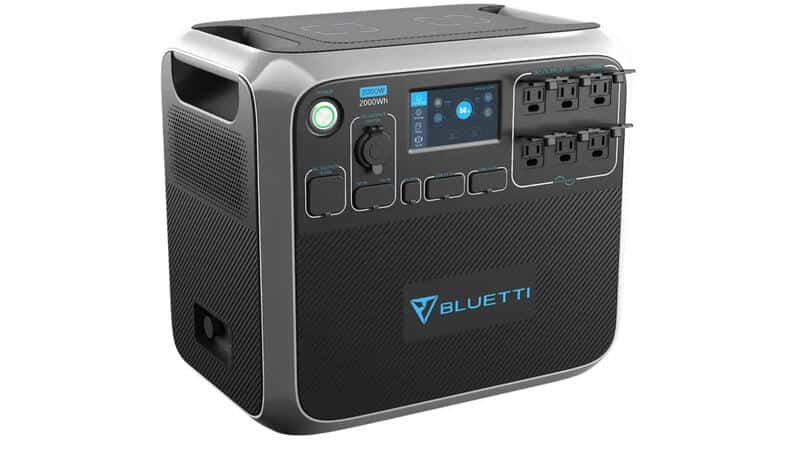
- The BLUETTI AC200P solar generator is a powerful and durable device that can provide up to 2000 watts of continuous power and 4800 watts of peak power. It has a huge lithium-ion battery that can store up to 2000 watt-hours of electricity, enough to run a window air conditioner for 8 hours or a blender for 100 times.
- It can be recharged with six BLUETTI 120W solar panels in about 3.5 hours. It has 17 versatile outlets, including 6 AC ports, standard USB-A/Type-C/Car port, 2 wireless charging pads, and a 12V/25A DC port.
- It also has a smart LCD display, outlet covers, and built-in safety features. It is a great solar generator for off grid living, home backup, and outdoor adventures. Most recent pricing for the BLUETTI AC200P can be found here.
Anker SOLIX F2600 Solar Generator

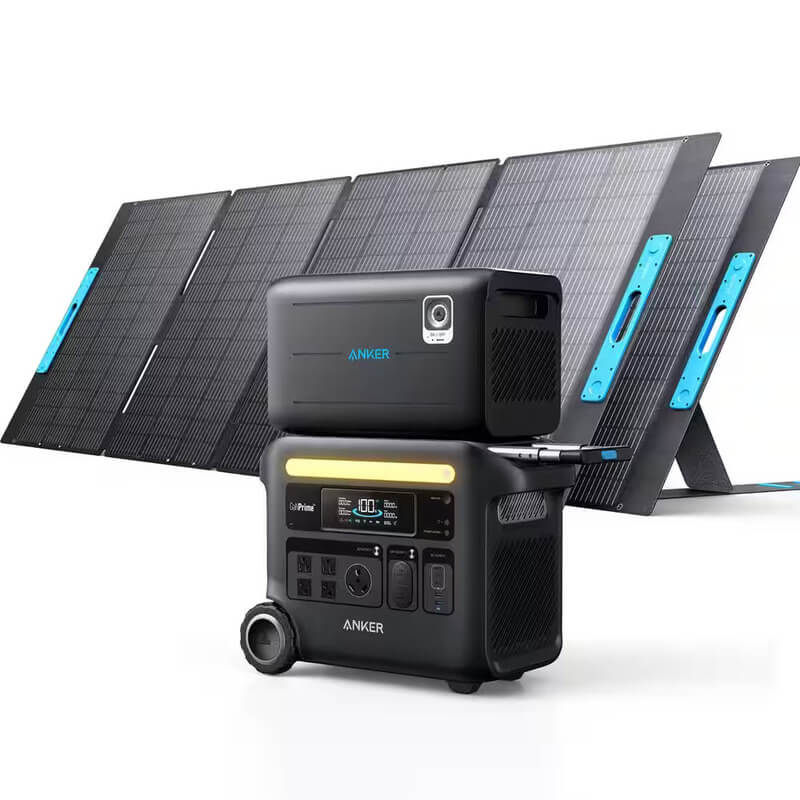
- The Anker SOLIX F2600 Solar Generator is a powerful and portable power station that can provide reliable backup power for your home, RV, or outdoor adventures. It has a 2,560Wh LFP battery that can last up to 10 years and can be expanded to 4,608Wh with an additional expansion battery. It can deliver 2,400W of continuous AC output and 2,800W of surge output, enough to run most appliances and devices. It also has multiple USB and 12V ports, as well as a 120W cigarette lighter output.
- The Anker SOLIX F2600 Solar Generator can be recharged in three ways: by plugging into a wall outlet with HyperFlash™ technology that can fully charge it in under 2 hours, by connecting to a car socket with a 120W input, or by using solar panels with a maximum 1,000W input.
- The 400W solar panel included in this bundle can generate enough power to recharge the power station in about 6 hours under optimal sunlight conditions. You can also monitor and control the power station remotely via WiFi and Bluetooth using the smart app. The power station has a drop-proof design and a built-in LED lamp for convenience and safety. The most recent pricing for the Anker SOLIX F2600 can be found here.
Conclusion
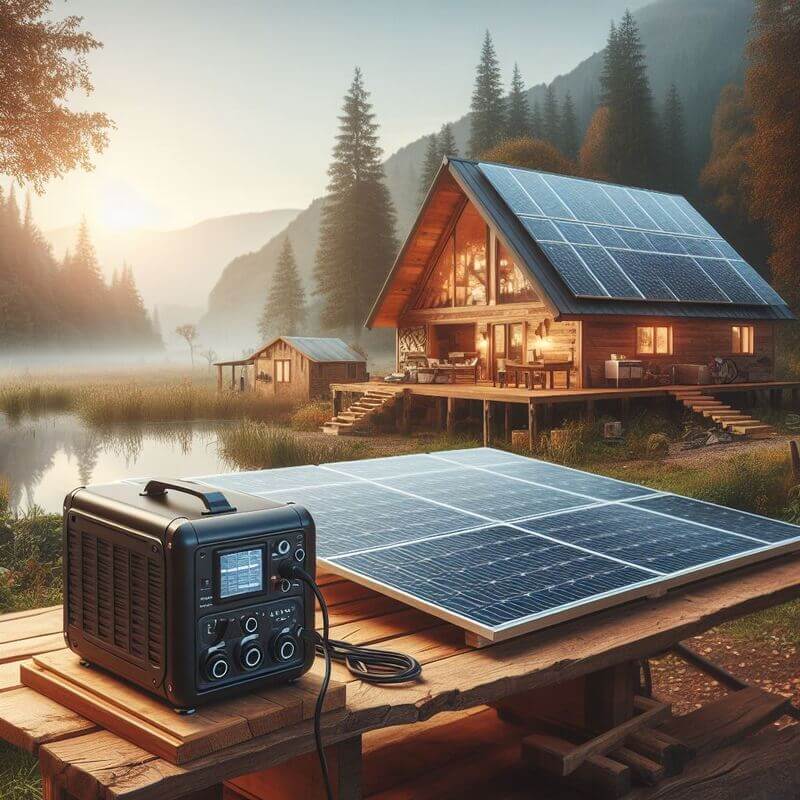
Solar generators are a great way to power your off grid cabin or tiny home with clean and renewable energy. They have come a long way in just the last few years and I’m sure they will advance more in the next few. They are low maintenance, easy to use, and cost-effective in the long run. They are also reliable, versatile, and customizable to suit your needs and preferences.
Despite so many solar generators on the market today, one still needs to consider what roles they want their solar generator to fill and what options are best for their situation(s). We’ve discussed what a solar generator is, how it works, and what the benefits of using one are. We’ve also compared some of the best solar generators available on the market today and given you our recommendations.
We hope that this article has helped you understand what a solar generator is, how it works, and which one to buy for your off grid living needs.
Be sure an check out our
beginner’s guide to off grid solar
.

FAQs
Q: How long can a solar generator last?
- A: A solar generator can last for 10 to 20 years or more with proper care and maintenance. The lifespan of a solar generator depends on the quality and durability of the solar panels, battery, and inverter, as well as how often and how deeply they are used and charged. To extend the lifespan of your solar generator, you should follow the manufacturer’s instructions and recommendations for cleaning, repairing, replacing, and upgrading the solar generator.
Q: How do I charge a solar generator?
- A: You can charge a solar generator by connecting it to solar panels, which use sunlight to generate electricity. You can also charge a solar generator by connecting it to a wall outlet, a car charger, or a generator, which use grid power or fossil fuels to generate electricity. However, charging a solar generator with solar panels is the
Q: How much does a solar generator cost?
- A: The cost of a solar generator varies depending on the size, capacity, quality, and features of the solar generator. Generally, the larger and more powerful the solar generator, the more expensive it is. The average cost of a solar generator ranges from $500 to $3000, not including the cost of the solar panels, which can add another $500 to $2000. However, the cost of a solar generator can be offset by the savings on fuel, maintenance, and grid power, as well as the tax credits and incentives that some areas offer for using solar energy.
Q: How do I install a solar generator?
- A: Installing a solar generator is not very difficult, but it may require some basic tools, skills, and knowledge. The installation process involves mounting the solar panels, connecting the solar panels to the battery, connecting the battery to the inverter, and connecting the inverter to the appliances and devices. You should follow the manufacturer’s instructions and recommendations for installing the solar generator, as well as the local codes and regulations for safety and compliance. You should also consult a professional or an expert if you are not sure or confident about installing the solar generator yourself.
Q: How do I maintain a solar generator?
- A: Maintaining a solar generator is not very demanding, but it may require some regular care and attention. The maintenance process involves cleaning the solar panels, checking the battery and inverter, and replacing or upgrading the solar generator as needed. You should follow the manufacturer’s instructions and recommendations for maintaining the solar generator, as well as the best practices and tips for extending the lifespan and performance of the solar generator. You should also seek help or advice from a professional or an expert if you encounter any problems or issues with the solar generator.
Q: What are the drawbacks or limitations of using a solar generator?
- A: Using a solar generator has many benefits, but it also has some drawbacks or limitations, such as:
- Dependence on sunlight: A solar generator relies on sunlight to produce and store electricity, which means that it may not work well or at all in cloudy, rainy, or snowy weather, or at night. To overcome this limitation, you may need to have a backup power source, such as a gas generator, a grid connection, or a battery bank, or you may need to reduce your power consumption or usage during these times.
- High initial cost: A solar generator may have a high initial cost, which includes the cost of the solar panels, battery, inverter, and accessories. This may deter some people from buying or investing in a solar generator, especially if they have a tight budget or a low income. To overcome this limitation, you may need to look for solar generators that offer discounts, deals, or financing options, or you may need to save up or fundraise for a solar generator, or you may need to apply for tax credits and incentives that some areas offer for using solar energy.
- Space and weight requirements: A solar generator may have a large size and weight, which may affect the portability, installation, and storage of the solar generator. This may pose a challenge for some people who have limited space, mobility, or access to their off grid cabin or tiny home. To overcome this limitation, you may need to look for solar generators that are compact, lightweight, or modular, or you may need to find a suitable location, vehicle, or container for your solar generator, or you may need to hire or ask for help from someone to transport or install your solar generator.
Q: What are some best practices and tips for solar generators?
- A: Using a solar generator is not very complicated, but it may require some common sense and caution. Here are some of the best practices and tips for using a solar generator:
- Read the manual: Before using a solar generator, you should read the manual that comes with the solar generator, which contains important information, instructions, and recommendations for using, operating, and maintaining the solar generator. You should also keep the manual handy for future reference or troubleshooting.
- Use compatible appliances and devices: When using a solar generator, you should use appliances and devices that are compatible with the voltage, current, frequency, and plug type of the solar generator. You should also avoid overloading or short-circuiting the solar generator by plugging in too many or too powerful appliances and devices at once. You should also unplug or turn off the appliances and devices when not in use to conserve power and prevent damage.
- Monitor the solar generator: When using a solar generator, you should monitor the solar generator regularly, using the display, indicators, or alerts that the solar generator provides. You should check the input, output, and battery level of the solar generator, and adjust the solar panels, battery, and inverter accordingly. You should also watch out for any signs of overheating, malfunctioning, or deterioration of the solar generator, and take action or seek help as soon as possible.
Q: Where can I buy a solar generator?
- There are many online platforms and websites that sell portable solar generators such as Amazon, Larger box stores (Home Depot, Lowe’s, Walmart). The best place to buy off grid equipment is from a dedicated off grid business like The Solar Power Store , Cabin Depot for Canada and Cabin Depot for the US. If you use our code OFFGRIDCABIN at the check out you can receive a discount! Some of the things that you should look for when buying off-grid equipment online are:
- The reputation and reliability of the seller, which you can check by reading the feedback, reviews, and ratings of previous customers.
- The description and specification of the equipment, which you can check by reading the product details, features, and dimensions.
- The warranty and return policy of the equipment, which you can check by reading the terms and conditions, guarantees, and refunds.
- The shipping and delivery options of the equipment, which you can check by reading the shipping methods, costs, and times.
Your Turn…
P.S.
If you enjoyed this post about
How to Choose the Best Solar Generator
then why not share it. It’s how we keep growing our off grid community here and lets us know we’re posting the right kind of info you’re looking for. Here’s a special Pinterest PIN for all
out there!


