


The Truth About Living Off the Grid: What You Need to Know Before You Go
Don’t Let These Off Grid Living Myths Stop You from Pursuing Your Dream
Finally, we’re taking this one head on. The desire to go off grid, even part time, has exploded over the last few years. But some folks got it all wrong.
We see the research trends online, read the comments across our social media accounts, in the comments here on our website and even notice it in the news. Are you one of those folks dreaming of living off the grid? Do you want to escape the rat race, maybe reduce your environmental impact, and enjoy a simpler and more self-reliant lifestyle? If so, join the growing party. Many people share your vision and passion for this alternative way of living.

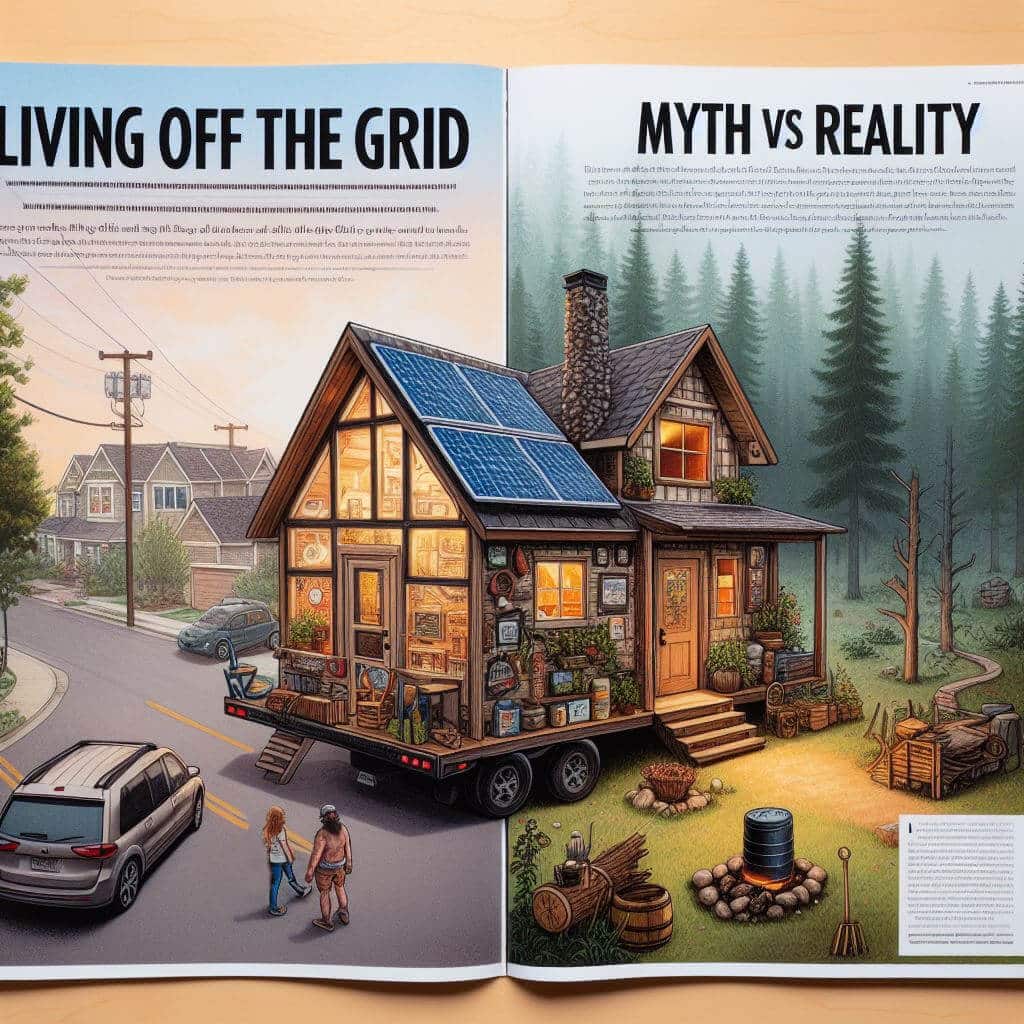
But you may also feel overwhelmed by the challenges and uncertainties that come with it. You may wonder if you have what it takes to make it happen, or if you will regret leaving behind the comforts and conveniences of modern life. You may have heard some myths and misconceptions that make living off the grid seem impossible or undesirable. In this blog post, we will bust some of the most common and persistent myths about living off the grid. We will use facts, statistics, examples, and testimonials from real off-grid dwellers who have made it happen. By the end of this post, you will have a clearer and more realistic picture of what living off the grid entails. Hopefully, you will be inspired to take action and give it a try.
Table Of Contents
Table Of Contents
- Why this myth is false
- How to overcome this myth
- What living off the grid really means (Legality)
- Why this myth is false
- How to overcome this myth
- What living off the grid really means (Expenses)
- Why this myth is false
- How to overcome this myth
- What living off the grid really means (Isolation)
- Why this myth is false
- How to overcome this myth
- What living off the grid really means (Safety)
Are YOU Ready to Master Off-Grid Living?
Once these myths are debunked, become an off-grid expert!
Here’s our essential tips for a sustainable lifestyle guide.
Myth #1 Living Off Grid Is Illegal

Some people think that living off the grid is illegal or requires a lot of permits and paperwork.
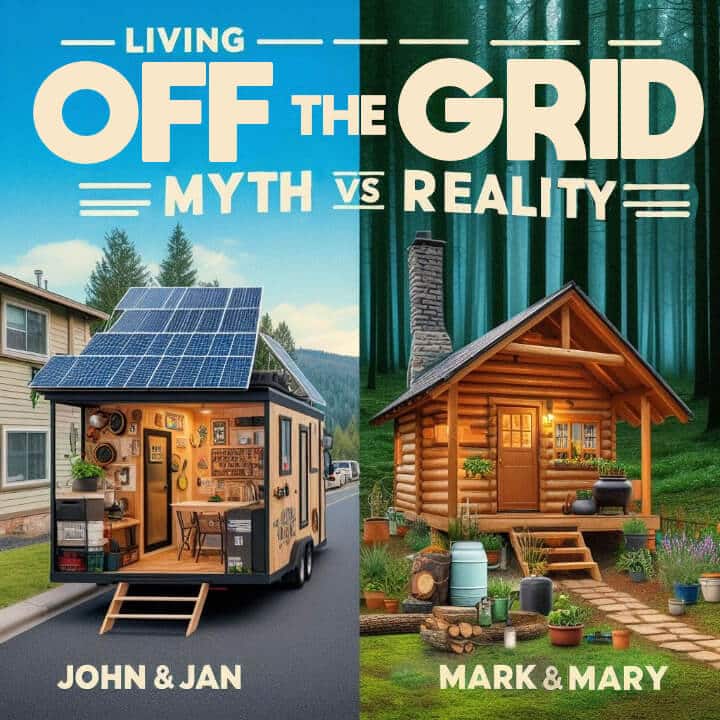
They think that living off the grid means living in a remote and secluded location, without any connection to the public utilities, such as electricity, water, sewage, and gas. This is not true for all off-grid dwellers. Living off the grid can mean different things to different people, depending on their preferences, needs, and goals. For example, there are folks that live in solar-powered tiny homes on wheels in a suburban neighborhoods, where they can still access some public services, such as garbage collection, internet, or phone. They chose this lifestyle because they wanted to reduce their environmental footprint, save money, and have more flexibility and mobility. On the other hand, some may live in a yurt in a remote forest, where they rely on rainwater, wood, and solar panels for their basic needs. They chose this lifestyle because they wanted to reconnect with nature, live more simply, and be more self-sufficient.
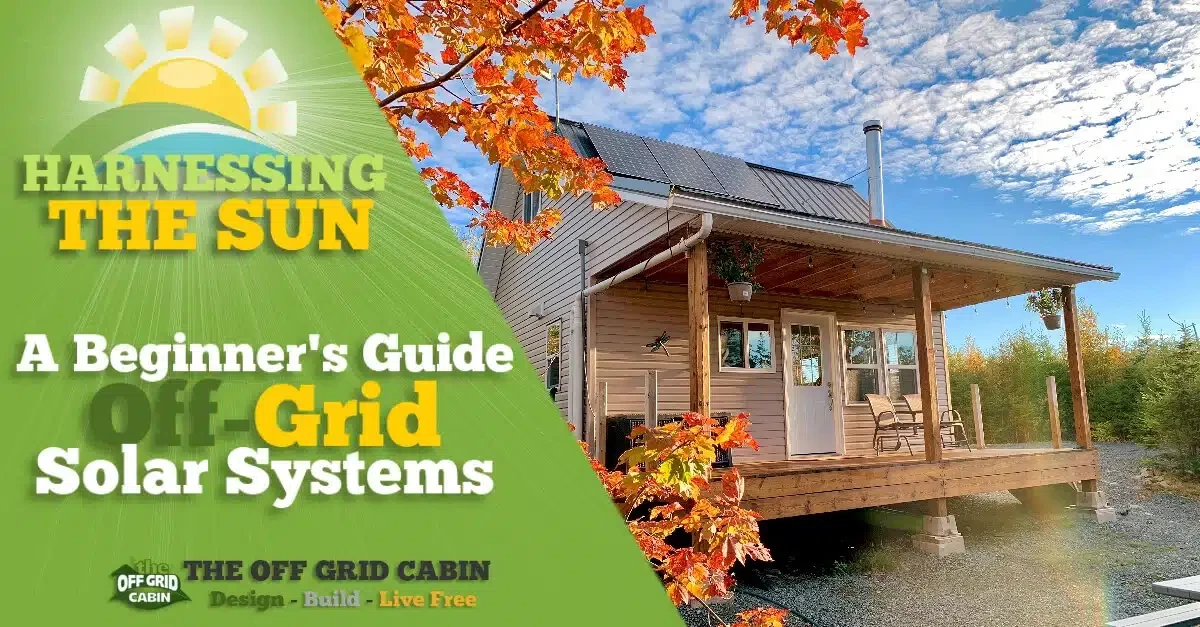
We do have a pretty amazing solar system to provide year round power and wouldn't be without it. We wrote a complete guide for getting started with solar called
Harnessing The Sun a Beginners Guide to Off-Grid Solar
.

The legality and feasibility of living off the grid depend on the location, the type of property, and the level of off-gridness. Each country, state, province, county, and municipality has its own laws and regulations regarding zoning, building codes, land use, environmental protection, and public health and safety. Before deciding to live off the grid, it is important to do your research and consult with the local authorities and experts. You need to find out what is allowed and what is not, and what are the requirements and procedures to get the necessary permits and approvals. For example, some areas may allow you to install solar panels, wind turbines, or rain barrels, but others may not. Some areas may require you to have a septic system, a well, or a backup generator, but others may not. Some areas may allow you to build a tiny house, a yurt, or a cabin, but others may not. Some areas may have minimum square footage, insulation, or ventilation standards, but others may not. Some areas may have property taxes, fees, or inspections, but others may not.
Living off the grid does not mean living outside the law or the society. It means living in harmony with the environment and the community, while respecting the rules and regulations that are in place for the common good and the public interest. Living off the grid is legal and possible in most countries and regions, as long as you follow the local laws and regulations and respect the environment and the community.
Why this myth is false
- Living off the grid can mean different things to different people, depending on their preferences, needs, and goals.
- The legality and feasibility of living off the grid depend on the location, the type of property, and the level of off-gridness.
- Living off the grid is legal and possible in most countries and regions, as long as you follow the local laws and regulations and respect the environment and the community.
How to overcome this myth
- Do your research and consult with the local authorities and experts before deciding to live off the grid.
- Find out what is allowed and what is not, and what are the requirements and procedures to get the necessary permits and approvals.
- Live in harmony with the environment and the community, while respecting the rules and regulations that are in place for the common good and the public interest.
What living off the grid really means (Legality)
- Living off the grid means choosing a lifestyle that suits your preferences, needs, and goals, while being mindful of the legal and practical implications of your choices.
- Living off the grid means being more independent and self-sufficient, but also more responsible and accountable for your actions and impacts.
- Living off the grid means being more connected to nature and yourself, but also more aware and respectful of the environment and the community.
Myth #2 Living Off Grid Is Expensive
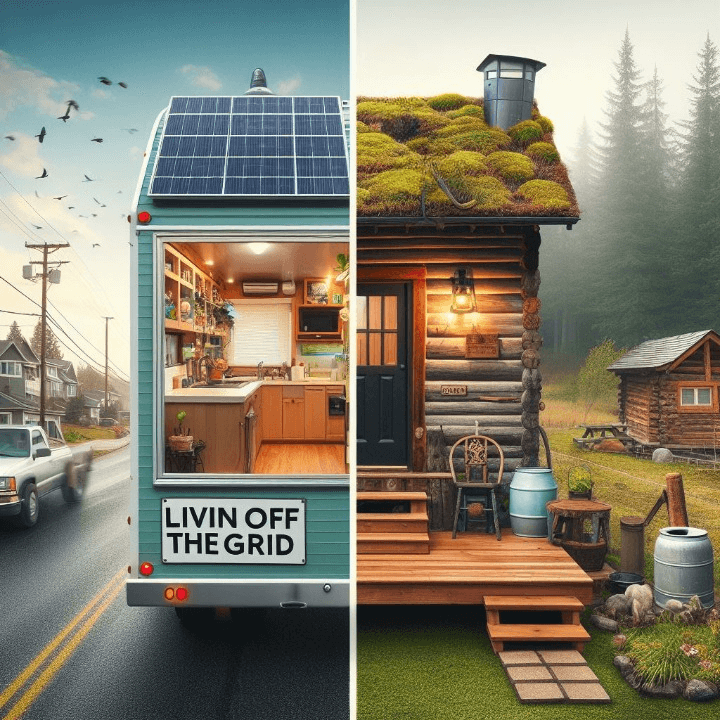
Another myth that discourages people from living off the grid is that it is expensive and requires a lot of upfront investment and maintenance costs.
They think that living off the grid means buying a large piece of land, building a custom-made home, and installing expensive and complex systems, such as solar panels, wind turbines, batteries, inverters, generators, pumps, filters, and more. This is not true for all off-grid dwellers. Living off the grid can be affordable and sustainable, if you plan carefully, use renewable energy sources, recycle and reuse materials, and adopt a minimalist and frugal lifestyle.
Our cabin may have all the amenities of home, but we are 100% off the grid. And it didn't break the bank either. In total we paid $20k for our land. Another $20k for all our building materials and then another $4k for our solar system. You may want to read up on how to read up on how to choose the best off-grid land to buy with out guide called
3 Steps to Choose the Best Location and Land
.
Here are some tips and tricks on how to save money and resources while living off the grid:
- Plan carefully and budget wisely before deciding to live off the grid. Compare the costs and benefits of different options, such as renting or buying land, building or buying a home, and installing or using existing systems. Consider the long-term savings and expenses, such as monthly bills, fees, taxes, maintenance, repairs, or replacements.
- Use renewable energy sources, such as solar panels, wind turbines, or rain barrels, to power your home and reduce your dependence on fossil fuels. Learn how to install, operate, and maintain your own renewable energy systems, or hire a professional to do it for you. Monitor your energy consumption and adjust your usage accordingly.
- Recycle and reuse materials, such as wood, metal, or plastic, to build your home and reduce your waste and environmental impact. Look for second-hand or salvaged materials, or use natural or local materials, such as straw, clay, or stone. Be creative and resourceful with what you have and what you can find.
- Adopt a minimalist and frugal lifestyle, by living in a smaller space, owning fewer possessions, and spending less on unnecessary items. Declutter your home and your life, and only keep what you need and love. Shop smartly and ethically, and avoid impulse buying or wasteful spending. Make your own products or services, or barter or trade with others.
One thing we do all year long is keep a list of the items we want and wait till Black Friday, Cyber Monday or another special time of the year for online deals come around and so all our major shopping then. This year we decided to write up a special guide called
How To Score The Top 10 Off-Grid Living Essentials for Cheap on Black Friday and Cyber Monday
to help folks find the best deals on line and not just on block Friday or cyber Monday.

The cost of living off the grid varies depending on the location, the size and type of property, the level of off-gridness, and the lifestyle choices. Some off-grid dwellers may spend more money upfront to buy land, build a home, and install systems, but save money in the long run by avoiding monthly bills, fees, and taxes. Others may spend less money upfront by renting land, buying a pre-made home, or using existing systems, but pay more money in the long run by paying rent, fees, or taxes. Some off-grid dwellers may spend more money on maintenance, repairs, or replacements, but others may spend less money by doing it themselves, using durable and reliable materials, or having backup plans. Some off-grid dwellers may spend more money on food, water, fuel, or entertainment, but others may spend less money by growing their own food, harvesting their own water, using renewable energy, or finding free or cheap entertainment.
When we first began looking for off grid land to buy we came across a little slice of heaven that we fell in love with. Lake front access, no one around for miles, very quiet, lots of wildlife and best of all… a little typo ended up saving us $20K!
We wrote a short story about how we got our land for half price.
Living off the grid does not mean living in poverty or deprivation. It means living within your means and according to your values, while optimizing your resources and reducing your expenses. Living off the grid can be affordable and sustainable, if you plan carefully, use renewable energy sources, recycle and reuse materials, and adopt a minimalist and frugal lifestyle.
Why this myth is false
- Living off the grid can be affordable and sustainable, if you plan carefully, use renewable energy sources, recycle and reuse materials, and adopt a minimalist and frugal lifestyle.
- The cost of living off the grid varies depending on the location, the size and type of property, the level of off-gridness, and the lifestyle choices.
- Living off the grid can save money in the long run by avoiding monthly bills, fees, and taxes.
How to overcome this myth
- Plan carefully and budget wisely before deciding to live off the grid.
- Use renewable energy sources, such as solar panels, wind turbines, or rain barrels, to power your home and reduce your dependence on fossil fuels.
- Recycle and reuse materials, such as wood, metal, or plastic, to build your home and reduce your waste and environmental impact.
- Adopt a minimalist and frugal lifestyle, by living in a smaller space, owning fewer possessions, and spending less on unnecessary items.
What living off the grid really means (Expenses)
- Living off the grid means choosing a lifestyle that fits your budget and values, while being mindful of the financial and environmental implications of your choices.
- Living off the grid means being more resourceful and efficient, but also more flexible and adaptable to changing circumstances and needs.
- Living off the grid means being more self-reliant and independent, but also more grateful and appreciative of what you have and what you can do.
Myth #3 Living Off Grid Is Boring
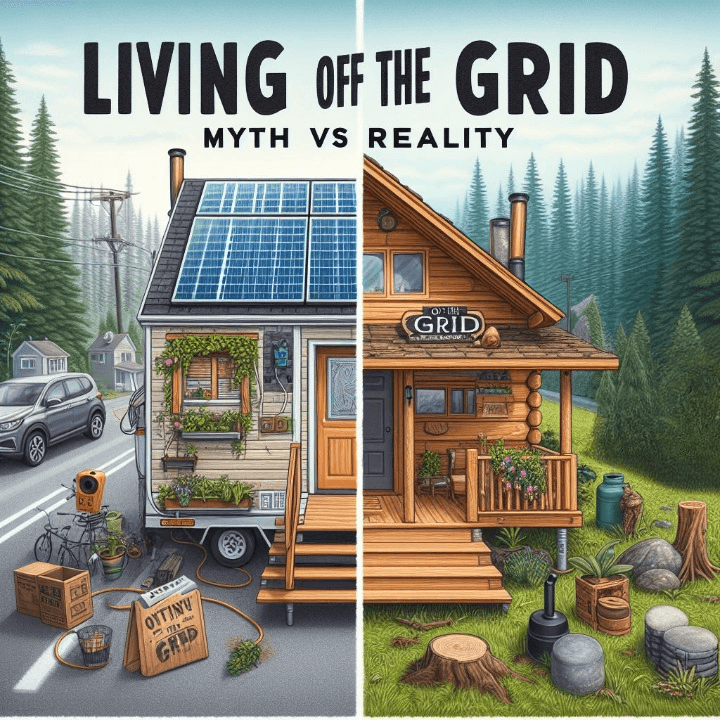
Some people think that living off the grid is boring and isolating and means giving up on modern amenities and entertainment.
They think that living off the grid means living in a remote and secluded location, without any connection to the internet, the phone, the TV, the radio, or the social media. This is not true for all off-grid dwellers. Living off the grid can be fun and fulfilling, if you pursue your hobbies and passions, connect with nature and yourself, and join or create a supportive and like-minded off-grid community.
We have all the amenities of our friends and family out here at cabin. In fact, some "die-hard" off grid enthusiasts will tell you we have too much. People ask us how we can blog from the cabin. Well, we have Starlink Internet here at the cabin that runs off our solar system. We also have a mini projector for watching movies. We have a microwave, full size fridge, a keurig, and even air conditioning! We even drive a
and can charge the car up right here at the cabin using nothing more than the sunshine. There's NO RULE that says you need to live like a hermit when you're off the grid. We do have an
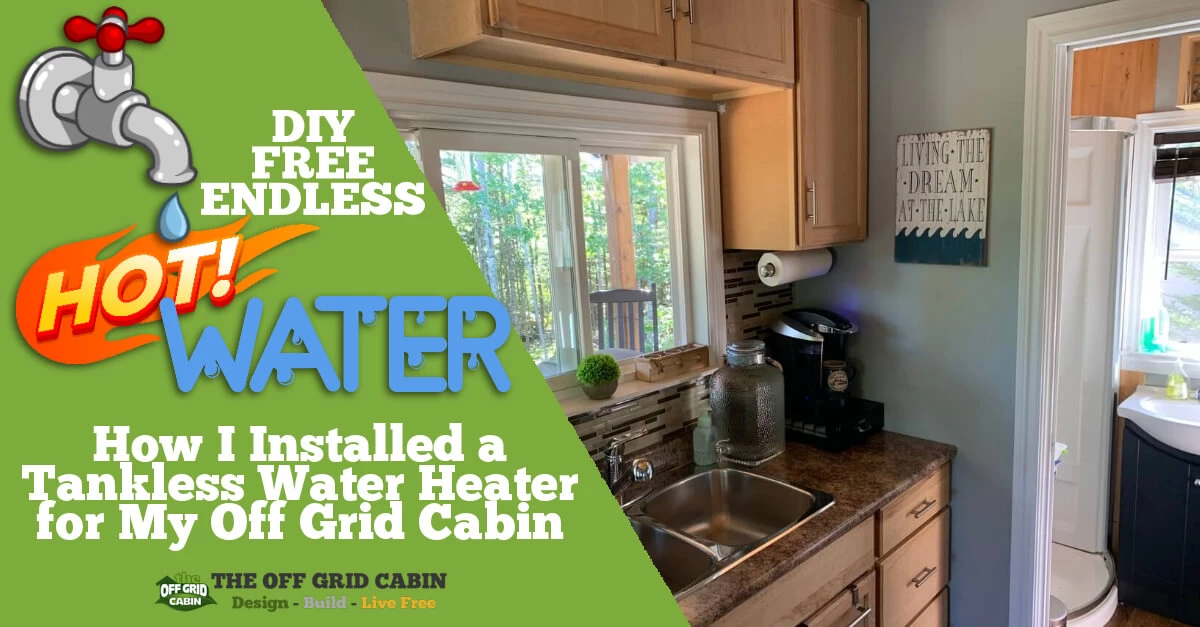
tankless on demand propane water heater
as opposed to an electrically heated water tank. So that's one difference from an on grid home.
Here are some examples of how off-grid dwellers enjoy their off-grid lifestyle:
- Lisa loves reading and writing, and she has a collection of books and journals that she keeps in her cozy cabin. She also has a solar-powered laptop, where she writes her own stories and blogs. She shares her stories and blogs online, and connects with other writers and readers who appreciate her off-grid perspective and creativity.
- Tom loves painting and gardening, and he has a beautiful garden and a studio where he grows his own flowers and paints them. He also has a rain barrel and a compost bin, where he collects water and organic waste for his plants. He sells his paintings and flowers at the local market, and meets other artists and gardeners who share his off-grid passion and vision.
- Amy and Ben love hiking and fishing, and they have a yurt and a boat where they explore the nearby lake and forest. They also have a wind turbine and a generator, where they produce their own electricity and fuel for their boat. They catch and cook their own fish, and enjoy the fresh air and the scenic views. They join other off-grid adventurers and travelers, who share their off-grid experiences and tips.
The level of boredom and isolation of living off the grid depends on the location, the personality, and the preferences of the off-grid dweller. Some off-grid dwellers may choose to live in urban or suburban areas, where they can still access some modern amenities and entertainment, such as internet, phone, TV, radio, or social media. Others may choose to live in rural or wilderness areas, where they can be more disconnected and immersed in nature, but also face more challenges and opportunities for adventure. Some off-grid dwellers may enjoy the solitude and tranquility of living off the grid, but others may crave the company and interaction of other people. Some off-grid dwellers may have many hobbies and passions that keep them busy and entertained, such as reading, writing, painting, gardening, hiking, fishing, hunting, or crafting. Others may have fewer hobbies and passions that require more creativity and resourcefulness, such as playing games, making music, telling stories, or learning new skills.
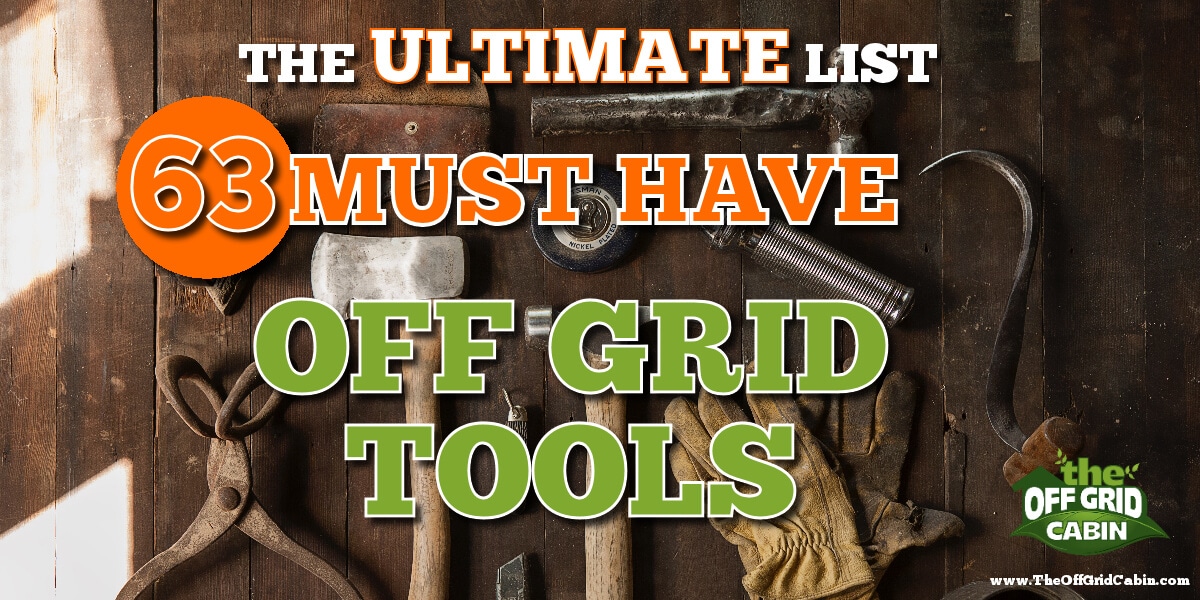
We love to build things and so we have a pretty amazing assortment of tools we use here at the cabin. If you plan on buying your own hand and power tools for living off grid or building an off grid home then check out our
Ultimate List of Must Have Tools for Off Grid Living.

Living off the grid does not mean living in boredom or isolation. It means living in alignment with your interests and goals, while exploring and discovering new things. Living off the grid can be fun and fulfilling, if you pursue your hobbies and passions, connect with nature and yourself, and join or create a supportive and like-minded off-grid community.
Why this myth is false
- Living off the grid can be fun and fulfilling, if you pursue your hobbies and passions, connect with nature and yourself, and join or create a supportive and like-minded off-grid community.
- The level of boredom and isolation of living off the grid depends on the location, the personality, and the preferences of the off-grid dweller.
- Living off the grid does not mean giving up on modern amenities and entertainment, but choosing what is meaningful and enjoyable for you.
How to overcome this myth
- Pursue your hobbies and passions, whether they are artistic, intellectual, physical, or spiritual, and find ways to express yourself and share your gifts with others.
- Connect with nature and yourself, by spending time outdoors, observing and appreciating the beauty and diversity of life, and practicing mindfulness and meditation.
- Join or create a supportive and like-minded off-grid community, by reaching out to other off-grid dwellers, joining online or offline groups or networks, or hosting or attending events or gatherings.
What living off the grid really means (Isolation)
- Living off the grid means choosing a lifestyle that makes you happy and fulfilled, while being mindful of the social and emotional implications of your choices.
- Living off the grid means being more adventurous and curious, but also more respectful and compassionate towards others and yourself.
- Living off the grid means being more authentic and expressive, but also more humble and grateful for what you have and what you can do.
Myth #4 Living Is Dangerous
Some people think that living off the grid is dangerous and exposes you to various risks and threats, such as wildlife, weather, crime, or health issues.
They think that living off the grid means living in a remote and secluded location, without any protection or assistance from the authorities, the utilities, or the neighbors. This is not true for all off-grid dwellers. Living off the grid can be safe and secure, if you prepare for emergencies, learn basic survival skills, protect your property and belongings, and have access to medical and communication services.
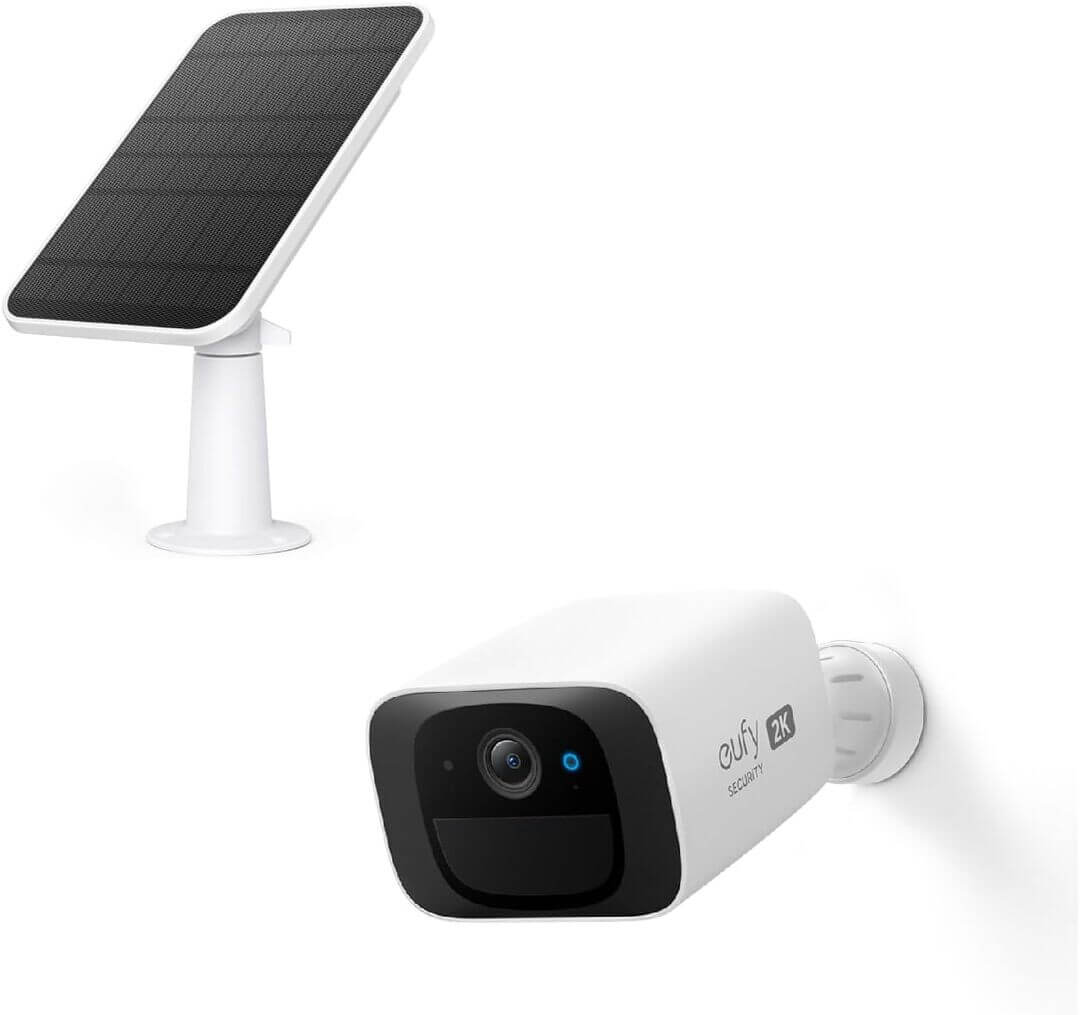
Here at the cabin we've installed a
wireless, solar powered security system
that has several cameras. It can be completely controlled and monitored remotely. It has some cool features like detecting people only and not the wildlife. This particular system is also great for off-grid locations because it has no base unit drawing power 24/7. It has its own integrated solar panels. One camera has the panel integrated right into the body of the camera. Also having a flood light integrated is the cherry on top! This is the

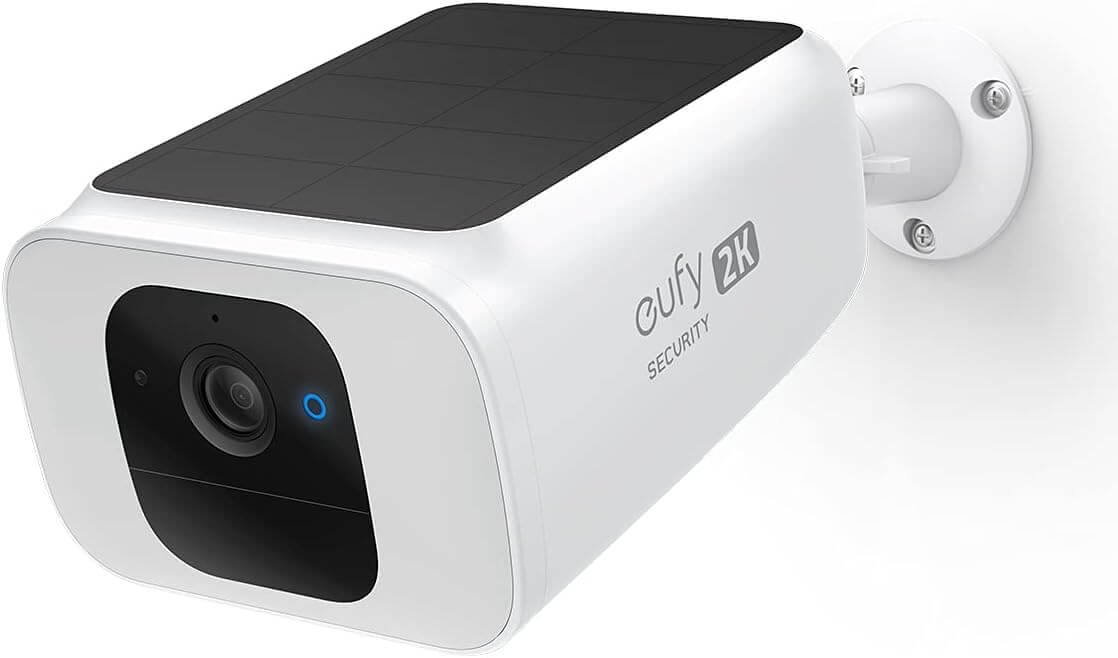
The other is the
. It has a small separate solar panel that we can position anywhere we like.

Here are some examples of how off-grid dwellers ensure their safety and security:
- Sarah and Sam have an emergency plan and kit that can help them cope and survive in case of a disaster or a crisis, such as first aid, food, water, fuel, or tools. They also have a solar-powered radio, where they can listen to the news and weather updates, and a satellite phone, where they can call for help if needed. They practice their emergency plan and check their emergency kit regularly, and update them as necessary.
- Jack and Jill have learned basic survival skills, such as how to start a fire, purify water, build a shelter, or treat a wound, and they practice them regularly. They also have a library of books and manuals, where they can learn more skills and knowledge, such as how to identify edible plants, make natural remedies, or fix a broken appliance. They are always eager to learn new things and improve their skills.
- Mike and Molly have protected their property and belongings, by securing their doors and windows, installing alarms or cameras, or having a guard dog or a weapon. They also have insured their property and belongings against theft or damage, and have a safe or a hidden stash, where they keep their valuables and important documents. They are friendly and respectful to their neighbors, but also cautious and vigilant of strangers.
The level of danger and risk of living off the grid depends on the location, the type and condition of the property, the level of off-gridness, and the preparedness of the off-grid dweller. Some off-grid dwellers may choose to live in urban or suburban areas, where they can still access some protection and assistance from the authorities, the utilities, or the neighbors, such as police, fire, ambulance, or power. Others may choose to live in rural or wilderness areas, where they can be more exposed and vulnerable to wildlife, weather, crime, or health issues, such as bears, storms, thieves, or infections. Some off-grid dwellers may have a well-built and well-maintained home and systems that can withstand and prevent various hazards and accidents, such as fire, flood, or power outage. Others may have a poorly-built and poorly-maintained home and systems, that can cause and aggravate various hazards and accidents, such as leaks, mold, or short circuits. Some off-grid dwellers may have an emergency plan and kit that can help them cope and survive in case of a disaster or a crisis, such as first aid, food, water, fuel, or tools. Others may have no emergency plan and kit, that can leave them helpless and hopeless in case of a disaster or a crisis, such as injury, hunger, thirst, cold, or isolation.
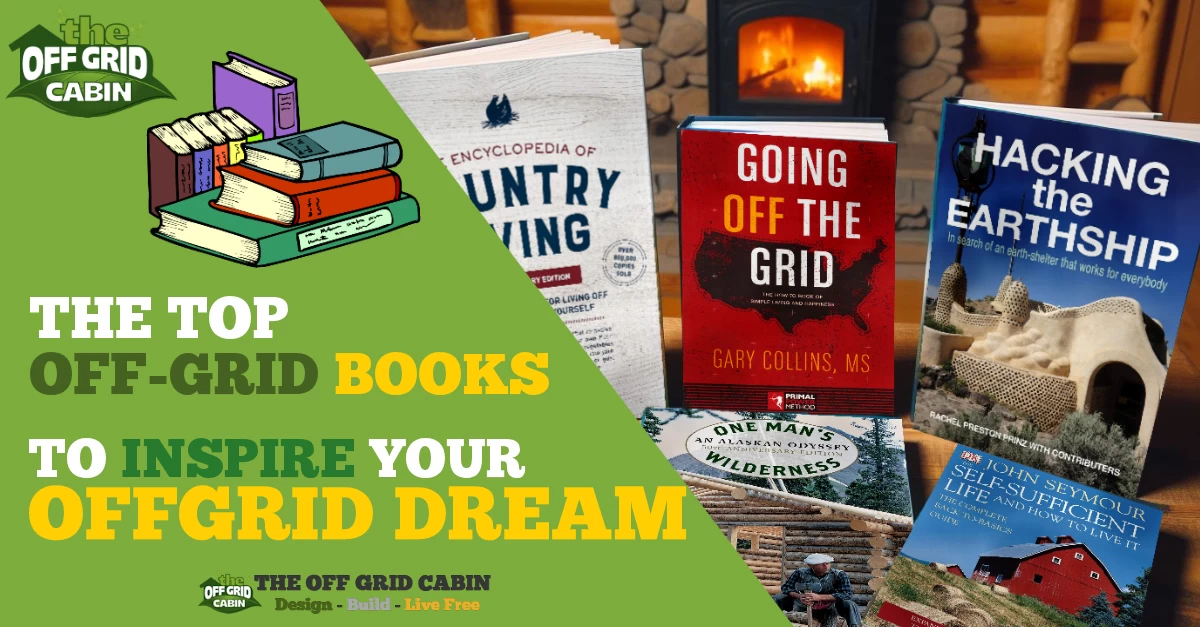
To learn more about how other off grid enthusiasts are dealing with these very same topics be sure to check out our recent article called
The Top 5 Off-Grid Books to Inspire Your Off Grid Living Dream
.
Living off the grid does not mean living in danger or risk. It means living in awareness and readiness, while taking precautions and measures to ensure your safety and security. Living off the grid can be safe and secure, if you prepare for emergencies, learn basic survival skills, protect your property and belongings, and have access to medical and communication services.
Why this myth is false
- Living off the grid can be safe and secure, if you prepare for emergencies, learn basic survival skills, protect your property and belongings, and have access to medical and communication services.
- The level of danger and risk of living off the grid depends on the location, the type and condition of the property, the level of off-gridness, and the preparedness of the off-grid dweller.
- Living off the grid does not mean living without any protection or assistance, but choosing what is appropriate and available for you.
How to overcome this myth
- Prepare for emergencies, by having an emergency plan and kit, that can help you cope and survive in case of a disaster or a crisis, such as first aid, food, water, fuel, or tools.
- Learn basic survival skills, such as how to start a fire, purify water, build a shelter, or treat a wound, and practice them regularly.
- Protect your property and belongings, by securing your doors and windows, installing alarms or cameras, or having a guard dog or a weapon, and insure them against theft or damage.
- Have access to medical and communication services, by having a phone, a radio, or a satellite device, and knowing the nearest hospital, clinic, or pharmacy, and how to contact them.
What living off the grid really means (Safety)
- Living off the grid means choosing a lifestyle that challenges and empowers you, while being mindful of the potential risks and threats of your choices.
- Living off the grid means being more resilient and resourceful, but also more cautious and prepared for any situation or eventuality.
- Living off the grid means being more confident and courageous, but also more responsible and accountable for your actions and impacts.
Conclusion
Living off the grid is a lifestyle choice that can bring you many benefits and rewards, such as freedom, peace, happiness, and fulfillment.
But it can also bring you some challenges and difficulties, such as uncertainty, isolation, danger, and hardship. The key is to be informed and realistic about what living off the grid entails, and to be prepared and adaptable to the changing circumstances and needs. Living off the grid is not for everyone, but it may be for you, if you have the vision, the passion, and the determination to make it happen. If you are ready to take the plunge and live off the grid, we hope this blog post has helped you debunk some of the myths and misconceptions that may have been holding you back. We also hope it has inspired you to take action and give it a try. Remember, living off the grid is not a destination, but a journey, and you can always adjust and improve your off-grid experience along the way. We wish you all the best in your off-grid adventure, and we hope to hear from you soon.
Your Turn…
P.S.
If you enjoyed this post about
The Top Off Grid Living Myths Debunked
then why not share it. It’s how we keep growing our off grid community here and lets us know we’re posting the right kind of info you’re looking for. Here’s a special Pinterest PIN for all
out there!

Let us know what you think in the comment section below.
And be sure to join the rest of the off grid community here and follow along with the build of our cabin! We'll update the
section every time we complete a new phase of the build so be sure to check in and watch the progression.
- How to Wire a 3-Way Switch in an Off-Grid Cabin (Solar, Battery & Inverter Safe)I’ve flown helicopters in weather that would ground most sane pilots, and I’ve stood in our cabin loft in the middle of a Nova Scotia February, snow howling sideways past the windows, trying to figure…
- how to clean solar panelsHow to Clean Solar Panels: A Step-by-Step DIY Guide As you already know, residential and off-grid solar systems are amazing sources of renewable energy that are quickly growing in popularity. The large flat glass panels…
- earthshipWhat Is an Earthship and How It Can Help Save the Planet Imagine living in a home that is completely self-sufficient, eco-friendly, and comfortable. A home that grows its own food, collects its own water,…
- 3-way-switch-wiring3-Way Switch Wiring: A How to Comprehensive Guide Here at the off grid cabin we’ve done our fair share of electrical work including 3-way switch wiring. We’ve done all the internal and external electrical wiring…
- solar generatorHow To Find The Best Solar Generator When we first cleared the land to build our off grid home back in 2016, we started with one of those small 700 watt Moto Master Eliminator Power…
- Off Grid HeatingThe Best Off Grid Heating Methods Introduction To Off Grid Heating If you're Living off the grid already or planning to in the future, you already know how important it is to have a very…
For more off grid enthusiasts we love be sure to check out the follwoing…
- Off-Grid World: This website covers a wide range of topics related to living off the grid, sustainable living, and renewable energy. You can find articles, videos, guides, and resources on how to build your own off-grid home, grow your own food, generate your own power, and more.
- Pure Living for Life: This blog documents the journey of Jesse and Alyssa, a couple who left the city to build their off-grid homestead from scratch, without taking out any loans. They share their experiences, challenges, and lessons learned, as well as DIY tutorials, equipment reviews, and budget tips.
- Prepared Bee: This website is a great source of information and inspiration for anyone who wants to be more prepared and self-reliant. It features a list of 25 best off-grid websites and blogs, as well as articles on survival skills, emergency preparedness, gardening, food preservation, and more.
And be sure to join the rest of the off grid community here and follow along with the build of our cabin! We'll update the
section every time we complete a new phase of the build so be sure to check in and watch the progression.


