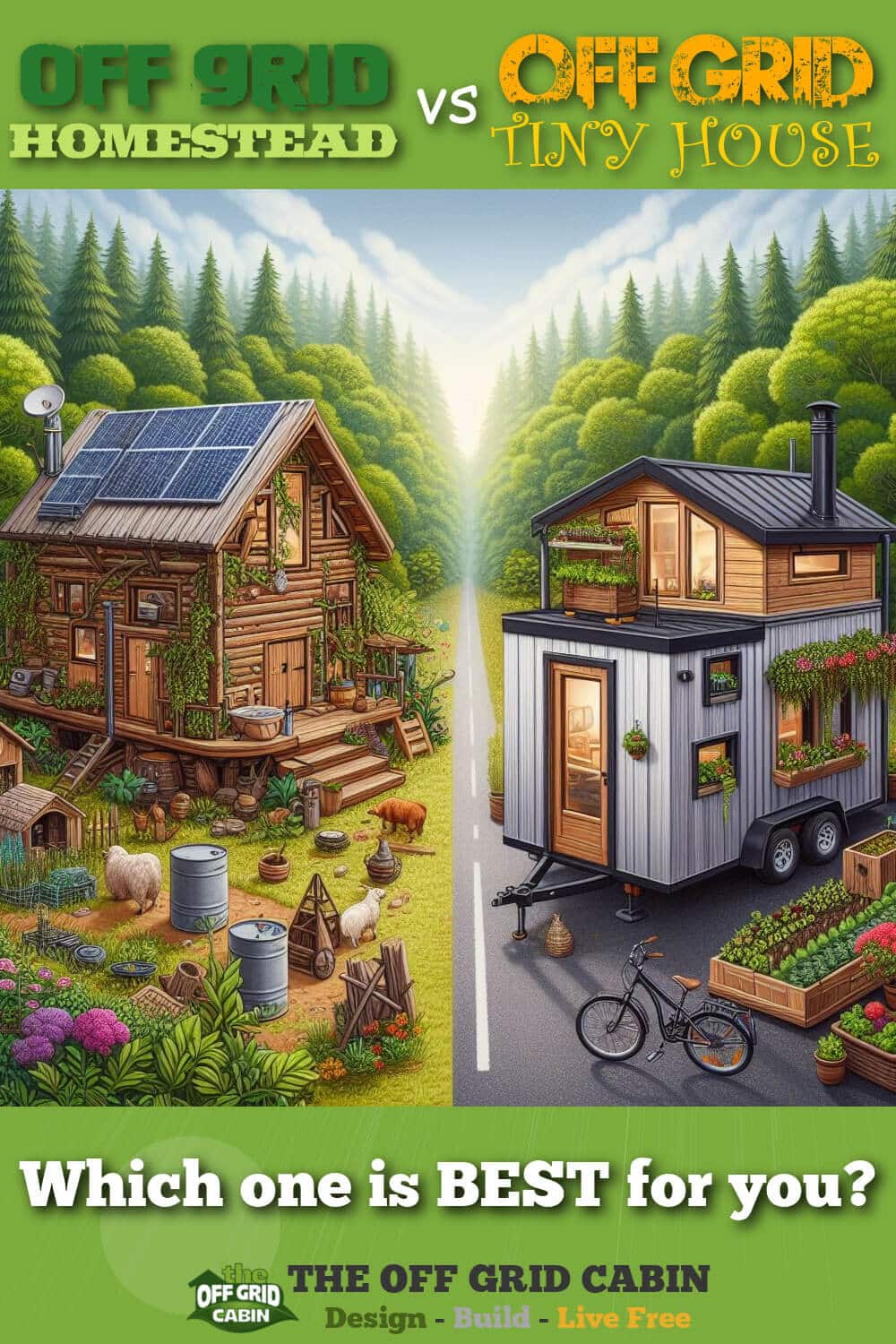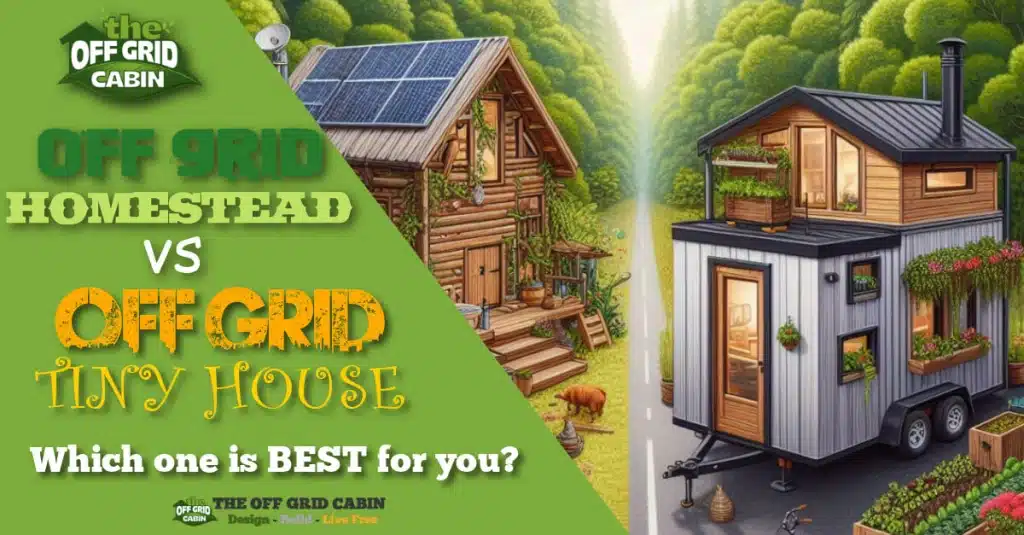
Off Grid Homestead vs Tiny House: Which is Perfect for You?
You’ve decided you’re going off the grid. Maybe it’s going to be part time, weekends and summer vacations away from the city. Or maybe full time, all year round every season thrown at you, no matter the weather you’re ready to tackle it all. Either way, you’re going to do it. It’s high time to save money, no more utility bills and embrace the great adventure of man vs nature.
Ok, so now you’re asking yourself “Where the heck do I even get started?”. Before you put pen to paper, start looking at properties to scope out and Googling “what’s the best solar system for off grid living”… you need to think about whether you want a small simple off grid, self sufficient tiny home or something bigger with some room to roam, stretch your legs, and yet still be 100% off the grid like an off grid homestead.
But what are the differences between these two lifestyles, and which one is best suited for your needs, preferences, and goals? In this article, we will compare and contrast off grid homesteading and tiny house living in terms of cost, space, comfort, and sustainability. We will also provide some guidance and advice on how to choose the best option for you.
Let’s get started!

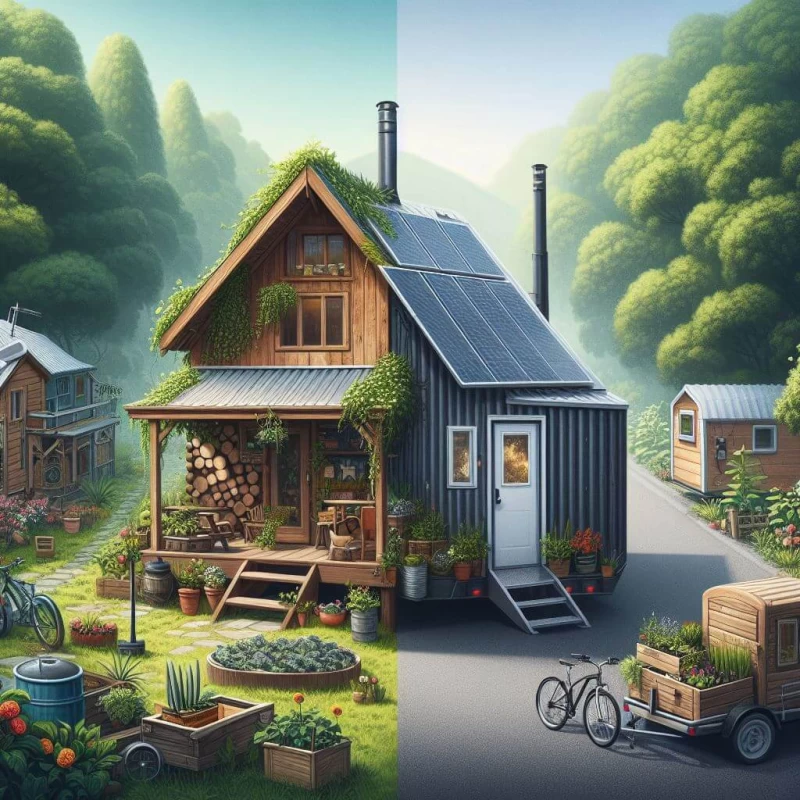
Table of Contents
- What is Off Grid Homesteading?
- What is Tiny House Living?
- Cost: Which One is Cheaper?
- Space: Which One is More Spacious?
- Sustainability: Which One is More Eco-Friendly?
- Conclusion: Which One is Right for You?
- Off Grid Living FAQs
- 1: What is an off grid homestead?
- 2: What is an off grid tiny house?
- 3: What are the benefits of living in an off grid homestead?
- 4: What are the benefits of living in an off grid tiny house?
- 5: What are the challenges of living in an off grid homestead?
- 6: What are the challenges of living in an off grid tiny house?
- 7: How much does it cost to build an off grid homestead?
- 8: How much does it cost to build an off grid tiny house?
- 9: How much land do you need for an off grid homestead?
- 10: How much space do you need for an off grid tiny house?
- 11: How do you power an off grid homestead?
- 12: How do you power an off grid tiny house?
- 13: How do you get water for an off grid homestead?
- 15: How do you dispose of waste in an off grid homestead?
- 16: How do you dispose of waste in an off grid tiny house?
- 17: How do you grow food in an off grid homestead?
- 18: How do you grow food in an off grid tiny house?
- 19: How do you heat and cool an off grid homestead?
- 20: How do you heat and cool an off grid tiny house?
What is Off Grid Homesteading?

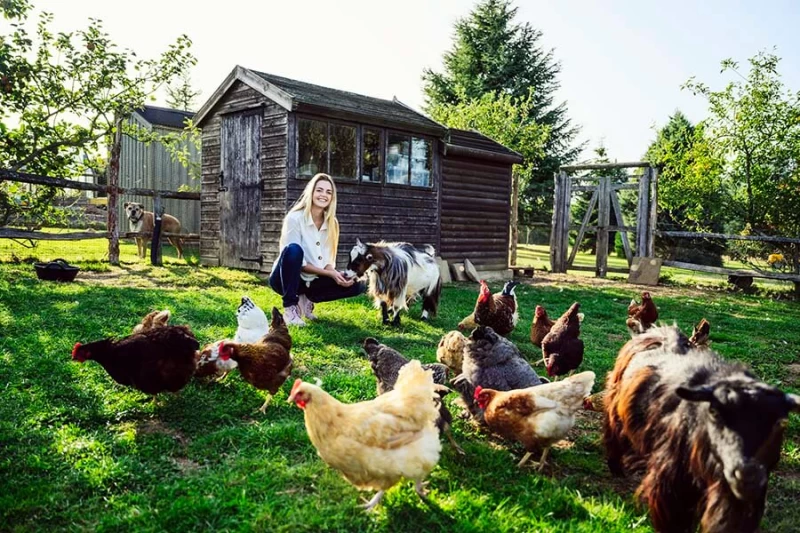
An off grid homestead is a property where the home and outbuildings are not connected to utility services, such as water, gas, or electricity lines. This type of homestead relies on alternative sources of power, like solar, wind, or hydro power, and often has its own water source. Off grid homesteaders aim to be self-sufficient and sustainable, growing their own food, raising livestock, and producing their own energy. It can take many forms, from a small-scale garden with a few backyard chickens to a large farm with crops, livestock, and extensive renewable energy systems on hundreds of acres of land.
What is Tiny House Living?

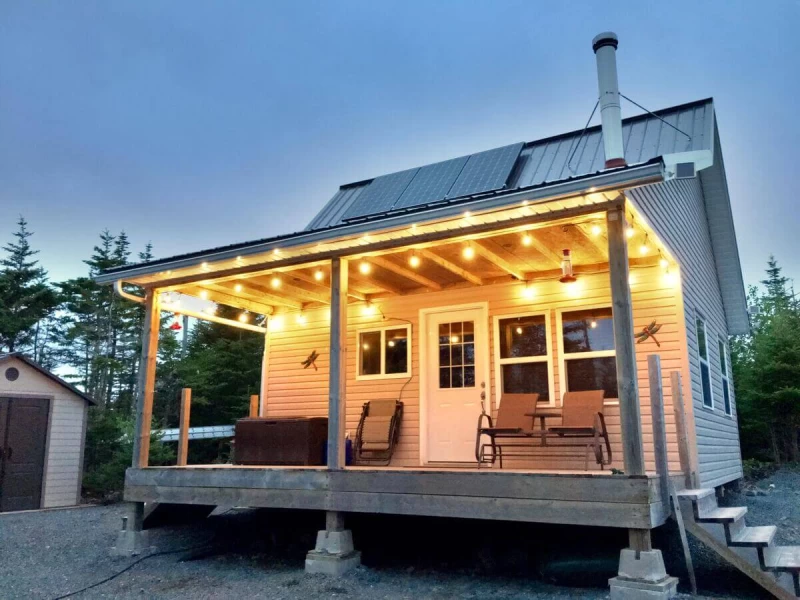
Tiny house living is a way of living that involves shedding your excess space and stuff, and living in a cozy, compact, and often custom designed home. Tiny houses are typically between 100 and 400 square feet, and can be built on wheels, trailers, or stationary foundations. Tiny house living represents a form of minimalism, as well as a way to save money, travel more, and live more intentionally and creatively. There needs to be a strong desire to live in a compact house. As an example, you might consider our off grid cabin is really more of an off grid tiny house. The off grid cabin just sounded a lot better than the off grid house when we first started building the cabin and our website.

Cost: Which One is Cheaper?
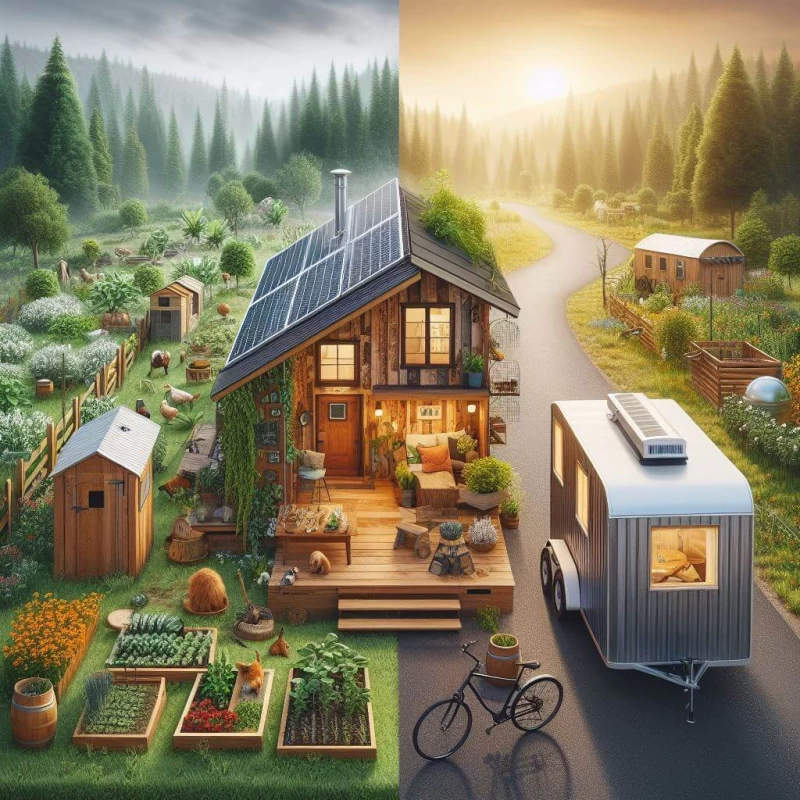
One of the main reasons why people choose off grid homesteading or tiny house living is to save money and reduce their living expenses. Who doesn’t want to save more of that hard earned money. But which one is cheaper in the long run? Well, that answer depends on several factors, such as the size, location, design, and quality of your home, as well as the amount and type of resources you’ll need and use. You can have a low cost fully functioning homestead that costs less than the average tiny home. However, you can also own a cutting edge, high tech tiny home with all the bells and whistles that far out costs an average homestead. Ask yourself, are you building your off grid homestead or tiny home yourself? If so, this is a significant way to cut costs of either project. Maybe you’re lending a hand during the construction process to offset overall costs. We actually designed and built our entire off grid home ourselves in just two weeks
Initial Cost
The initial cost of building and setting up an off grid homestead or a tiny house can vary widely, depending on how much you do yourself, how much you hire professionals, and how much you buy new or used materials and equipment. According to some estimates, the average cost of building an off grid homestead is around $50,000, while the average cost of building a tiny house is around $25,000. However, these numbers can be higher or lower, depending on your choices and circumstances as we discussed. The initial cost of our 512 square foot home cost roughly $13, 653 in building materials. You can download a complete building materials list and cost breakdown here.
Ongoing Cost
The ongoing cost of maintaining and living in an off grid homestead or a tiny house can also vary widely, depending on how much you consume vs produce, and how much you pay for taxes, permits, insurance, and other fees. According to some estimates, the average annual cost of living in an off grid homestead is around $10,000, while the average annual cost of living in a tiny house is around $5,000. Again, these numbers can also be higher or lower, depending on your choices and circumstances. We found the yearly cost of our off grid home to be approximately $4000 including land taxes, Starlink internet, propane for heating and cooking, and some other consumables like ready made fire logs that we sometimes use, fuel for the ATV to plow the roads in winter, and the odd tool or off grid product to make life more enjoyable.
Cost Comparison
Based on these estimates, it seems that tiny house living is cheaper than off grid homesteading, both in terms of initial and ongoing costs. However, this may not be true for everyone, as there are many variables and trade-offs involved like the quality of home and equipment. For example, some off grid homesteaders may be able to reduce their costs by growing and selling their own food, or by using natural resources, such as wood and water from their land. On the other hand, some tiny house dwellers may have to pay more for renting or buying land that’s ready made for a tiny house, or for moving and parking their homes. Ultimately, the cost of either option depends on your personal situation and preferences, and how you manage your finances and resources.
Space: Which One is More Spacious?
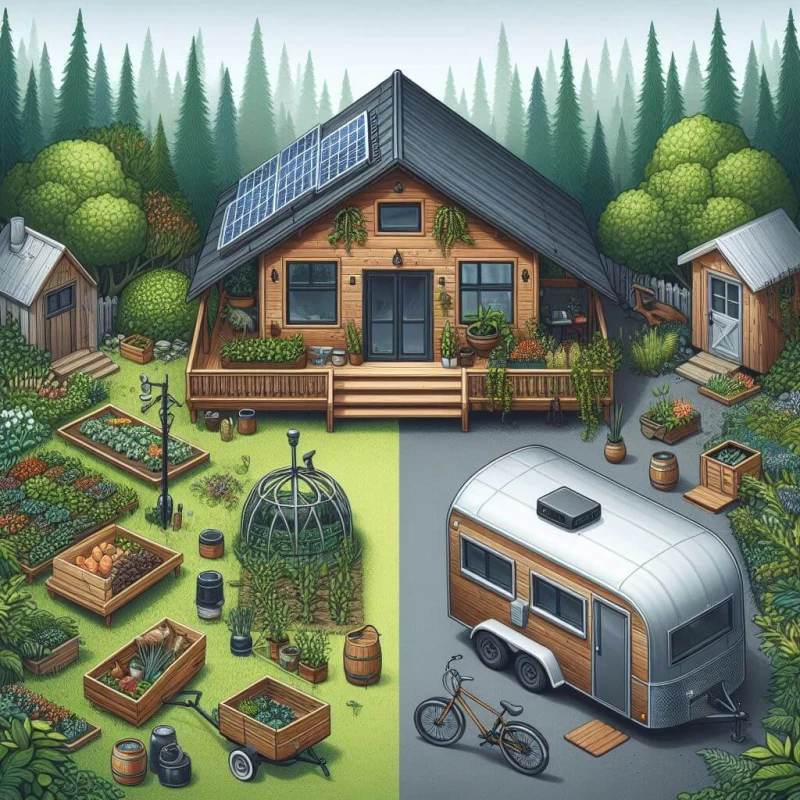
A major perk of living off grid is the expansive room available to you vs the city life. People choose off grid homesteading or tiny house living to have more space and flexibility, either in terms of physical or mental space. You may have what most folks consider a huge back yard in the city, but chances are you have neighbors only a few feet to the left and right of you. Count us in on wanting more mental space and not just a big backyard. But which of the two is more spacious in reality? The answer depends on how you define and measure space, and how you use and especially optimize it. Space optimization is far more important living in a tiny house than an off grid homestead.
Physical Space
The physical space of an off grid homestead or a tiny house is obviously determined by the physical size, floor plan and layout of your home, as well as the size and features of your land. Generally speaking, an off grid homestead offers more physical space than a tiny house, both inside and outside. An off grid homestead typically has more rooms, more storage, more amenities, and more comfort than a tiny house. An off grid homestead also typically has more land, more privacy, more nature, and more opportunities for gardening, farming, or recreation than a tiny house. However, there can also be a happy medium in between like we have. We own 3.2 acres of forested land and have our home situated right beside a lake. While we don’t own the lake it definitely increases the feeling of having more physical space.
Mental Space
The mental space of an off grid homestead or a tiny house is determined by the design and style of your home, as well as the mood and atmosphere of your environment. Generally speaking, a tiny house offers more mental space than an off grid homestead, both inside and outside. There are less things to think about living in and maintaining a tiny home compared to a homestead. Of course that depends on what you have on your homestead property. A tiny house typically has less clutter, less distraction, less stress, and less maintenance than an off grid homestead. A tiny house also typically has more mobility, more variety, and possibly more adventure than an off grid homestead.
Space Optimization
How you organize and utilize your space, and how you adapt and improve upon it over time plays an important role in any home but especially in a tiny home. Both options require some degree of space optimization, as they both have their own limitations and challenges. For example, an off grid homesteader may have to deal with harsh weather, pests, or emergencies, while a tiny house dweller may have to deal with zoning laws, parking issues, or social stigma. However, both options also offer some room for space optimization, as they both have their own advantages and possibilities. For example, an off grid homestead is easier to add expansion, facilities or even rearrange the floor plan down the road. However, your land size stays the same. A tiny house dweller has less room to rearrange but you can most certainly expand your view if you are on wheels. The only home whose property size may change more than the home.
Space Comparison
Based on these aspects, it seems that off grid homesteading and tiny house living offer different kinds of space, and different ways of optimizing it. Off grid homesteading offers more physical space, but less mental space, while tiny house living offers more mental space, but less physical space. However, this may not be true for everyone, as there are many ways to create and enjoy space, regardless of the size or location of your home. Ultimately, the space of either option depends on your personal needs and preferences, and how you make the most of it.
Comfort: Which One is More Comfortable?
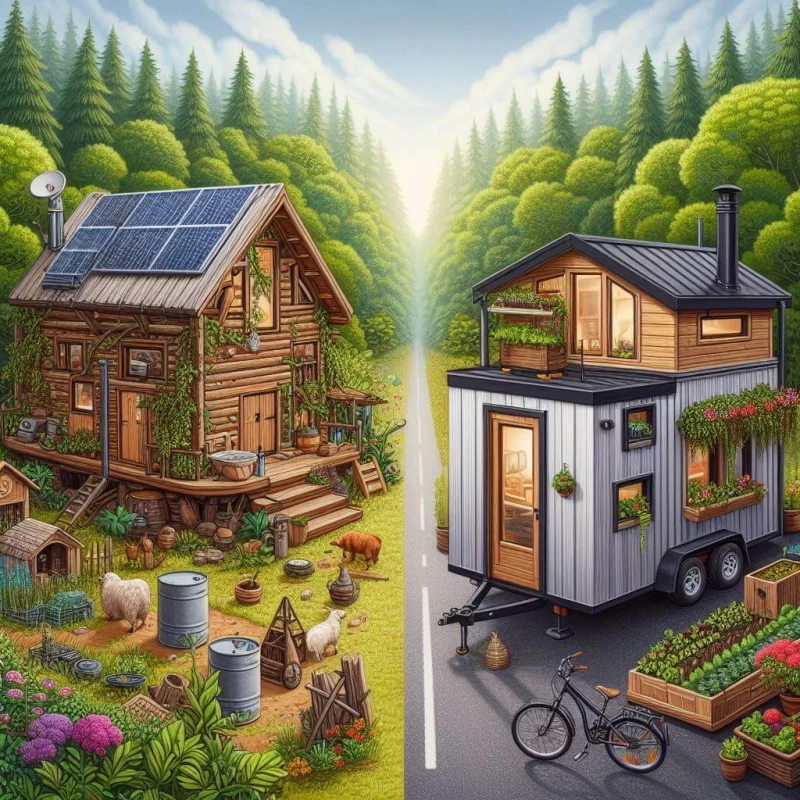
Comfort Comparison
Ask yourself, do you need more room to wander around a house or can you just step outside to accomplish that? You can imagine that off grid homesteading and tiny house living can offer different levels of comfort depending on the owner. Our off grid home has 512 square feet of living space which we find is perfect for two adults. The main floor is 320 square feet while the loft has an additional 192 square feet.
Sustainability: Which One is More Eco-Friendly?
Many people are intrigued by the self sustainability of an off grid property. We certainly are. But is one more eco-friendly than the other? Both are more eco-friendly in practice compared to a home on the grid of course, but by just how much? Let’s compare an off grid tiny home to a regular home on the grid.
There is no definitive answer to how much more eco-friendly an off-grid tiny home is compared to a house on the grid, as it depends on various factors, such as the size, design, location, and lifestyle of the occupants. However, some general advantages of an off-grid tiny home are:
- It uses less land, materials, and energy than a conventional house, reducing its ecological footprint and consumption.
- It relies on renewable energy sources, such as solar, wind, or hydro power, reducing its greenhouse gas emissions and dependence on fossil fuels.
- It often has its own water source, such as a well, rainwater harvesting, or filtration system, reducing its water usage and waste.
- It can be more adaptable and flexible, as it can be moved to different locations and climates, reducing its environmental impact and vulnerability.
Some estimates suggest that an off-grid tiny home can reduce its carbon footprint by up to 80% compared to a house on the grid. However, this also depends on how the off-grid tiny home is built and maintained, and how the occupants live and consume. For example, some challenges or limitations of an off-grid tiny home are:
- It can have higher initial costs and maintenance, as it requires more equipment and expertise to set up and operate the off-grid systems.
- It can face legal and regulatory barriers, such as zoning, parking, and financing issues, depending on the local laws and ordinances.
- It can have less storage space, comfort, and functionality, as it has to optimize every square inch and minimize unnecessary items.
- It can require more planning and management, as it has to monitor and adjust the energy and water supply and demand, and deal with potential weather or technical problems.
Therefore, an off-grid tiny home can be more eco-friendly than a house on the grid, but it also requires more commitment and responsibility from the occupants. It is not a perfect solution, but it can offer a more sustainable and simple way of living for those who seek it.
Now lets compare the difference between an off grid homestead and an on the grid home.
As with the tiny house, there is no definitive answer to how much more eco-friendly an off-grid homestead is compared to a house on the grid, as it also depends on size, design, location, and the owner’s lifestyle. However, some general advantages of an off-grid homestead are:
- It produces its own food and energy, reducing its dependence on external sources and consumption.
- It minimizes waste and emissions, as it uses natural resources efficiently and recycles or composts organic materials.
- It preserves and enhances the natural environment, as it promotes biodiversity, soil health, and water quality.
- It relies on renewable energy sources, such as solar, wind, or hydro power, reducing its greenhouse gas emissions and dependence on fossil fuels.
- It often has its own water source, such as a well, rainwater harvesting, or filtration system, reducing its water usage and waste.
Some estimates suggest that an off-grid homestead can reduce its carbon footprint by up to 90% compared to a house on the grid. However, this also depends on how the off-grid homestead is built and maintained, and how the occupants live and consume. For example, some challenges or limitations of an off-grid homestead are:
- It can require a lot of land, materials, and equipment, which can have a high initial cost and thus environmental impact.
- It faces similar legal and regulatory barriers, such as zoning, building codes, and property taxes, depending on the local laws and ordinances.
- It demands a lot of time, labor, and skills, as it involves managing and maintaining the homestead systems and activities.
- It exposes the occupants to potential risks, such as weather, pests, diseases, or accidents, which can affect their health and safety.
Therefore, an off-grid homestead can be more eco-friendly than a house on the grid, but it also requires more commitment and dedication from the occupants. It is not an easy solution, but it can offer a more rewarding and meaningful way of living for those who seek it.
Conclusion: Which One is Right for You?
As you can see, off grid homesteading and tiny house living are two different alternative living options, each with their own advantages and disadvantages, and their own challenges and rewards. But there are also many similarities between them. There’s no definitive answer to which one is right for you, as it depends on your personal situation and preferences, and how you weigh the various factors and criteria. However, here are some general tips and advice to help you make the best decision for yourself:
- Consider your goals and motivations: Why do you want to live off the grid or in a tiny house? What are you hoping to achieve or experience? How do you measure your success or happiness?
- Consider your needs and wants: What are the essential and desirable things that you need and want in your life? How do you prioritize and balance them? How do you cope with the trade-offs or sacrifices?
- Consider your budget and resources: How much money and time do you have and need to invest in your alternative living option? How do you manage and optimize your finances and resources? How do you generate and save income and expenses?
- Consider your skills and abilities: What are the skills and abilities that you have and need to learn and apply in your alternative living option? How do you acquire and improve them? How do you use and share them?
- Consider your personality and lifestyle: What are the personality traits and lifestyle habits that you have and need to adapt and change in your alternative living option? How do you develop and modify them? How do you express and enjoy them?
- Consider your environment and society: What are the environmental and social factors and impacts that you have and need to consider and deal with in your alternative living option? How do you respect and protect them? How do you interact and communicate with them?
By considering these aspects, you will be able to make a more informed and confident choice between off grid homesteading and tiny house living, or even find a way to combine or customize them to suit your unique needs and preferences. Remember, there is no right or wrong way to live alternatively, as long as you are happy, healthy, and responsible.
We hope you found this article helpful and informative. If you have any questions, comments, or feedback, please feel free to leave them below. We would love to hear from you and learn from your experiences.
Thank you for reading and happy living!
Off Grid Living FAQs
1: What is an off grid homestead?
- An off grid homestead is a property that is self-reliant and independent from the public utilities and services, such as electricity, water, sewage, and gas. An off grid homesteader typically uses renewable energy sources, such as solar panels, wind turbines, or hydroelectric generators, to power their home and appliances. They also collect rainwater, dig wells, or use springs for their water supply, and treat their wastewater with septic tanks, composting toilets, or reed beds. An off grid homesteader may also grow their own food, raise animals, and preserve their harvests.
2: What is an off grid tiny house?
- An off grid tiny house is a small, movable dwelling that is not connected to the public utilities and services, and can be easily transported to different locations. An off grid tiny house owner usually uses portable or foldable solar panels, batteries, inverters, and generators to power their home and appliances. They also use water tanks, pumps, filters, and heaters to store and use water, and composting toilets, incinerating toilets, or dry toilets to dispose of human waste. An off grid tiny house owner may also have a small garden, a greenhouse, or a hydroponic system to grow some food.
3: What are the benefits of living in an off grid homestead?
- Some of the benefits of living in an off grid homestead are:
- You can live in harmony with nature and reduce your environmental impact.
- You can save money on utility bills and taxes, and be more resilient to inflation and economic crises.
- You can have more freedom, privacy, and security, and be less dependent on the government and corporations.
- You can have more space, comfort, and customization, and create your own design and style.
- You can have more opportunities to learn new skills, be creative, and enjoy a simpler and healthier lifestyle.
4: What are the benefits of living in an off grid tiny house?
- Some of the benefits of living in an off grid tiny house are:
- You can travel and explore different places and cultures, and have more flexibility and mobility.
- You can save money on construction, maintenance, and transportation costs, and be more financially independent and debt-free.
- You can have less clutter, stress, and responsibility, and be more minimalist and organized.
- You can have more efficiency, functionality, and innovation, and use the latest technology and gadgets.
- You can have more fun, adventure, and excitement, and experience a more diverse and dynamic lifestyle.
5: What are the challenges of living in an off grid homestead?
- Some of the challenges of living in an off grid homestead are:
- You may have to deal with harsh weather, natural disasters, pests, and predators, and be more vulnerable to emergencies and accidents.
- You may have to invest a lot of time, money, and energy to build, maintain, and repair your homestead, and be more self-reliant and resourceful.
- You may have to cope with isolation, loneliness, and boredom, and be more social and outgoing.
- You may have to comply with zoning, building, and environmental regulations, and be more aware and respectful of the law and the community.
- You may have to sacrifice some conveniences, amenities, and luxuries, and be more adaptable and flexible.
6: What are the challenges of living in an off grid tiny house?
- Some of the challenges of living in an off grid tiny house are:
- You may have to deal with limited space, storage, and privacy, and be more creative and efficient.
- You may have to invest in high-quality, durable, and compact materials and appliances, and be more careful and selective.
- You may have to cope with frequent moving, parking, and towing, and be more prepared and skilled.
- You may have to comply with size, weight, and safety standards, and be more informed and cautious.
- You may have to sacrifice some stability, comfort, and security, and be more adventurous and courageous.
7: How much does it cost to build an off grid homestead?
- The cost of building an off grid homestead depends on many factors, such as the size, location, design, and materials of the property, the type and quality of the renewable energy and water systems, and the amount and complexity of the DIY work. According to some estimates, the average cost of building an off grid homestead ranges from $50,000 to $200,000.
8: How much does it cost to build an off grid tiny house?
- The cost of building an off grid tiny house depends on many factors, such as the size, style, and features of the house, the type and quality of the trailer and the solar and water systems, and the amount and complexity of the DIY work. According to some estimates, the average cost of building an off grid tiny house ranges from $10,000 to $40,000.
9: How much land do you need for an off grid homestead?
- The amount of land you need for an off grid homestead depends on your goals, needs, and preferences. Some factors to consider are the climate, soil, water, and vegetation of the area, the size and layout of your house and other structures, the number and type of animals and plants you want to raise and grow, and the legal and practical limitations of the land. According to some experts, the minimum land size for an off grid homestead is one acre, but the ideal size is five acres or more.
10: How much space do you need for an off grid tiny house?
- The amount of space you need for an off grid tiny house depends on your lifestyle, needs, and preferences. Some factors to consider are the number and size of your belongings and appliances, the number and age of your family members and pets, the frequency and duration of your travels and stays, and the availability and affordability of parking and storage options. According to some statistics, the average size of an off grid tiny house is 186 square feet, but the ideal size varies from person to person .
11: How do you power an off grid homestead?
- The most common way to power an off grid homestead is to use solar panels, which convert sunlight into electricity. Solar panels are usually mounted on the roof or on a stand, and connected to batteries, inverters, and charge controllers, which store, convert, and regulate the electricity. Solar panels can provide enough power for most of the household needs, such as lighting, heating, cooling, cooking, and entertainment. However, solar panels depend on the weather and the season, and may not be sufficient or reliable in some areas or situations. Therefore, some off grid homesteaders also use other renewable energy sources, such as wind turbines, hydroelectric generators, or biomass generators, which harness the power of the wind, water, or organic matter, respectively. Alternatively, some off grid homesteaders use backup generators, which run on gasoline, diesel, or propane, to supplement or replace their renewable energy systems .
12: How do you power an off grid tiny house?
- The most common way to power an off grid tiny house is to use portable or foldable solar panels, which are similar to the ones used for off grid homesteads, but smaller, lighter, and easier to transport and set up. Portable or foldable solar panels can provide enough power for most of the tiny house needs, such as lighting, heating, cooling, cooking, and entertainment. However, portable or foldable solar panels also depend on the weather and the season, and may not be sufficient or reliable in some areas or situations. Therefore, some off grid tiny house owners also use other portable or foldable renewable energy sources, such as wind turbines, hydroelectric generators, or biomass generators, which are similar to the ones used for off grid homesteads, but smaller, lighter, and easier to transport and set up. Alternatively, some off grid tiny house owners use portable or foldable backup generators, which are similar to the ones used for off grid homesteads, but smaller, lighter, and easier to transport and set up .
13: How do you get water for an off grid homestead?
- The most common way to get water for an off grid homestead is to collect rainwater, which falls from the sky and can be captured by gutters, barrels, tanks, or cisterns. Rainwater can be used for most of the household needs, such as drinking, cooking, washing, and gardening. However, rainwater depends on the weather and the season, and may not be sufficient or safe in some areas or situations. Therefore, some off grid homesteaders also use other water sources, such as wells, springs, or rivers, which tap into the underground or surface water, respectively. Alternatively, some off grid homesteaders use water delivery services, which bring water from a nearby town or city, to supplement or replace their water collection systems .
14: How do you supply water to an off grid tiny house?
- The most common way to supply water to an off grid tiny house is to use water tanks, which store water from various sources, such as rainwater, wells, springs, rivers, or water delivery services. Water tanks can be mounted on the trailer, under the house, or on the roof, and can be connected to pumps, filters, and heaters to provide water for drinking, cooking, washing, and flushing. However, water tanks can be heavy, bulky, and expensive, and may not hold enough or last long in some areas or situations. Therefore, some off grid tiny house owners also use other water supply methods, such as water jugs, bottles, or buckets, which are cheap, light, and easy to fill and carry, but may not be convenient or sanitary.
15: How do you dispose of waste in an off grid homestead?
- The most common way to dispose of waste in an off grid homestead is to use a septic tank, which is a large underground container that collects and decomposes wastewater from the house. A septic tank requires a drain field, which is a network of pipes that distribute the treated water into the soil. A septic tank can last for decades with proper maintenance and pumping. However, a septic tank can be expensive to install and may not be allowed or feasible in some areas. Therefore, some off grid homesteaders use other waste disposal methods, such as composting toilets, which turn human waste into fertilizer, or reed beds, which use plants to filter and clean wastewater.
16: How do you dispose of waste in an off grid tiny house?
- The most common way to dispose of waste in an off grid tiny house is to use a composting toilet, which is a small and portable device that converts human waste into compost. A composting toilet does not require water or plumbing, and can be easily emptied and cleaned. A composting toilet can reduce odors and environmental impact, and provide valuable fertilizer for plants. However, a composting toilet can be costly to buy and may not be legal or acceptable in some areas. Therefore, some off grid tiny house owners use other waste disposal methods, such as incinerating toilets, which burn human waste into ash, or dry toilets, which separate liquid and solid waste into different containers.
17: How do you grow food in an off grid homestead?
- The most common way to grow food in an off grid homestead is to have a garden, which is a plot of land where you can plant and harvest fruits, vegetables, herbs, and flowers. A garden requires soil, water, sunlight, seeds, and tools, and can provide fresh and organic food for your family and animals. However, a garden can be labor-intensive and time-consuming, and may not produce enough or consistent food throughout the year. Therefore, some off grid homesteaders also have a greenhouse, which is a structure that protects plants from the weather and extends the growing season, or a hydroponic system, which is a method that grows plants in water and nutrients without soil.
18: How do you grow food in an off grid tiny house?
- The most common way to grow food in an off grid tiny house is to have a small garden, which is a mini version of a regular garden that can fit in a container, a window sill, or a balcony. A small garden requires soil, water, sunlight, seeds, and pots, and can provide some fresh and organic food for your family. However, a small garden can be limited in space and variety, and may not produce enough or consistent food throughout the year. Therefore, some off grid tiny house owners also have a portable greenhouse, which is a foldable or inflatable structure that can be easily moved and stored, or a portable hydroponic system, which is a compact and lightweight device that can be easily transported and set up.
19: How do you heat and cool an off grid homestead?
- The most common way to heat and cool an off grid homestead is to use a wood stove, which is a metal appliance that burns wood to produce heat and fire. A wood stove can warm up your house and cook your food, and can be fueled by the wood you chop or collect from your land. However, a wood stove can be smoky and messy, and may not be efficient or safe in some situations. Therefore, some off grid homesteaders also use other heating and cooling methods, such as propane heaters, which use pressurized gas to generate heat, or ceiling fans, which use electric motors to circulate air.
20: How do you heat and cool an off grid tiny house?
- The most common way to heat and cool an off grid tiny house is to use a mini split system, which is a type of air conditioner that consists of an indoor unit and an outdoor unit that are connected by a pipe. A mini split system can heat or cool your house by transferring heat between the indoor and outdoor air, and can be powered by your solar or generator system. However, a mini split system can be expensive and noisy, and may not be compatible or sufficient in some climates. Therefore, some off grid tiny house owners also use other heating and cooling methods, such as electric heaters, which use electric coils or elements to generate heat, or evaporative coolers, which use water and fans to cool the air.
Your Turn…
P.S.
If you enjoyed this post about Off Grid Homestead vs Tiny House: Which is Perfect for You? then why not share it.
It’s how we keep growing our off grid community here and lets us know we’re posting the right kind of info you’re looking for. Here’s a special Pinterest PIN for all our Pinterest fans out there!